
Crypto Market Overview | volume collapse meets extreme fear | June 27, 2026
Crypto Market Overview | volume collapse meets extreme fear | June 27, 2026
Market overview
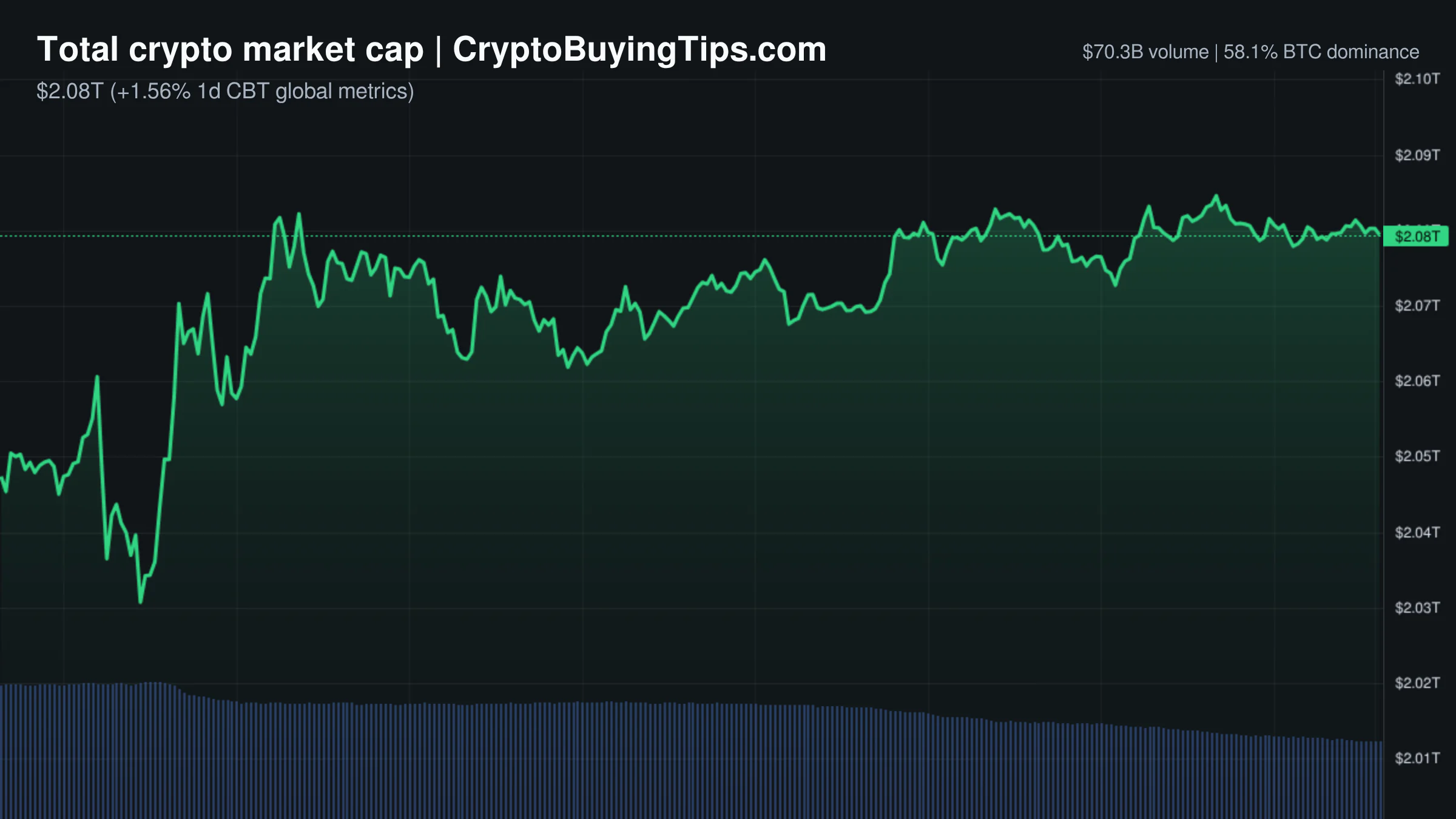
The crypto market is currently presenting a strange contradiction. While the total market capitalization has ticked up slightly to $2.17T and indices like the CMC20 and CMC100 are showing modest gains of around 1.6%, the actual trading activity is in a state of collapse. Spot volume has dropped by over 33% and derivatives volume has plummeted by more than 38%. It is the kind of price action that suggests a market in a coma, where the numbers are moving but nobody is actually trading.
This liquidity vacuum is paired with a sentiment reading that borders on the hysterical. The Fear and Greed Index sits at 17, firmly in extreme fear. Usually, such a reading accompanies a vertical price crash. Instead, we have a market that is slightly rising while the participants are terrified. This divergence is often a sign of exhaustion or a market that has simply run out of buyers and sellers, leaving the price to drift on very thin bid-side depth.
The macro backdrop offers little comfort. Both the S&P 500 and the NASDAQ are in the red, with the NASDAQ dropping 1.38%. This risk-off mood in traditional equities typically drags on crypto, and the current lack of volume suggests that institutional appetite has vanished for the moment. Stablecoin dominance is holding at 11.99%, meaning a significant amount of capital is sitting on the sidelines, waiting for a reason to enter or a signal to flee.
Bitcoin and Ethereum
Bitcoin continues to act as the sole anchor for the market. Dominance is high, fluctuating between 51.7% and 58.15% depending on the data source. This tells us that while the broader market is stagnant, the limited capital that remains is hiding in the largest asset. The price is currently battling a lack of conviction, moving sideways while the derivatives market dries up.
Ethereum is in a more precarious position. Network activity has effectively vanished, with gas fees hovering between 0.11 and 0.14 Gwei. We previously wrote about how Ethereum gas costs explained this level of stagnation is not a gift to users but a sign of a ghost town. When on-chain activity is this low, it suggests that DeFi and NFT engagement have hit a wall.
The dominance of ETH has slipped to around 8.8%, reflecting a slow bleed of interest compared to BTC. The lack of on-chain demand makes it difficult for the asset to decouple from the general market fear. Without a catalyst to drive network usage, ETH is simply following the gravity of the macro trend.
Top crypto prices
Specific front-page price data for the top coins is currently unavailable. However, the CMC20 and CMC100 indices provide a proxy for the top assets, both of which have risen between 1.5% and 1.8% over the last 24 hours. This indicates that the gains are spread across the larger caps rather than being driven by a single outlier.
News driving today's market
The most immediate threat to market structure is the July 1 MiCA licensing deadline in the European Union. Spain has made it clear that there will be no extensions or exceptions. This puts major players like Binance in a difficult spot. Because Binance withdrew its application in Greece and is still unlicensed in several key areas, it may be forced to temporarily halt operations in Europe. A forced exit of the world's largest exchange from a major economic bloc would create significant operational risk and potentially trigger a liquidity shock.
On the institutional side, there is a glimmer of progress with Securitize. The firm is eyeing a NYSE debut in early July via a $400 million SPAC deal. This move toward the public markets for a tokenization firm is a legitimate step for real-world asset integration. However, we remain cautious about the hype surrounding this sector. We have previously argued that the tokenizing stocks trap often involves centralized receipts that look like blockchain innovation but offer little actual utility.
The AI sector is also providing a mixed signal. OpenAI has rolled out GPT-5.6, but the Trump administration has requested a limited release while they develop a federal framework for frontier AI. This is a reminder that the state still holds the keys to the most powerful AI infrastructure. While the tech is bullish for the long term, the regulatory gating adds a layer of geopolitical risk to the AI-crypto narrative.
Finally, the prediction market space is seeing a split in fortunes. DraftKings has launched its own exchange after seeing $3.4 billion in consumer volume, which shows genuine retail appetite for this product. Conversely, Polymarket is facing a CFTC investigation following reports of fake bets. This suggests that while the product is popular, the lack of oversight is finally catching up with the pioneers.
Social intelligence
On-chain data shows that some whales are not sharing the extreme fear of the retail crowd. A newly created wallet has accumulated over 18,000 ETH and 152,000 HYPE from FalconX over the last nine days. This suggests that large players are using the current panic to build positions in both the flagship smart contract platform and newer high-beta assets.
The regulatory pressure in Europe is also being felt by smaller firms. Reports indicate that only about 230 MiCA licenses have been issued so far. In France, roughly 40% of registered providers have not even applied. This is leading to a loss of market diversity, as smaller firms are either shutting down or being absorbed by the few that can afford the compliance costs.
There is also a public spat between industry titans. Ripple CEO Brad Garlinghouse has criticized Michael Saylor's strategy of using financial engineering to fund Bitcoin purchases. Garlinghouse pointed to Strategy's STRC preferred shares trading 25% below par as evidence that the strategy is flawed. He argues that value should be driven by utility, not by borrowing to buy more of the same asset. It is a classic clash between the utility-driven view of crypto and the "digital gold" hoarding strategy.
Trading ideas worth watching
Bitcoin is currently testing a heavy support zone between $56,600 and $48,200. One analyst suggests that we are seeing the completion of a downward wave structure, which could lead to a new upward move. The immediate target is $62,433, but the market may first fill the CME gap between $54,545 and $52,980. A stop loss at $47,400 would be the final line of defense for this bullish thesis.
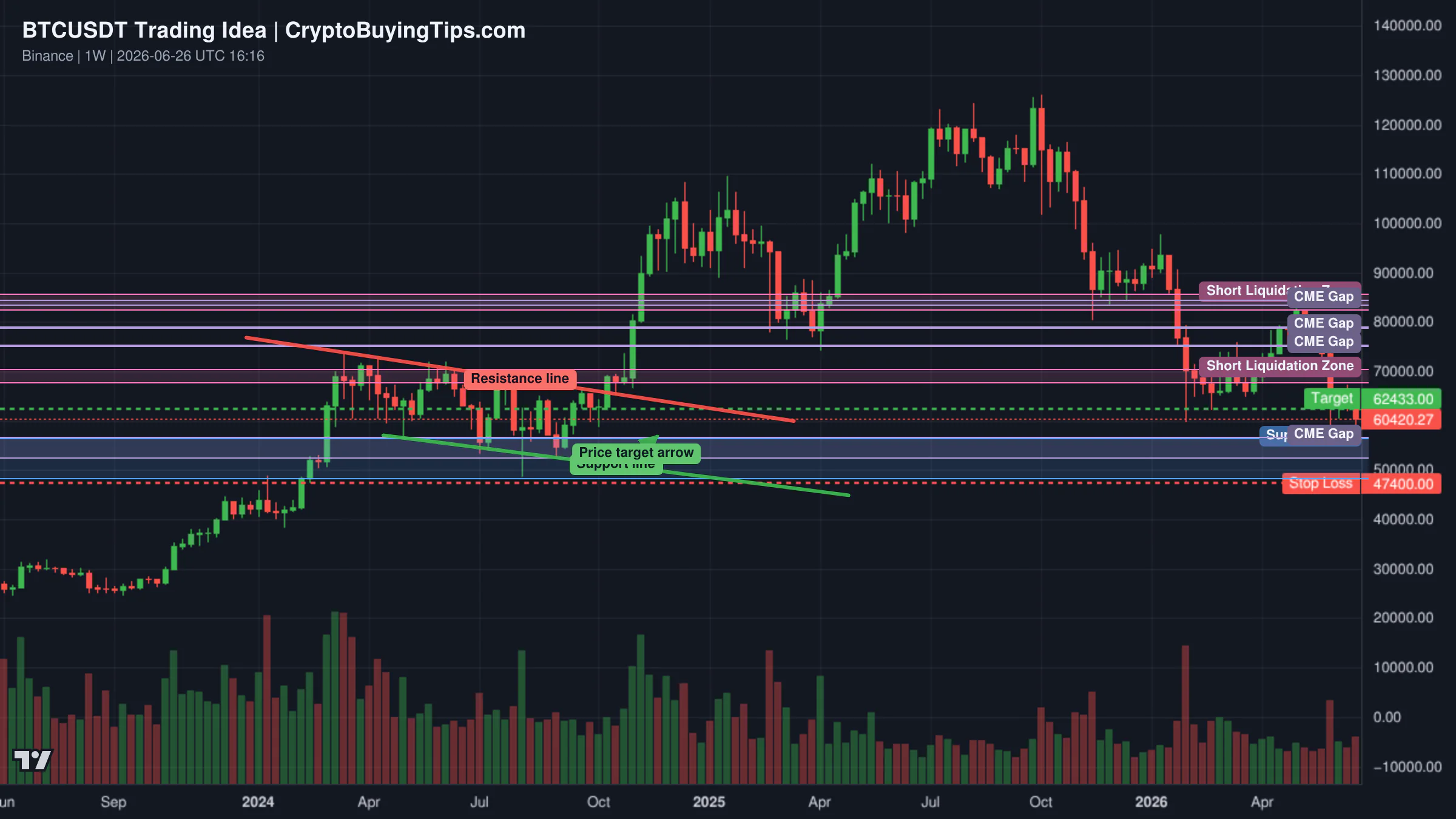
Another perspective on Bitcoin focuses on two distinct floors. The $57,000 level is viewed as the leverage floor, where liquidated longs could cause a quick wick. The $54,000 level is the structural floor, sitting near the realized price and whale cost-basis. If Bitcoin holds $57,000 and reclaims $62,000, the bounce case is strong. A weekly close below $54,000 would signal a deeper capitulation phase.
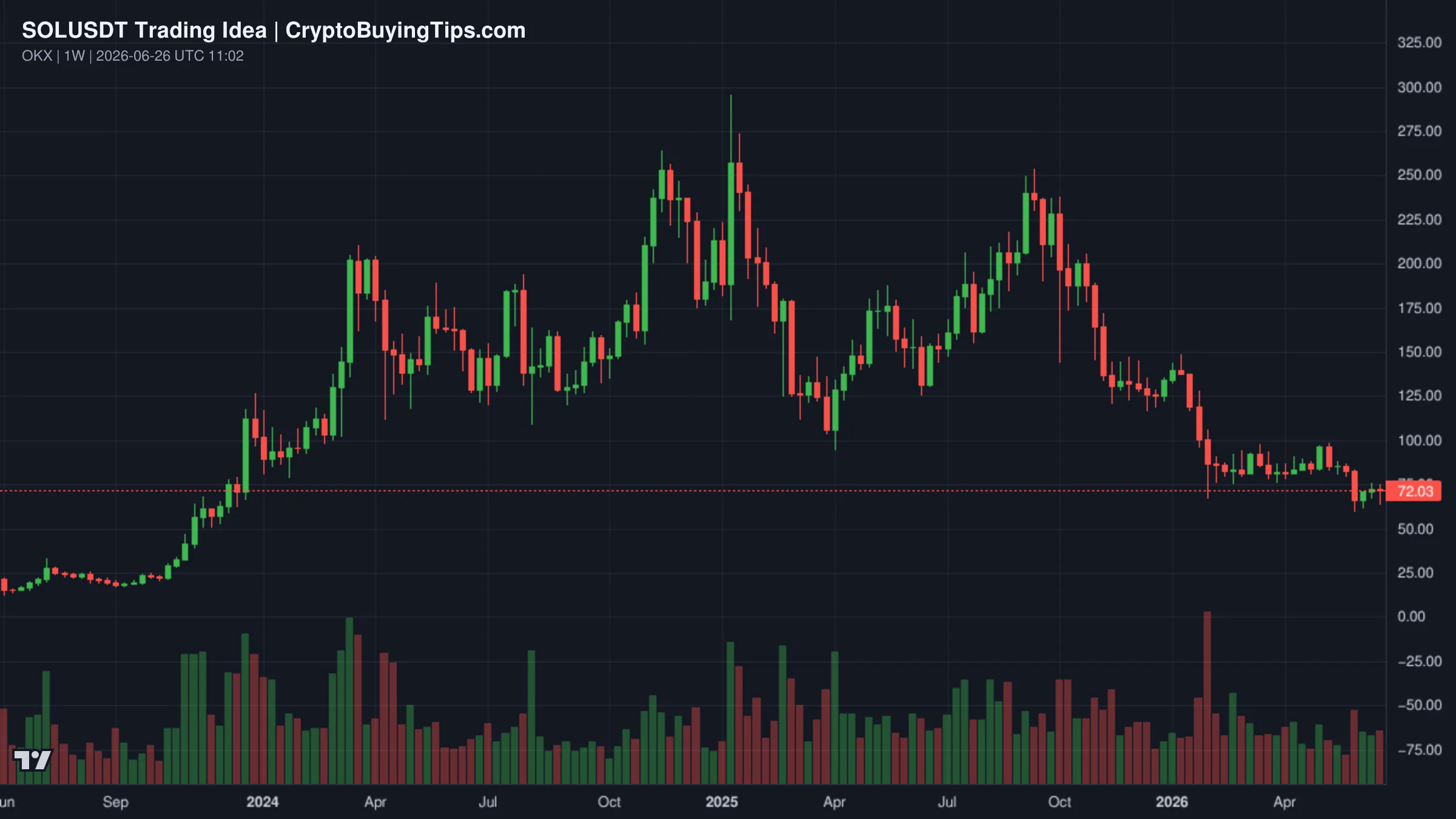
For Solana, there is a theory that history is rhyming. The asset previously completed an 8-leg corrective sequence before its major bull run. Current price action suggests it may be approaching the final leg, which often produces one last lower low inside the accumulation zone. Traders are monitoring this area as a potential long-term entry point, though it requires patience for one final dip before a trend reversal.
What to watch next
The most critical date on the calendar is July 1. The MiCA deadline will determine whether the EU becomes a regulated haven or a fragmented mess of halted services. If Binance is forced to wind down operations in Europe, we can expect a spike in volatility and a potential flight of capital toward compliant alternatives.
Beyond regulation, the gap between the Fear and Greed Index and the actual price action must close. Either the fear is justified and a liquidity event is coming, or the retail crowd is simply wrong and the market is bottoming. We will be watching the volume metrics closely. A recovery in spot and derivatives volume is required to confirm that the current price stability is a floor and not just a lack of interest.
Some links in this article may be affiliate links. We may earn a commission at no extra cost to you — this never influences our analysis or coverage.

Sigrid Voss
Crypto analyst and writer covering market trends, trading strategies, and blockchain technology.
More Articles
Crypto Market Overview | Volume collapse masks marginal gains amid regulatory noise | July 26, 2026
Volume collapse masks marginal gains amid regulatory noise Crypto market overview for July 26, 2026 data points.

BitMart is shutting down and the CEX risk is back
Another platform blinking lights reminds us what happens when liquidity dries up entirely; derivatives activity has…
Crypto Market Overview | speculative retreat amid sanctions and low on-chain activity | July 25, 2026
The crypto market retreats amid sanctions news and low on-chain activity; see our overview of current metrics.
Crypto Market Overview | leverage bets meet macro pressure amid institutional shifts | July 24, 2026
The crypto market overview shows leverage bets meeting macro pressure as institutional shifts drive volume amid fear…