

Derivatives volume is 8x higher than spot. Here is why that is a warning
Our market data shows derivatives volume is roughly 8.2x higher than spot volume. For most retail traders, a rising price chart is enough evidence to start buying, but the difference between spot and derivatives volume is more than just a technicality; it is a warning. When the volume of leveraged bets dwarfs the volume of actual asset purchases, the market stops being a reflection of value and starts becoming a game of musical chairs. We previously covered derivatives volume surging for more background.
Understanding the difference between spot and derivatives volume
To understand why an 8.2x disparity is a problem, we have to look at what these numbers actually represent. Spot trading is the simplest form of exchange. When you buy Bitcoin on the spot market, you are paying the full price for the asset and taking ownership of it. You can move it to a hardware wallet, hold it for a decade, or use it to buy things. As yieldfund.com notes, spot trading is the most direct indicator of real capital inflows and long-term demand.
Derivatives trading is entirely different. In the derivatives market, you aren't buying the asset; you are buying a contract that tracks the asset's price. This allows for leverage, meaning you can bet $10,000 on a price move while only putting up $1,000 of your own capital.
The danger appears when derivatives volume becomes the primary driver of price. In the current environment, the fact that derivatives volume is 8.2x higher than spot suggests that the recent price action is being pushed by speculators using borrowed money rather than investors accumulating the underlying asset.
Why is the leverage ratio so high right now?
The current market state is a textbook example of speculative overheating. While the Fear & Greed index sits at 78, suggesting a state of "Greed," the actual buying pressure is surprisingly thin. Our data shows spot volume at $91.25B, but the derivatives side is booming.
This suggests that the market is being driven by perpetual futures, where traders bet on short-term direction. This creates a feedback loop. As the price rises, more traders open long positions with leverage. This forced buying pushes the price higher, which attracts more leverage. It feels like a bull market, but it is actually a leverage bubble.
Our news scoring system rated the current macro regulatory shift an 8/10 for impact, yet the traders in the derivatives market seem to be ignoring these signals in favor of chasing the current trend. We've seen this pattern before. We previously covered how derivatives volume vs spot can signal a fragile market. When the "smart money" is actually just a crowd of people using 20x leverage, the floor is much thinner than it looks.
How does understanding the difference between spot and derivatives volume help?
Knowing this divergence helps you identify the risk of a "liquidation cascade." In a spot-driven market, if the price drops 5%, people who hold the asset for the long term generally don't sell. In a derivatives-driven market, a 5% drop can trigger margin calls for those using high leverage.
When a leveraged long is liquidated, the exchange automatically sells the asset to cover the loan. This selling pressure pushes the price down further, which triggers the next round of liquidations. This is how a healthy correction turns into a vertical crash in minutes.
We can see this risk in the current Bitcoin structure. Our market metrics put BTC dominance at 59.21145708702286. While Bitcoin is dominating the market cap, the quality of that dominance is questionable if it is propped up by leverage. Our signal scanner flagged the BTCUSDT neutral setup for potential range-bound consolidation, which suggests that the aggressive upward momentum may be stalling.
If the market enters a period of sideways movement, the cost of holding those leveraged positions (funding rates) starts to eat into profits. Traders eventually get bored or squeezed, and they close their positions. If enough of them do this at once, the lack of spot demand means there are no buyers to catch the falling knife. As wealthwithin.com.au explains, the primary risk of leverage is this instability, where small price swings lead to total capital loss.
Our read is that the market is currently operating on a "hope" premium. The price is climbing, but the foundation is made of contracts, not coins. Until we see spot volume rise to meet derivatives activity, we remain skeptical of the current rally's sustainability. The data doesn't support a fundamental breakout; it supports a leveraged gamble.
Some links in this article may be affiliate links. We may earn a commission at no extra cost to you — this never influences our analysis or coverage.

Sigrid Voss
Crypto analyst and writer covering market trends, trading strategies, and blockchain technology.
More Articles

The market is trading $1 trillion in leverage and it is a problem
The market is trading $1 trillion in leverage and it is a problem. The sheer disparity between spot volume ($112.74B)…
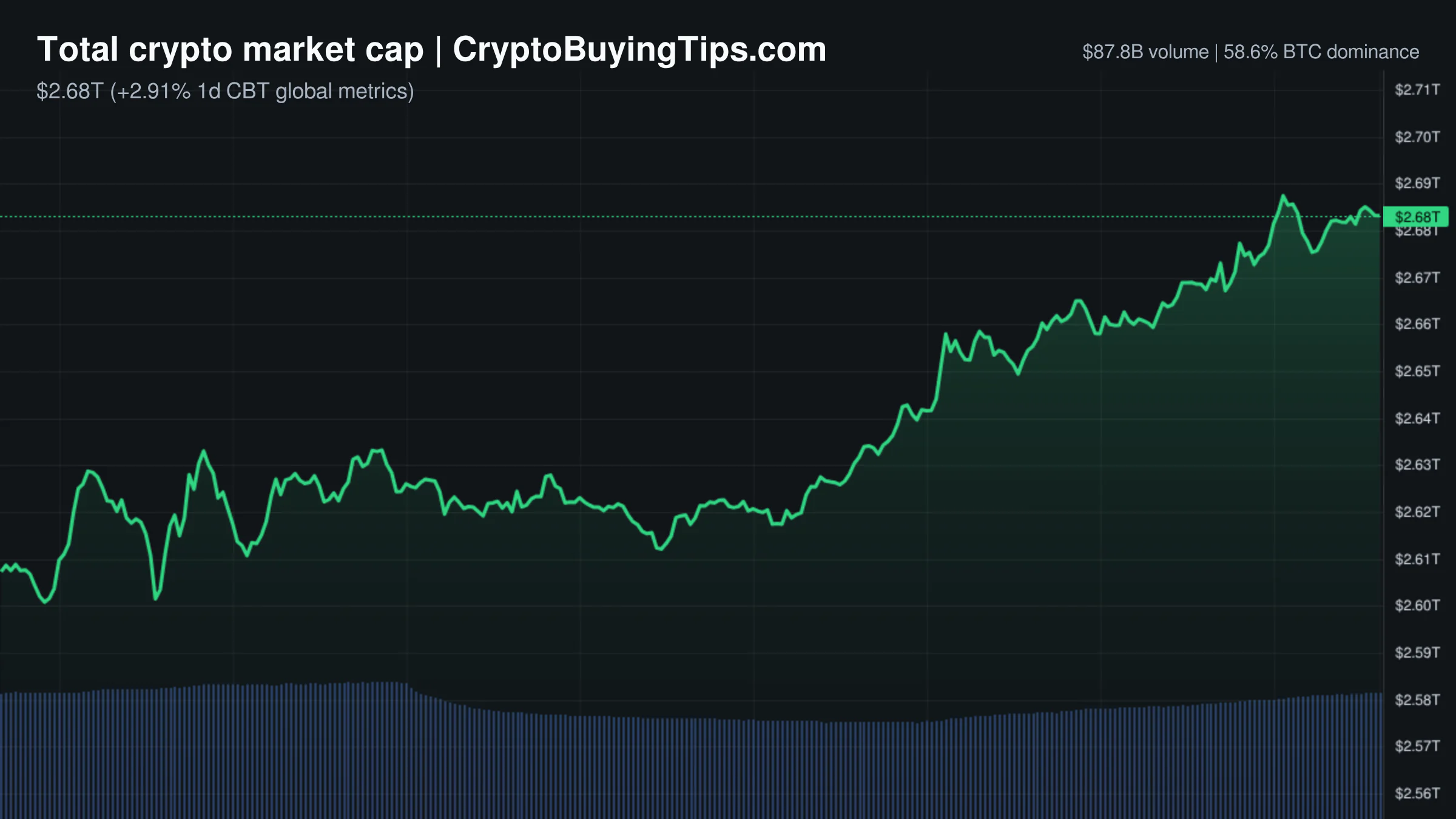
Crypto Market Overview | Leveraged bets dominate as regulatory shifts clash with geopolitical friction | September 18, 2026
The total market cap sits at $2.70T as leveraged bets dominate; see our read on crypto's regulatory clashes and…
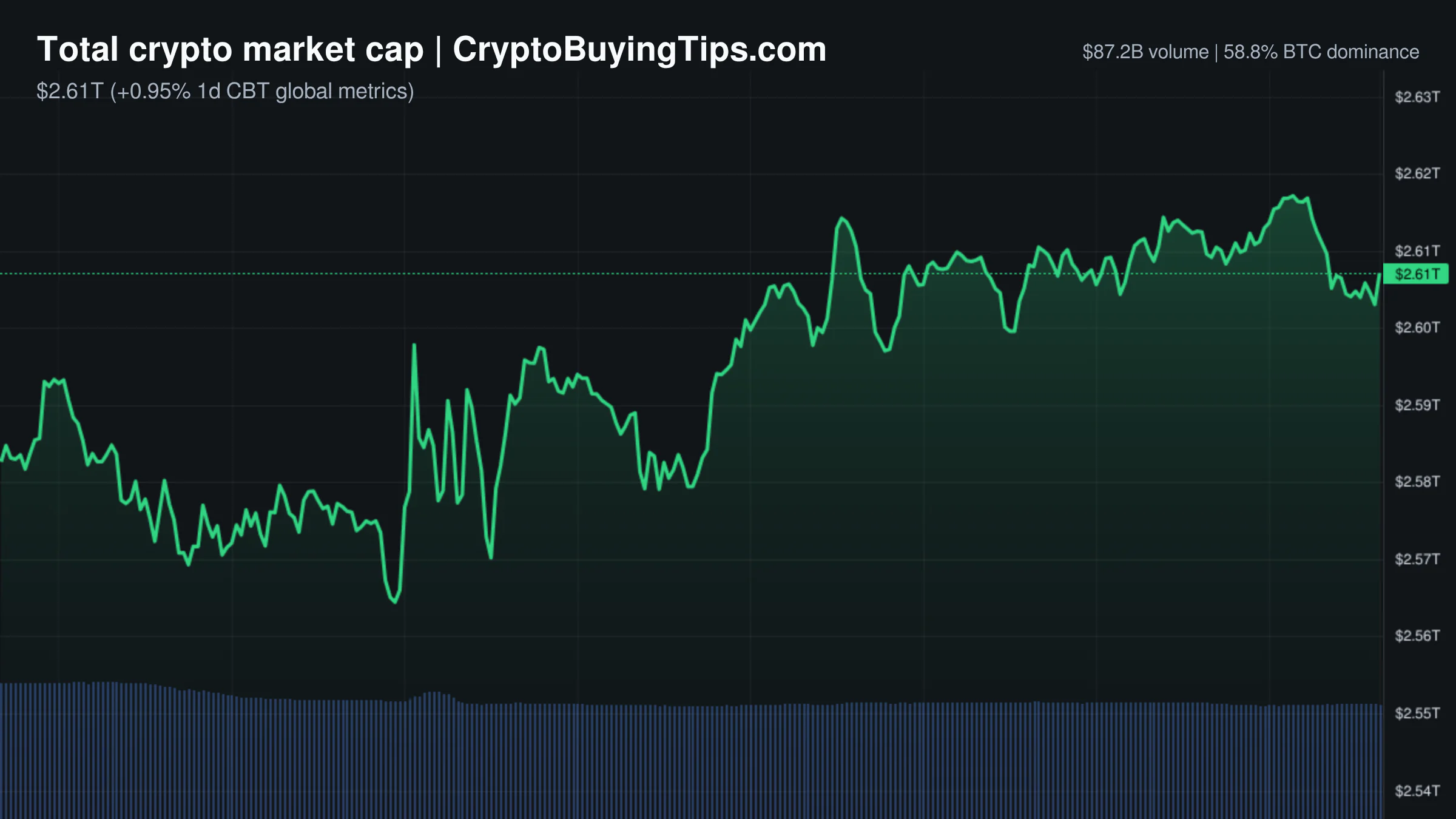
Crypto Market Overview | Fed rate hikes meet derivatives volume despite spot outflows and ETF redemptions | September 17, 2026
Fed rate hikes meet derivatives volume despite spot outflows and ETF redemptions Crypto market overview analysis for…

BlackRock and Visa are now validators, and Circle just built a walled garden for banks
Another layer built for banks means less room for general DeFi mischief. Circle’s Arc mainnet appears designed not as a…