
Ethereum gas fees are at a standstill. Is it time to move your assets back to L1?
If you have been staring at your funds on Arbitrum or Optimism and dreading the cost of moving them back to the main Ethereum network, I have some good news. Gas fees have essentially vanished. We are seeing network costs hit 0.13 Gwei, which is basically the floor. For anyone who has ever been priced out of their own wallet, this is the moment to stop guessing and maybe use an ethereum gas fee calculator for beginners to see exactly how cheap it is right now. For more background, CBT previously covered this in Whales are dumping ETH into Binance while the SEC rewrites the rules.
The short answer
Yes, now is the time to move assets. When gas is this low, the "cost of doing business" on Ethereum L1 disappears. If you have funds sitting in Layer 2s (L2s) that you want to consolidate, or if you want to move assets into a secure hardware wallet for the long term, doing it now will cost you pennies instead of dollars.
How it actually works
To understand why this is a big deal, you have to remember that Ethereum is like a highway. When everyone tries to drive at once, the toll prices (gas fees) skyrocket. When the highway is empty, the tolls drop.
Right now, the highway is a ghost town. On-chain activity has cratered. I've noticed this trend in the data, where DeFi volume has dropped by over 92% in a single day. People are either apathy-stricken or just not interacting with the main chain.
When you move assets from an L2 back to L1, you are performing a "bridge" transaction. This involves interacting with smart contracts on both chains. While L2s are cheap for daily trades, the final step of pulling those funds back to the Ethereum mainnet always requires a bit of L1 gas. At 0.13 Gwei, that cost is negligible.
Where people get tripped up
The biggest mistake I see beginners make is waiting for a "crash" or a "pump" to move their money. By the time a massive price move happens, everyone rushes back to the chain, and gas fees spike instantly. If you wait for the hype to return, you'll be paying $50 for a transaction that costs $2 today.
Another common point of confusion is the difference between "gas" and "gas price." Gas is the amount of computational effort a transaction takes. Gas price (Gwei) is how much you are willing to pay for that effort. Since the price is currently at rock bottom, the total cost of the transaction is what's plummeting.
I also see people leaving their funds on exchanges because they are scared of the "bridge" process. Honestly, keeping your life savings on an exchange is a gamble. If you're moving assets to a secure spot, I recommend using something like the Ledger Nano Gen5. It's a budget-friendly entry point at around $99 that gives you an E Ink touchscreen, which makes verifying those low gas transactions much easier than the old-school buttons.
Putting it into practice
If you have assets scattered across different networks and want to clean house, here is the play:
First, check a gas tracker. If you see Gwei sitting below 5, you are in the green zone. Second, if you are using a bridge, double check that you have a small amount of ETH on the destination chain to cover any future moves.
I've been tracking this divergence for a bit, and as I mentioned in my previous piece about Ethereum being a coiled spring, the fact that volatility is high while fees are low is a weird anomaly. It means the "smart money" is positioning via derivatives, but the actual users are gone.
Don't wait for the retail crowd to wake up. Move your assets to cold storage or consolidate your portfolios while the network is essentially giving you a free ride.
Trade the news at our editorial-picked exchange: Bybit
Related Tickers
Some links in this article may be affiliate links. We may earn a commission at no extra cost to you — this never influences our analysis or coverage.

Sigrid Voss
Crypto analyst and writer covering market trends, trading strategies, and blockchain technology.
More Articles
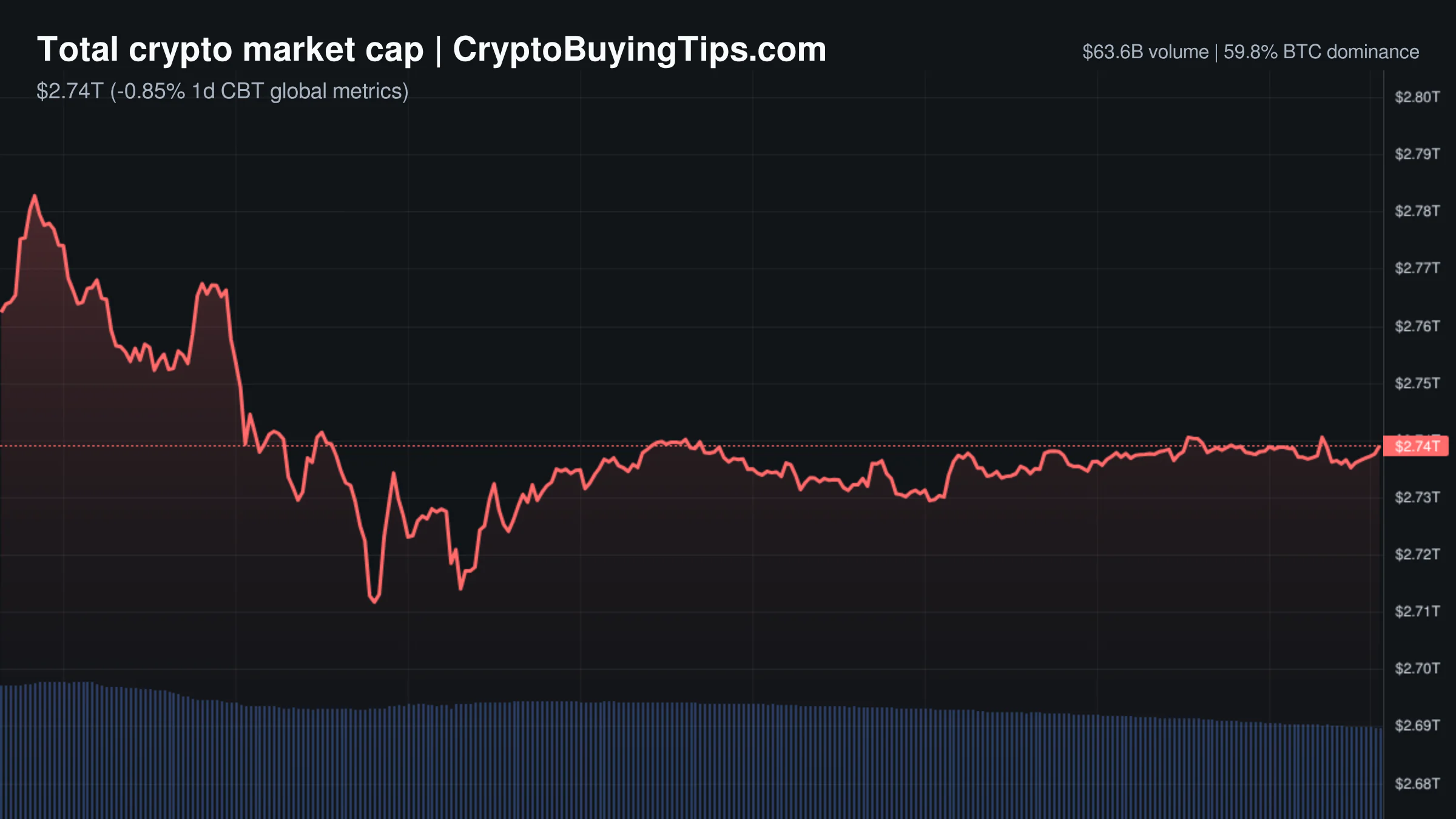
Crypto Market Overview | volume collapse amid macro pressure weighs on institutional flows | October 17, 2026
Market overview shows volume collapse amid macro pressure weighing on institutional flows; see how crypto is reacting to…

Speculators are ditching altcoins for tokenized Tesla stocks
Another day, another reason to question where all the money goes these days. Our signal scanner flagged a clear…
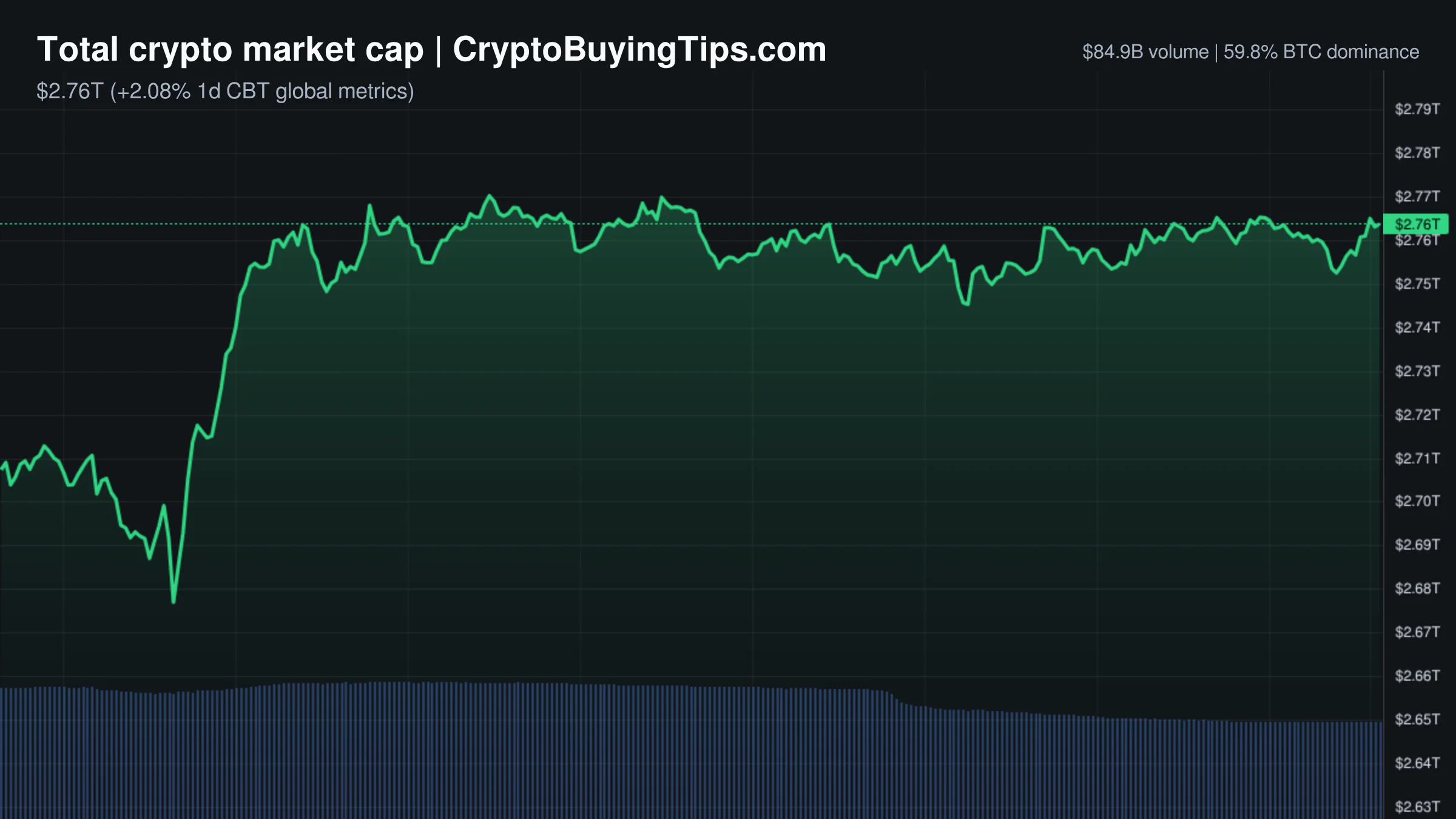
Crypto Market Overview | prices climb despite falling trading volume and stablecoin activity | October 16, 2026
Prices climb despite falling trading volume and stablecoin activity; see our market overview for context.

Wall Street is building its own rules while Congress argues
Wall Street seems to have decided waiting for Congress isn't worth the time. Major players like Mastercard are building…