
Fear is hitting the market but volume is spiking. Here is the trade
The Fear & Greed Index just printed 38. That's firmly in Fear territory. But here's the thing that caught my attention: 24-hour trading volume is up 16.32% to $138.98 billion while the total market cap dropped only 1.24%. This divergence tells me something interesting is happening under the hood, and if you're trying to figure out how to trade crypto during fear and greed, this is the exact setup you need to understand.
I've seen this pattern before. Price drifts lower on light volume, that's a quiet bleed. Nobody's panicking, just slow distribution. But when fear spikes alongside heavy volume, that's different. Someone's actively selling and someone else is aggressively buying. The question is which side you want to be on.
What happened
Let me walk through the numbers because they matter more than the headlines.
Total market cap sits at $2.52 trillion, down 1.24% in 24 hours. Nothing catastrophic there. But look at the activity: spot volume hit $138.98 billion, derivatives volume exploded to $859.43 billion (up 16.86%), and DeFi volume climbed 17.99% to $10.20 billion. Stablecoin volume also jumped 9.58% to $177 billion.
Bitcoin dominance ticked up to 59.91%, and the Altcoin Season Index reads 36 out of 100. That's neutral territory, well below the 75 threshold that signals altcoin season. Money is rotating into Bitcoin, not out of it.
ETH gas fees are sitting at 0.74 Gwei for slow transactions. That's extremely low. It tells me on-chain activity is quiet even though trading volume is hot. People are trading on exchanges, not moving assets on-chain.
Why it matters for your trading decisions
This volume spike during fear creates a specific opportunity, but it also sets a trap.
When derivatives volume dominates spot trading by this much, you're looking at leveraged players driving the action. They get liquidated faster, which creates wicks in both directions. I've watched too many traders try to catch the exact bottom during these setups only to get stopped out when a liquidation cascade pushes price 5% lower before the real bounce.
The smart play here isn't predicting the bottom. It's recognizing that fear with volume means liquidity is present. You can actually enter and exit positions without slippage killing you. That's not always true in quiet markets.
If you're looking to accumulate during this fear phase, you need an exchange that won't eat your margin on fees. I use MEXC for volatile periods because they charge 0% maker fees on spot trading. When you're placing limit orders during a dip, that zero maker fee adds up fast compared to the standard 0.1% most exchanges charge. They list over 2,800 coins too, so you're not limited if you want to diversify beyond BTC and ETH.
But here's what I'm cautious about: if you're buying during fear, you need to hold through the noise. That means getting your assets off the exchange once you've accumulated. I keep my longer-term holdings on a Ledger Nano S Plus. It's around $79, gives you CC EAL6+ certified security, and keeps your private keys offline. After the 2021 exchange hacks I covered as a journalist, I made it a rule: if I'm holding for more than a month, it goes on cold storage.
What I'm watching next
Three things will tell me if this fear is a buying opportunity or the start of something worse.
First, I need to see BTC dominance hold above 59%. If it starts slipping while price stays weak, that means money is leaving crypto entirely, not rotating into altcoins. That's a different signal.
Second, watch the derivatives volume. If it stays elevated while price stabilizes, that's leverage getting rebuilt. Good for the next move up. If derivatives volume collapses while price drops, that's deleveraging and we could see lower lows.
Third, I'm tracking stablecoin volume. The 9.58% increase to $177 billion suggests traders are moving to the sidelines. Rising stablecoin dominance usually means capital is waiting on the sidelines. That's bearish short-term but bullish medium-term because that capital has to go somewhere eventually.
The low ETH gas fees tell me on-chain users aren't panicking. They're just sitting tight. That's actually a good sign. Real distribution usually shows up as high gas fees from people rushing to move assets.
Bottom line
Fear with volume beats fear without volume every time. You have liquidity, you have volatility, and you have a clear signal that the market is repricing rather than slowly bleeding out.
But don't confuse this with a guaranteed bottom. I'm not calling the low here. I'm saying the setup favors active traders who can manage risk and accumulators who can dollar-cost average through the noise. If you're the type who needs certainty, sit this one out. If you can handle seeing your entry down 10% before it works, this is where the opportunity lives.
I've been trading through these setups since 2019. The ones that paid best felt the worst in the moment. That doesn't mean you go all-in. It means you start small, use limit orders, and give yourself room to add if price goes lower.
The market is telling you something with this volume spike. Listen to it.<turn|>
TITLE: Fear is hitting the market but volume is spiking. Here is the trade
The Fear & Greed Index just printed 38. That's firmly in Fear territory. But here's the thing that caught my attention: 24-hour trading volume is up 16.32% to $138.98 billion while the total market cap dropped only 1.24%. This divergence tells me something interesting is happening under the hood, and if you're trying to figure out how to trade crypto during fear and greed, this is the exact setup you need to understand.
I've seen this pattern before. Price drifts lower on light volume, that's a quiet bleed. Nobody's panicking, just slow distribution. But when fear spikes alongside heavy volume, that's different. Someone's actively selling and someone else is aggressively buying. The question is which side you want to be on.
What happened
Let me walk through the numbers because they matter more than the headlines.
Total market cap sits at $2.52 trillion, down 1.24% in 24 hours. Nothing catastrophic there. But look at the activity: spot volume hit $138.98 billion, derivatives volume exploded to $859.43 billion (up 16.86%), and DeFi volume climbed 17.99% to $10.20 billion. Stablecoin volume also jumped 9.58% to $177 billion.
Bitcoin dominance ticked up to 59.91%, and the Altcoin Season Index reads 36 out of 100. That's neutral territory, well below the 75 threshold that signals altcoin season. Money is rotating into Bitcoin, not out of it.
ETH gas fees are sitting at 0.74 Gwei for slow transactions. That's extremely low. It tells me on-chain activity is quiet even though trading volume is hot. People are trading on exchanges, not moving assets on-chain.
How to trade crypto during fear and greed when volume diverges
This volume spike during fear creates a specific opportunity, but it also sets a trap.
When derivatives volume dominates spot trading by this much, you're looking at leveraged players driving the action. They get liquidated faster, which creates wicks in both directions. I've watched too many traders try to catch the exact bottom during these setups only to get stopped out when a liquidation cascade pushes price 5% lower before the real bounce.
The smart play here isn't predicting the bottom. It's recognizing that fear with volume means liquidity is present. You can actually enter and exit positions without slippage killing you. That's not always true in quiet markets.
If you're looking to accumulate during this fear phase, you need an exchange that won't eat your margin on fees. I use MEXC for volatile periods because they charge 0% maker fees on spot trading. When you're placing limit orders during a dip, that zero maker fee adds up fast compared to the standard 0.1% most exchanges charge. They list over 2,800 coins too, so you're not limited if you want to diversify beyond BTC and ETH.
But here's what I'm cautious about: if you're buying during fear, you need to hold through the noise. That means getting your assets off the exchange once you've accumulated. I keep my longer-term holdings on a Ledger Nano S Plus. It's around $79, gives you CC EAL6+ certified security, and keeps your private keys offline. After the 2021 exchange hacks I covered as a journalist, I made it a rule: if I'm holding for more than a month, it goes on cold storage.
What I'm watching next
Three things will tell me if this fear is a buying opportunity or the start of something worse.
First, I need to see BTC dominance hold above 59%. If it starts slipping while price stays weak, that means money is leaving crypto entirely, not rotating into altcoins. That's a different signal.
Second, watch the derivatives volume. If it stays elevated while price stabilizes, that's leverage getting rebuilt. Good for the next move up. If derivatives volume collapses while price drops, that's deleveraging and we could see lower lows.
Third, I'm tracking stablecoin volume. The 9.58% increase to $177 billion suggests traders are moving to the sidelines. Rising stablecoin dominance usually means capital is waiting on the sidelines. That's bearish short-term but bullish medium-term because that capital has to go somewhere eventually.
The low ETH gas fees tell me on-chain users aren't panicking. They're just sitting tight. That's actually a good sign. Real distribution usually shows up as high gas fees from people rushing to move assets.
Bottom line
Fear with volume beats fear without volume every time. You have liquidity, you have volatility, and you have a clear signal that the market is repricing rather than slowly bleeding out.
But don't confuse this with a guaranteed bottom. I'm not calling the low here. I'm saying the setup favors active traders who can manage risk and accumulators who can dollar-cost average through the noise. If you're the type who needs certainty, sit this one out. If you can handle seeing your entry down 10% before it works, this is where the opportunity lives.
I've been trading through these setups since 2019. The ones that paid best felt the worst in the moment. That doesn't mean you go all-in. It means you start small, use limit orders, and give yourself room to add if price goes lower.
The market is telling you something with this volume spike. Listen to it.
Some links in this article may be affiliate links. We may earn a commission at no extra cost to you — this never influences our analysis or coverage.

Sigrid Voss
Crypto analyst and writer covering market trends, trading strategies, and blockchain technology.
More Articles
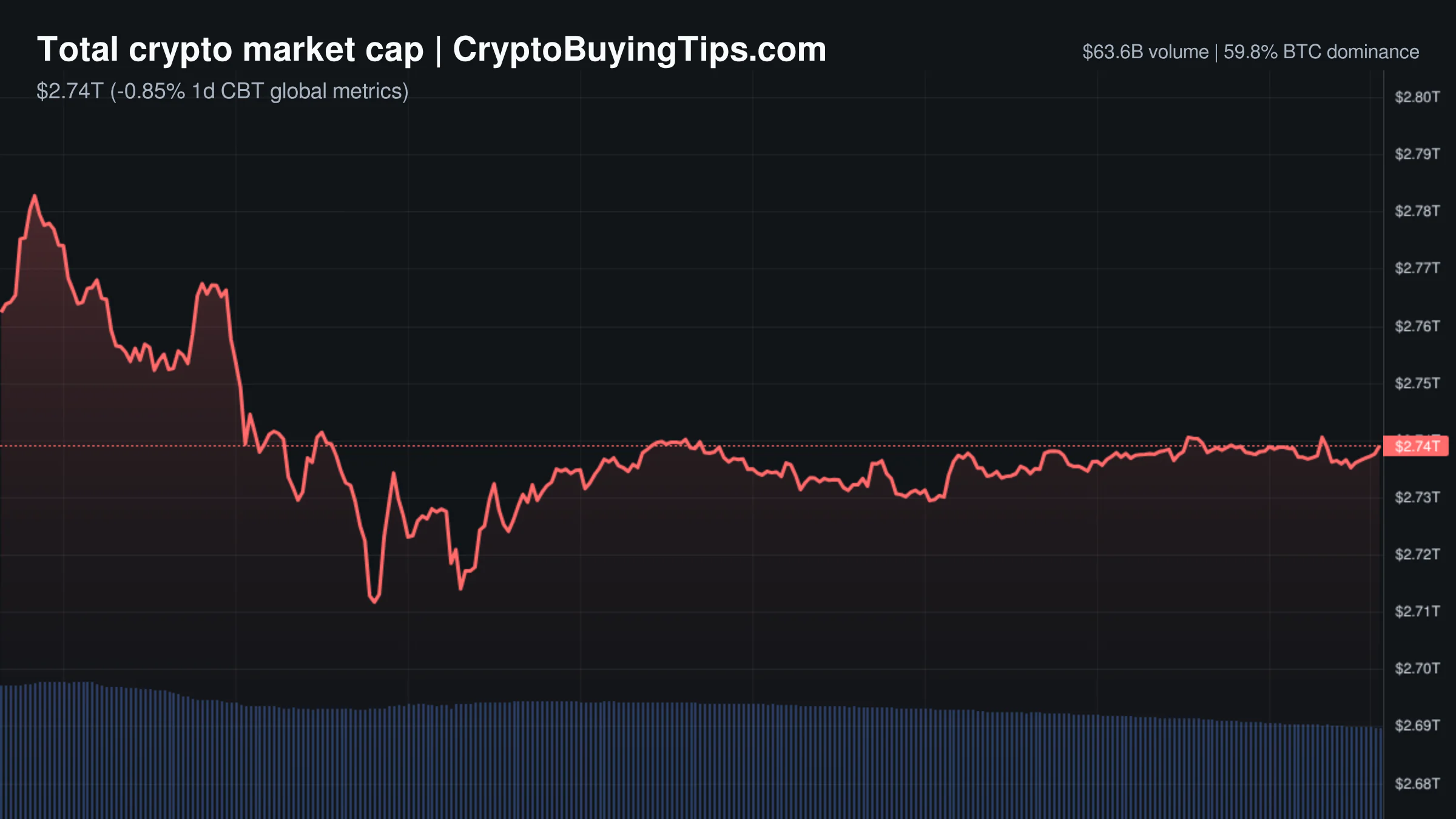
Crypto Market Overview | volume collapse amid macro pressure weighs on institutional flows | October 17, 2026
Market overview shows volume collapse amid macro pressure weighing on institutional flows; see how crypto is reacting to…

Speculators are ditching altcoins for tokenized Tesla stocks
Another day, another reason to question where all the money goes these days. Our signal scanner flagged a clear…
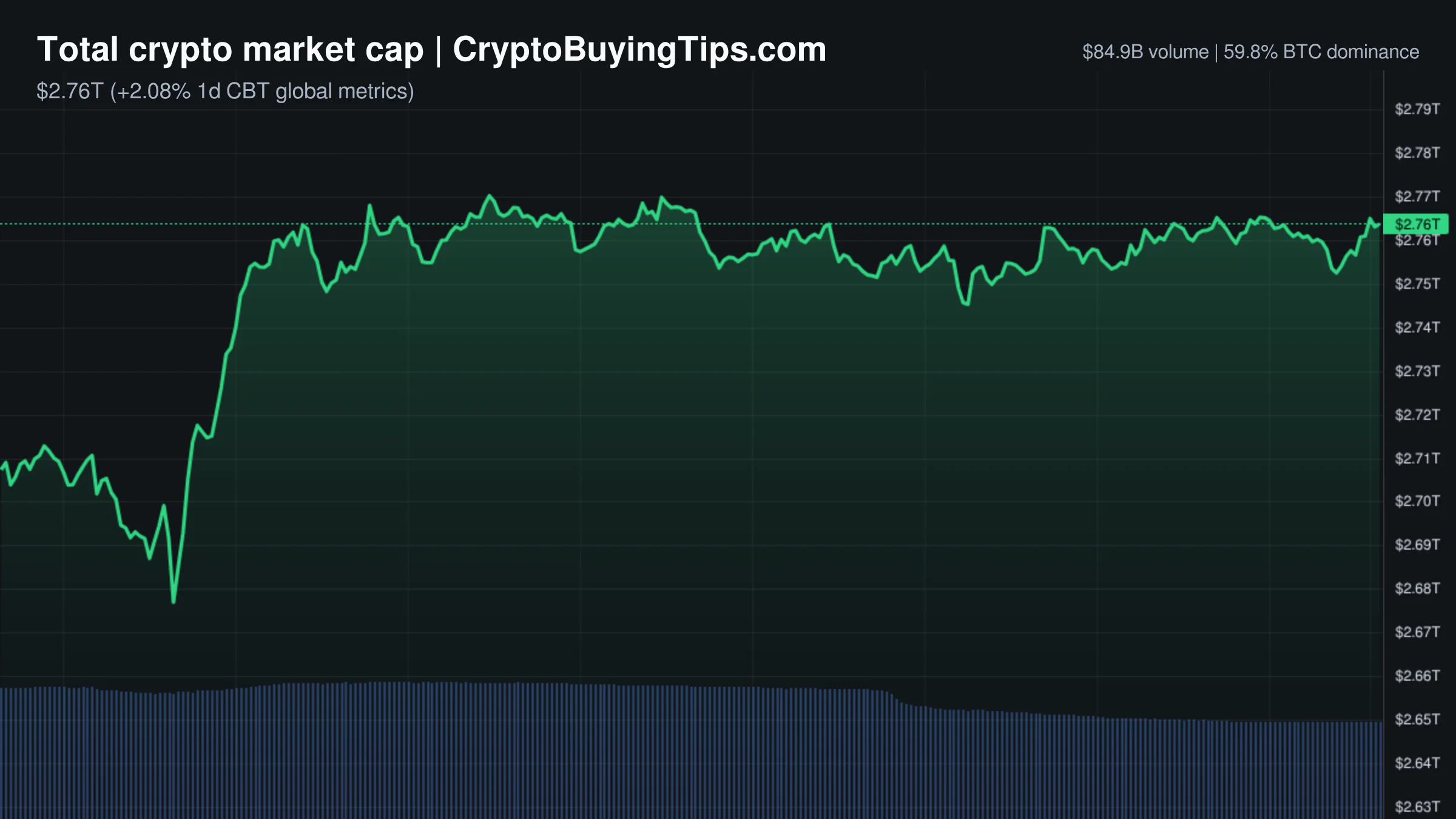
Crypto Market Overview | prices climb despite falling trading volume and stablecoin activity | October 16, 2026
Prices climb despite falling trading volume and stablecoin activity; see our market overview for context.

Wall Street is building its own rules while Congress argues
Wall Street seems to have decided waiting for Congress isn't worth the time. Major players like Mastercard are building…