

Moody's and central banks are legitimizing stablecoins while retail panics
Stablecoin volume rose by +14.18% while the total market cap dipped -1.53%. This gap is where the real story lives. While retail traders are busy staring at red candles, the institutional plumbing is being rebuilt. One of the most significant shifts is the move toward traditional banking charters. For those wondering what does a national trust bank charter mean for crypto, it is essentially an attempt by issuers to stop asking for permission from legacy banks. We previously covered related angles in stablecoin dominance in crypto and rising bitcoin dominance.
The short answer on national trust bank charters
A national trust bank charter allows a crypto company to operate as its own bank. This means they can hold assets and provide custodial services without needing a third-party partner that might freeze their accounts or change their terms on a whim.
Our news scoring system rated the story about Rain seeking a national trust bank charter with a macro impact of 9/10. This is not about DeFi innovation. It is a strategic move to bypass the banking-as-a-service middleman. By securing a charter from the Office of the Comptroller of the Currency (OCC), an issuer can manage its own reserves and settlement rails. It is the financial equivalent of owning the road instead of paying a toll to a bank that doesn't actually like you.
How does what does a national trust bank charter mean for crypto work?
The move toward regulatory legitimacy is a direct response to systemic risk and operational friction. When stablecoin issuers try to secure national trust bank charters, they are trading the move fast and break things ethos for a government-backed seal of approval.
The data suggests that capital is not fleeing the market, but is instead consolidating into these safer rails. We saw 24h volume hit $98.34B, with stablecoin volume specifically jumping by +14.18%. This indicates a high level of activity that doesn't align with the downward trend in total market cap.
This shift is also a hedge against technical instability. Our news scoring system flagged a report from Europol warning that crypto wallets are a primary risk for quantum attacks, giving it a novelty score of 10/10. When the underlying technology feels fragile, a federal charter provides a layer of perceived safety that a smart contract alone cannot offer.
Comparing regulatory signals and the Moody's effect
The contrast in how different assets are being treated right now is stark. US spot Ethereum ETFs saw net outflows of $201.9 million recently. In the meantime, BTC dominance sits at 58.735591841690315, and stablecoin dominance is 9.117992283091647.
While the ETF data looks bearish, the infrastructure data tells a different story. The real shift in legitimacy is coming from ratings agencies. Moody's is now proposing a framework to rate stablecoin obligations. This is a massive departure from the trust us era of stablecoin reserves.
According to their methodology, a stablecoin only gets a rating if its assets are effectively segregated from the issuer's balance sheet cryptonews.net. This means the reserves must be exclusively available to meet holder demands, even if the issuing company goes bankrupt. For an institutional treasurer, a credit rating from Moody's is a far more important signal than a bullish tweet. It transforms a stablecoin from a speculative tool into a legitimate financial instrument.
The bottom line
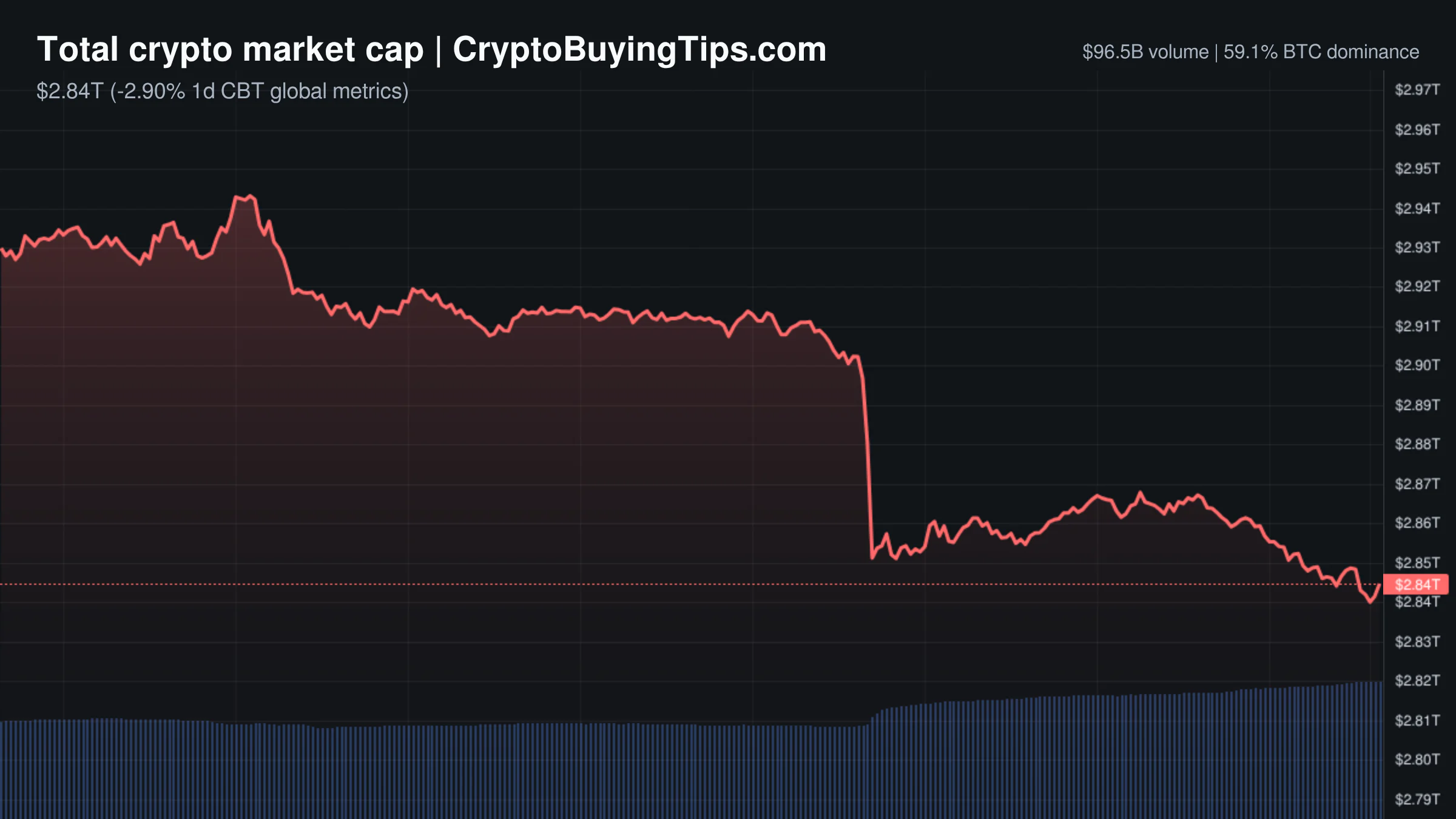
The market is currently in a strange state. We have a total market cap of $2.82T that is drifting lower, yet the systems that allow money to move are becoming more professional.
The pursuit of OCC charters and Moody's ratings suggests that the adults in the room are not panicking. They are building a walled garden where they can move billions of dollars without worrying about the volatility of the broader market or the whims of a legacy bank. Retail may be focused on the dip, but the plumbing is being upgraded for a much larger scale of capital.
Some links in this article may be affiliate links. We may earn a commission at no extra cost to you — this never influences our analysis or coverage.

Sigrid Voss
Crypto analyst and writer covering market trends, trading strategies, and blockchain technology.
More Articles
Crypto Market Overview | volume spikes amid institutional inflows despite quantum fears | October 7, 2026
Crypto market overview shows volume spikes amid institutional inflows despite quantum fears; see how ETF flows contrast…

What is stablecoin dominance and why it is the most ignored lead indicator in crypto
The market seems greedy on paper, but our data suggests otherwise; stablecoin dominance acts as the true measure of…
Crypto Market Overview | Leveraged derivatives volume dwarfs spot trading amid institutional infrastructure developments | October 6, 2026
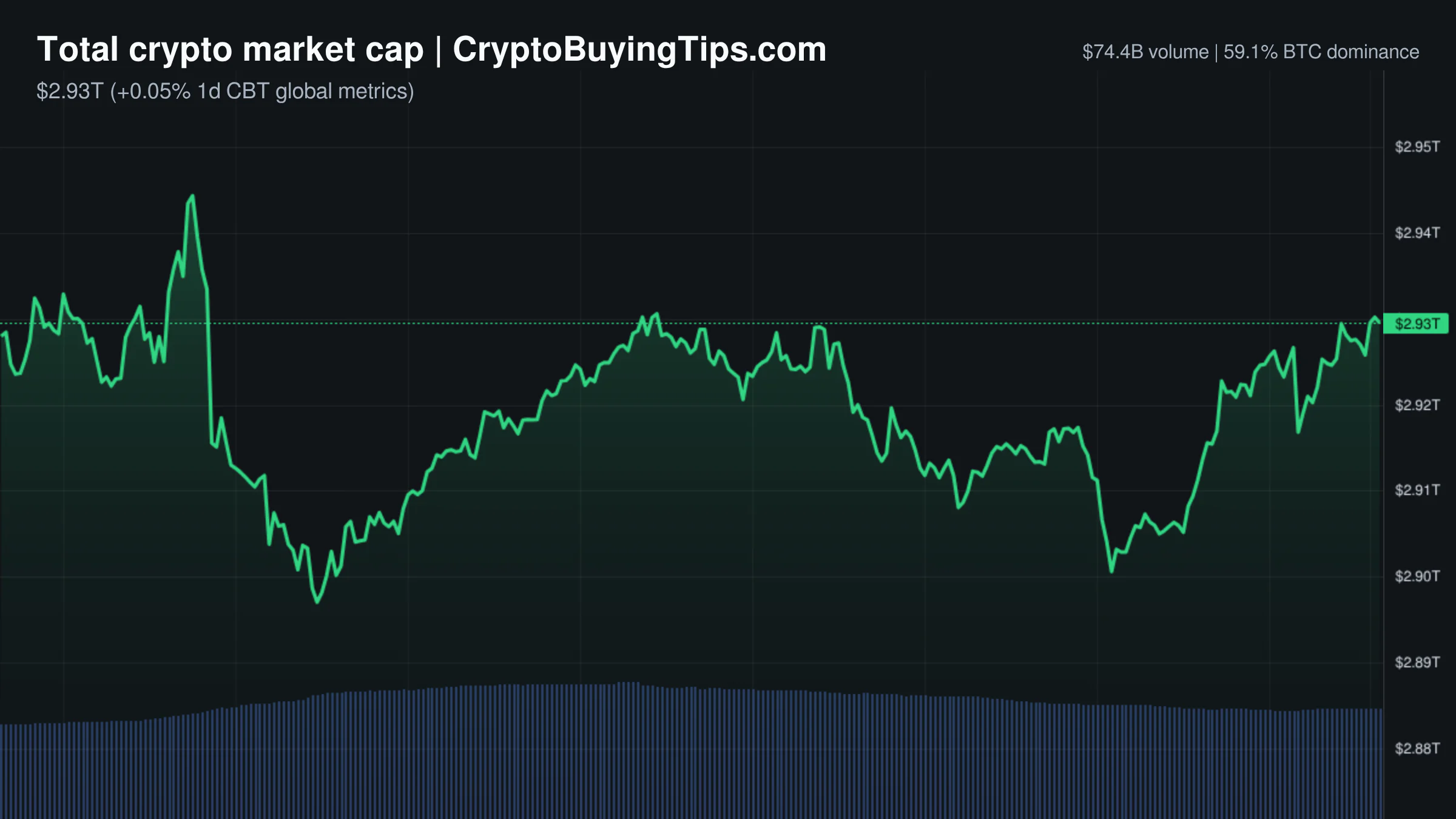
Leveraged derivatives volume dwarfs spot trading at $2.93T market cap; see how institutional infrastructure developments…

Solana just tried to fire the clearinghouses
Another day, another attempt to make old banking rails look quaint. Solana’s Delivery-versus-Payment (DvP) rail is less…