

The $763 billion leverage trap masking a fake recovery
The market looks like it is recovering, but the numbers under the hood tell a completely different story. We are seeing a dangerous disconnect where the total market cap is ticking up, yet the Fear & Greed Index is sitting at a bone-chilling 15. When you see "extreme fear" paired with rising prices, it usually means the move is not organic. To understand why this is a red flag, you have to understand the difference between spot and perpetual futures. In simple terms, spot is when you actually buy the coin and own it. Perpetual futures are bets on the price that use leverage to amplify gains (and losses). Right now, the derivatives volume is $763.87B, while spot volume is a measly $84.6B. That is a massive gap that suggests this "recovery" is being driven by gamblers, not investors. We previously covered Derivatives Volume Crash Signal for more background.
Why the derivatives skew is a warning
When spot volume is high, it means people are actually accumulating assets for the long term. It creates a solid floor for the price. But when derivatives volume dwarfs spot trading, the price is being pushed by leverage.
In my experience, this is how "fake" rallies start. Traders open massive long positions using borrowed money. This pushes the price up, which attracts more leverage, creating a feedback loop. But because the actual spot demand is low, there is no real support. The moment the price dips, these leveraged positions hit their liquidation price. This triggers a chain reaction of forced selling, which we call a liquidation cascade.
We have seen this pattern before. I remember writing about a similar leveraged trading trap where high open interest during a period of fear led to a volatility squeeze. The current data is even more skewed. With perpetuals open interest at $376.74B, the market is essentially a powder keg waiting for a spark.
How funding rates create the trap
If you are new to this, you need to watch funding rates. In the perpetual futures market, funding rates are periodic payments made between long and short traders to keep the contract price close to the actual spot price.
When everyone is bullish and piling into longs, the funding rate goes positive. Longs have to pay shorts to keep their positions open. If the funding rate gets too high, it becomes expensive to hold a long position. Traders start closing their bets just to avoid the fee, which puts downward pressure on the price.
Combine high funding rates with a Fear & Greed score of 15, and you have a recipe for disaster. You have a market that is terrified, yet somehow heavily leveraged to the upside. This divergence is usually a sign that the "smart money" is positioning for a crash while retail traders are trying to catch a falling knife with 100x leverage.
Where the risk is highest
I am particularly concerned about the volatility in Ethereum. Its implied volatility is currently at 69.93%, significantly higher than Bitcoin's 49.72%. This means the market expects ETH to swing much more violently.
If you are trading these volatile assets, you have to be careful about where you keep your funds. I personally avoid leaving large amounts of capital on exchanges during these high-leverage phases. If a liquidation cascade happens, exchanges can sometimes lag or freeze during the chaos. I use a Ledger Flex because it gives me a secure E Ink touchscreen to verify transactions without the risk of exchange insolvency or hacks. It is a mid-range option that keeps my private keys offline, which is the only way to truly sleep at night when the derivatives market is this unstable.
My take on the current setup
I am not saying a crash is guaranteed tomorrow, but I am saying this recovery is built on sand. The S&P 500 is down 2.58% and the NASDAQ is down 4.80%, showing that the broader macro environment is risk-off. Crypto usually follows this trend, but the derivatives market is trying to fight the tide with leverage.
I prefer to see a "healthy" rally where derivatives volume drops while prices rise. That shows a shift from speculation to genuine accumulation. Right now, we have the opposite. We have a market where the bets are huge, the fear is extreme, and the actual buying of coins is lagging.
I will be watching the $2.18T total market cap closely. If we see a sharp drop in price while derivatives volume stays high, expect a violent flush of long positions. Until I see spot volume catch up to the derivatives madness, I am treating this recovery as a trap.
Some links in this article may be affiliate links. We may earn a commission at no extra cost to you — this never influences our analysis or coverage.

Sigrid Voss
Crypto analyst and writer covering market trends, trading strategies, and blockchain technology.
More Articles

Derivatives volume is 8x higher than spot. Here is why that is a warning
The market's current price action seems to be driven by bets rather than cash; with derivatives volume eight times…
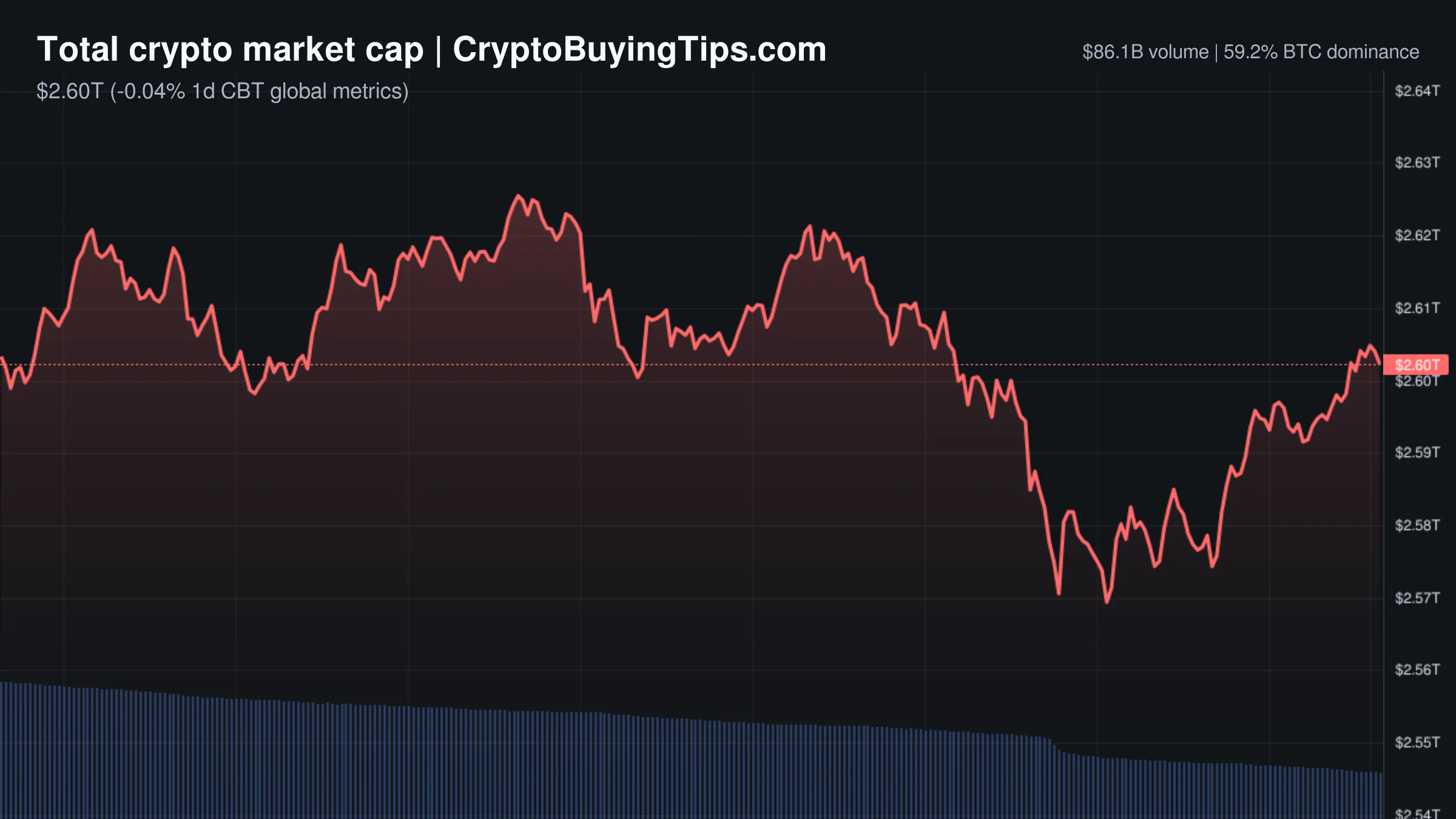
Crypto Market Overview | volume collapses as greed persists amid regulatory friction | August 23, 2026
Volume collapses as greed persists amid regulatory friction; see our market overview on crypto's current state and key…

Brussels is coming for DeFi vaults and the market is ignoring the risk
Brussels seems to think "decentralized" is just an aesthetic choice for now. Our read suggests MiCA regulation isn't…
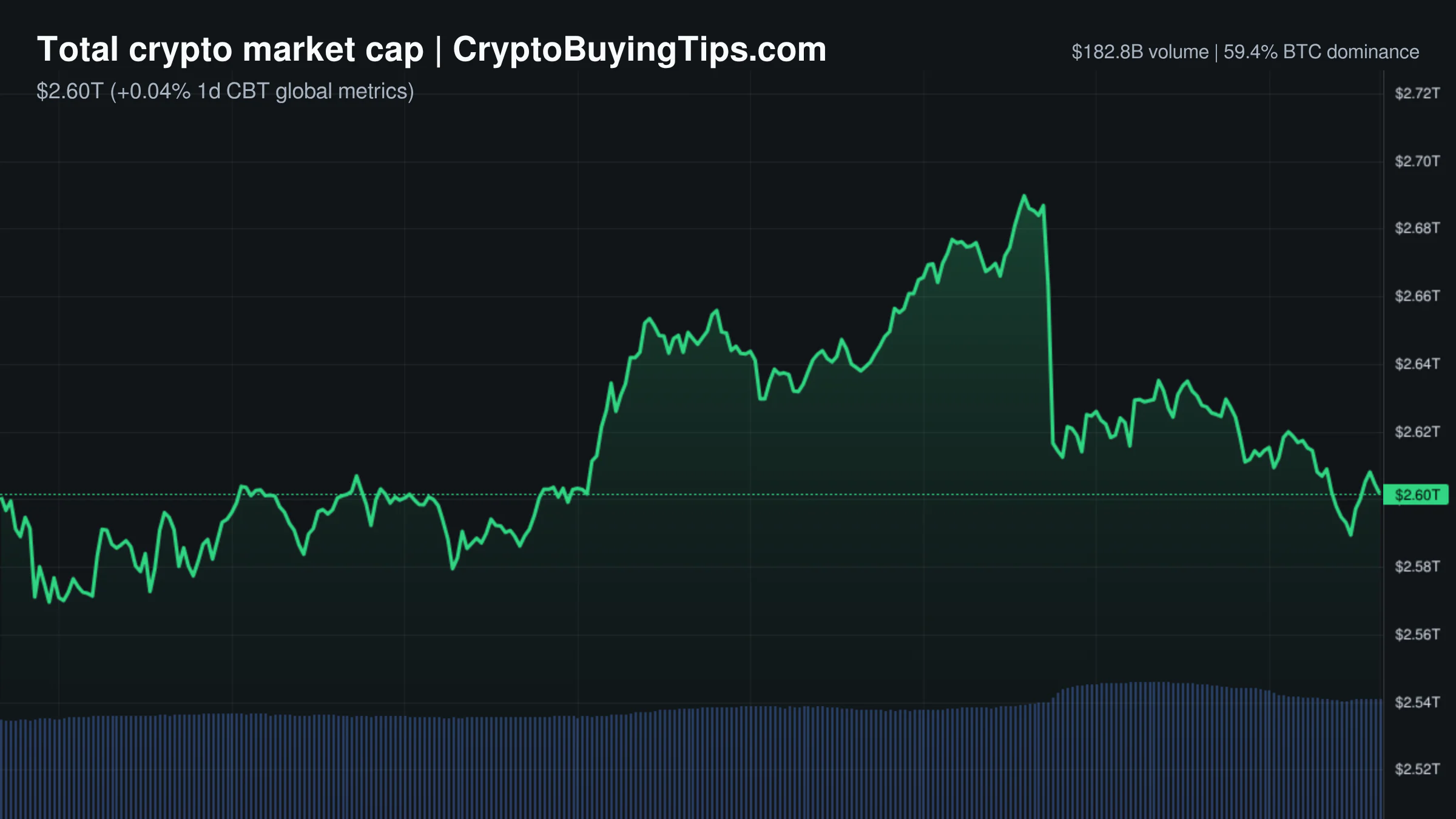
Crypto Market Overview | Spot accumulation rises while derivatives volume cools | August 22, 2026
Spot accumulation rises while derivatives volume cools in this market overview of crypto activity and macro drivers for…