
Crypto Market Overview | liquidity vacuum amid extreme fear and institutional retreat | June 28, 2026
Crypto Market Overview | liquidity vacuum amid extreme fear and institutional retreat | June 28, 2026
Market overview
The crypto market is currently experiencing a synchronized collapse in activity. It is not merely a price correction, but a disappearance of interest across the board. Spot volume is down 38.69%, derivatives volume has fallen 36.53%, and stablecoin volume has dropped 38.93%. This level of coordination in a downturn suggests a genuine liquidity vacuum. When traders stop fighting and simply stop trading, the result is a stagnant, drifting market.
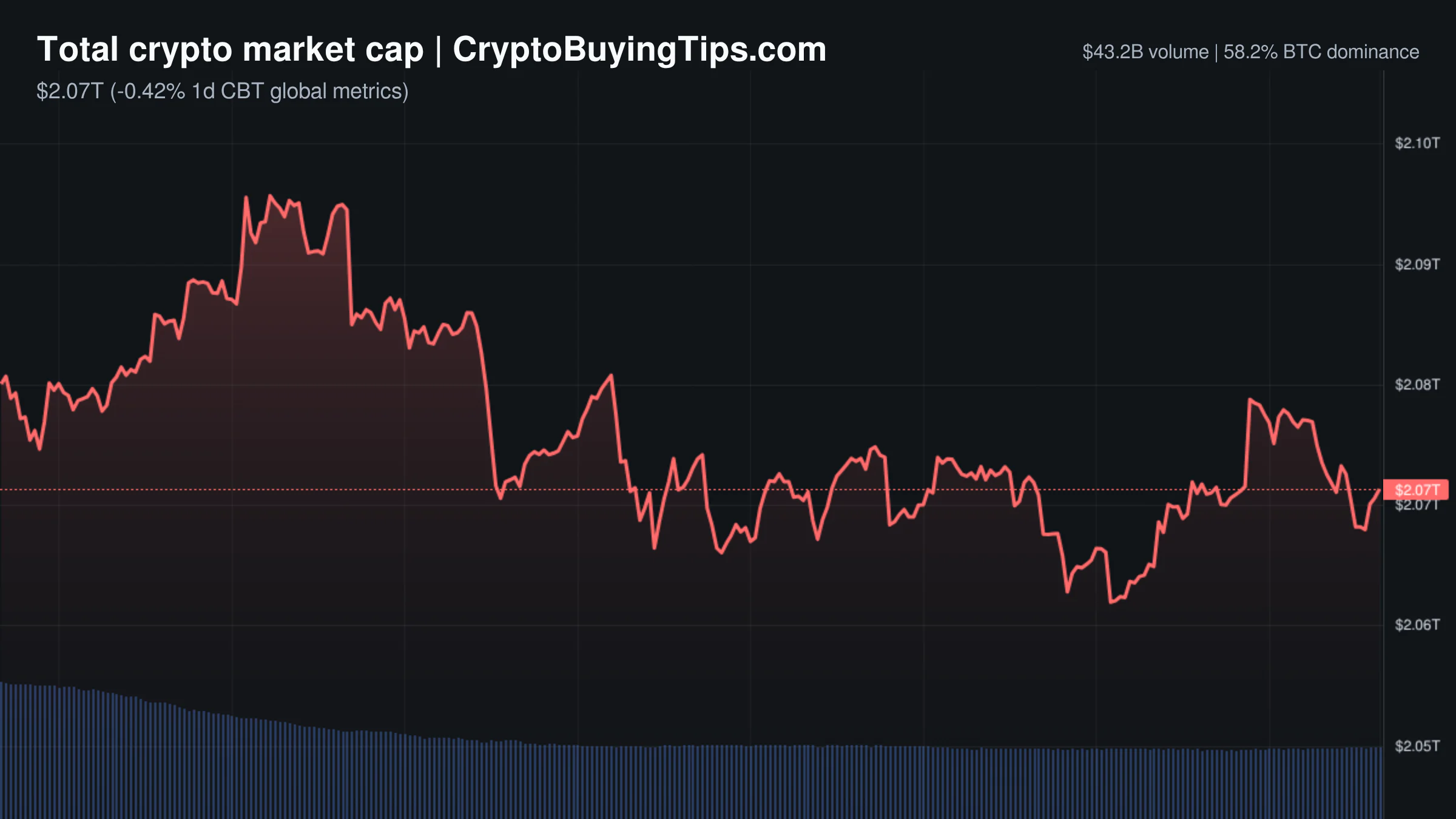
Sentiment has shifted into a state of severe distress. The Fear and Greed Index sits at 17, marking a period of extreme fear. This psychological floor usually coincides with the most pessimistic phase of a cycle, yet the data shows no sign of a bottom. The total market cap has dipped to $2.07T, while the S&P 500 and NASDAQ are also in the red. This indicates a broader risk-off mood where capital is fleeing volatile assets for the safety of the sidelines.
Bitcoin dominance has crept up to 58.16%, which is a typical reflex during market stress. Investors tend to retreat to the largest asset when the altcoin market begins to bleed. The Altcoin Season Index is at 48, which is neutral. This means there is no clear rotation into riskier assets, and the market is effectively waiting for a catalyst that does not currently exist.
Bitcoin and Ethereum
Bitcoin is facing a period of genuine capitulation risk. Nearly 50,000 BTC were recently shifted to exchanges at a loss, a signal that short-term holders are reaching a breaking point. The institutional facade is also cracking. Average IBIT investors are down roughly 40% as spot ETFs just finished their second-worst week on record. This marks the seventh straight negative week for the category. It is a rare instance where the institutional bid is not just absent, but actively retreating.
Fidelity has attempted to steady the ship by rebutting claims that the network becomes less secure after halvings. While the technical argument is sound, the market is currently ignoring fundamentals in favor of price action. The threat of a $3 billion sell-off from Strategy to cover cash obligations, as suggested by Grayscale's research head, hangs over the order books. If that liquidity hit occurs without a corresponding bid, the move could become disorderly.
Ethereum is in a worse position. Network activity has effectively vanished. Gas fees have plummeted to 0.06 Gwei, which is the on-chain equivalent of a ghost town. The lack of utility is compounded by infrastructure failures. A sequencer bug on Base caused back-to-back outages, which damages the narrative that Layer 2s are ready for mass adoption. When the plumbing fails during a downturn, trust evaporates quickly.
Top crypto prices
Direct price data for the top coins is unavailable, but the broader indices provide a clear picture. The CMC20 Index is down 0.48% to 121.74, and the CMC100 Index has fallen 0.51% to 116.36. These figures confirm that the decline is systemic rather than isolated to a few failing projects. The broad-based nature of the drop suggests that the current sell-off is a macro-driven event rather than a protocol-specific crisis.
News driving today's market
The regulatory environment in Europe is creating a chaotic scramble for users. Binance has failed to secure a MiCA license by the July 1 deadline, forcing it to suspend several services in the EU. This has left a vacuum that Coinbase and OKX are aggressively filling with sign-up bonuses and deposit matching. We previously covered how Mica crypto regulation explained is essentially a cull of non-compliant players. The fact that a giant like Binance is struggling with these hurdles suggests that the era of "move fast and break things" in the EU is over.
In a rare bullish development, institutional interest in decentralized AI remains resilient. Yuma, backed by Digital Currency Group, has launched a fund to give institutional investors exposure to the Bittensor ecosystem. This simplifies access to TAO and various AI subnets. While network trackers show a discrepancy in subnet values, the move by DCG suggests that the AI narrative is the only one with enough momentum to attract new capital in this environment. We previously covered tokenizing stocks trap for more background.
The stability of the system is being tested by security failures. Polymarket suffered a $3.1 million hack after a third-party vendor injected a malicious script into its frontend. This happened while the platform is already under federal investigation for deceptive promotions. When a protocol is fighting both hackers and the government, the risk profile becomes unattractive for most traders.
Tether is attempting to bridge traditional finance and crypto liquidity by allowing XAUT holders to borrow against their gold stockpile. This bullion-backed loan mechanism is a clever way to introduce liquidity without forcing users to sell their underlying assets. It is a sophisticated move, but it is unlikely to offset the massive outflows seen in the BTC ETF market.
Social intelligence
Geopolitical tension is currently the primary driver of risk appetite. Reports from the Iranian parliament's national security committee suggest that the U.S. has shown no commitment to ceasefire principles, with warnings of "retreat and regret." In the crypto world, this usually translates to a flight to safety, though that safety is currently being found in cash rather than Bitcoin.
On the regulatory front, Spain's securities regulator has confirmed there will be no extensions to the July 1 MiCA deadline. This puts immense pressure on any exchange that hasn't finalized its compliance. The market is now pricing in the possibility of sudden restrictions across the EU, which adds to the bearish momentum.
There is a slight divergence in tech sentiment. Elon Musk's SpaceX is set to join the Nasdaq 100 on July 7. Normally, such a move would signal a risk-on appetite for the tech sector. However, the crypto market is not following suit. This suggests a decoupling where traditional tech indices are viewed as a safer bet than digital assets.
Trading ideas worth watching
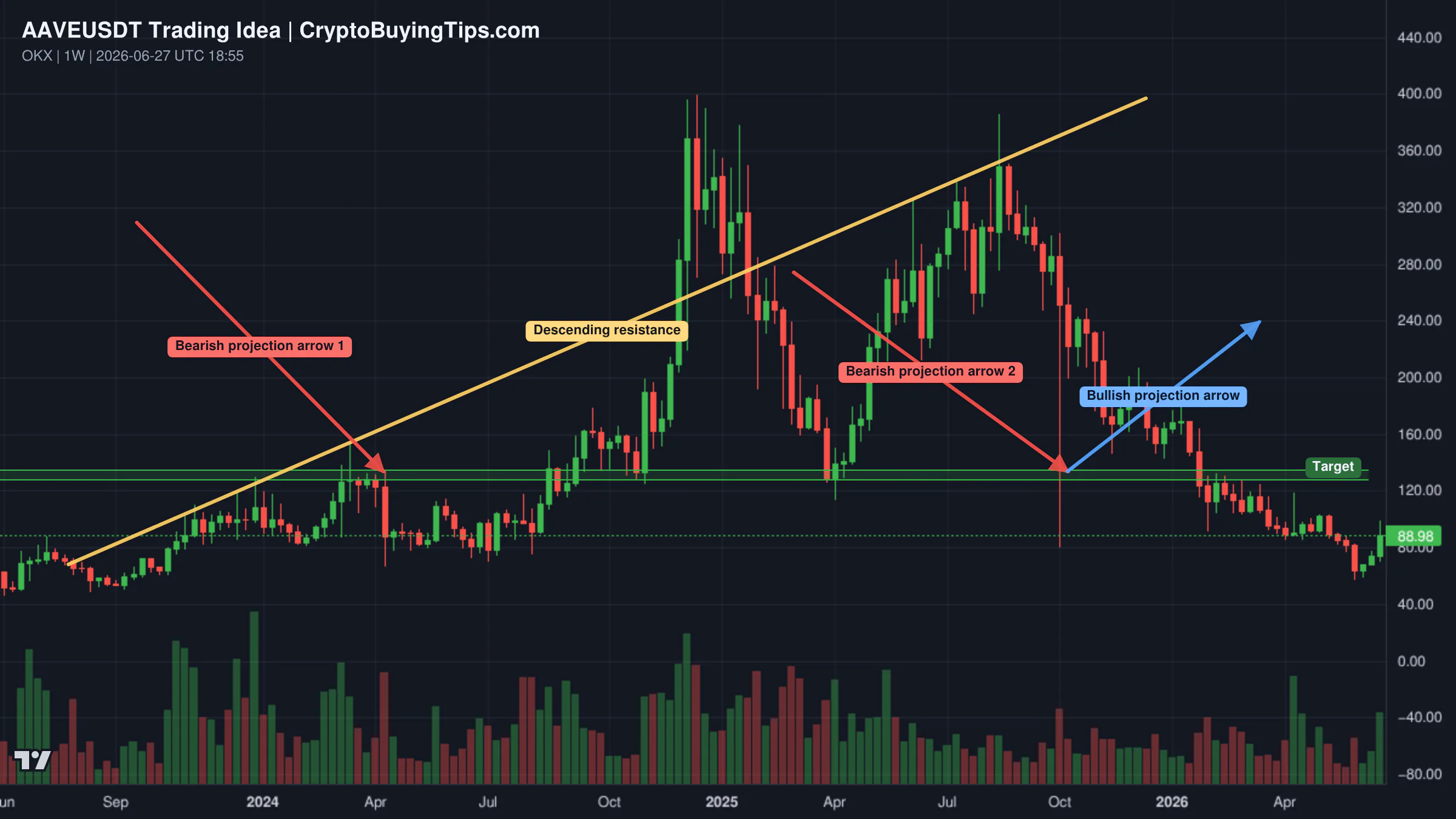
AAVE is showing surprising resilience. Analysis of the weekly chart suggests the asset is attempting to build a base after a prolonged decline. Historically, AAVE spends a significant amount of time in sideways consolidation before a sustainable bull trend begins. The current target for this recovery is the $127 to $135 area. Traders should remain conservative here; while momentum has improved, the asset still needs to prove it can hold a base before anyone gets carried away with optimism.
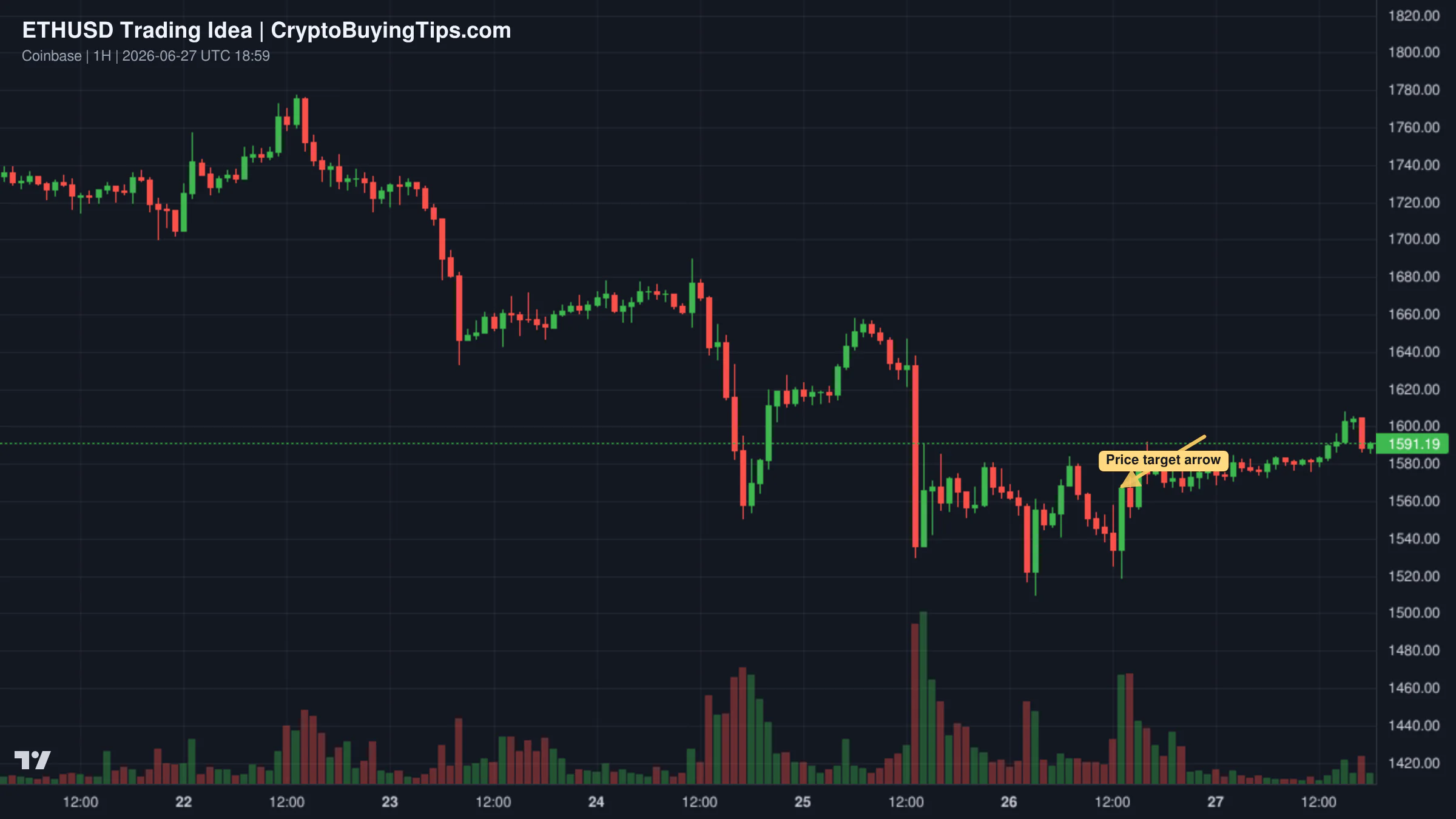
Ethereum currently has a bearish bias. The price is retesting a broken horizontal supply area after a corrective bounce. Smart Money Concepts suggest this mitigation will likely attract fresh sellers, which could drive the price toward lower liquidity pools and imbalances. Given the lack of on-chain activity and the Base network issues, the path of least resistance for ETH remains down.
Smart Money Signals — Hyperliquid Leaderboard
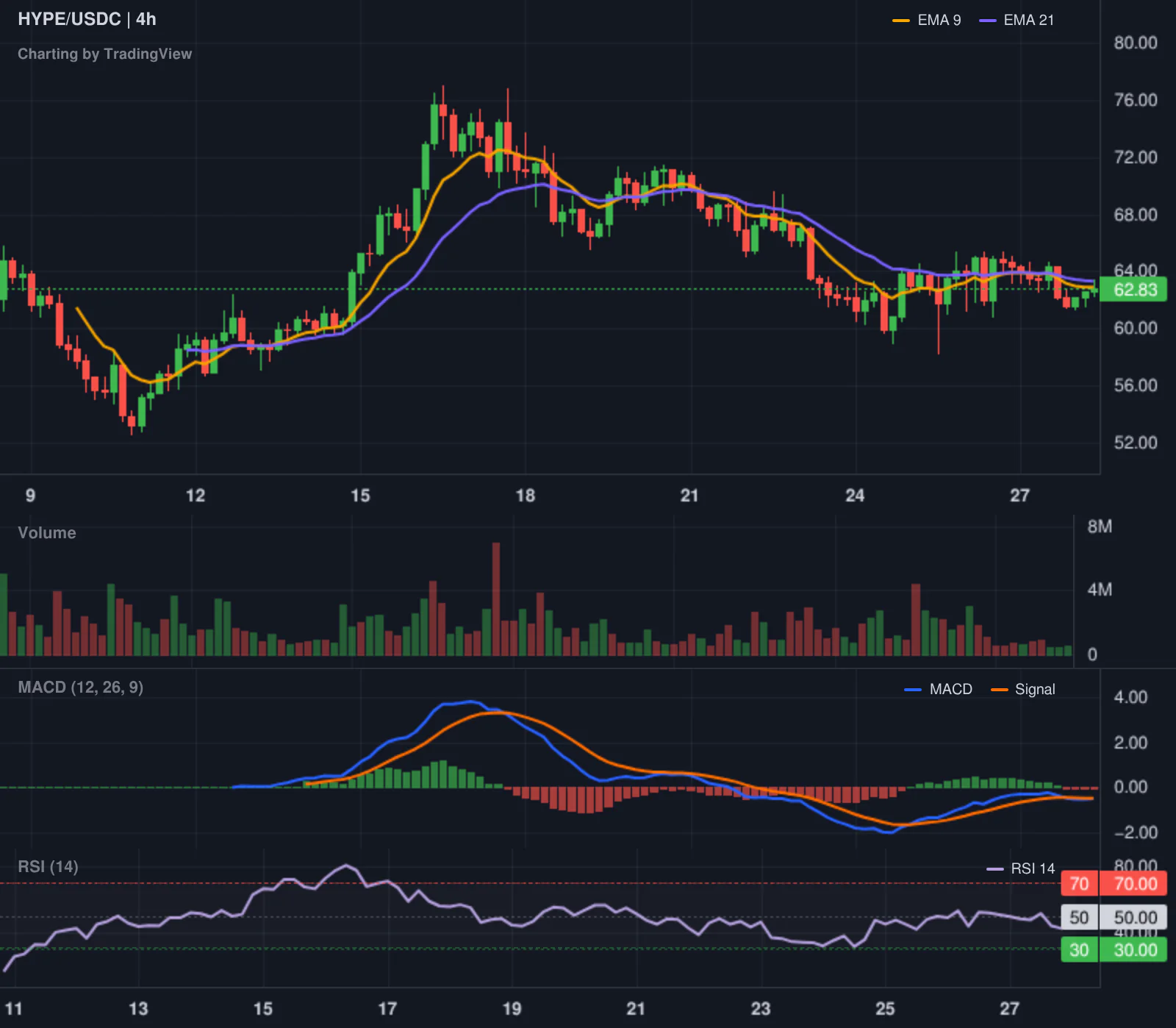
Our tracker has flagged a high-confidence move from a top trader on Hyperliquid. A trader with a 193% 30-day ROI has opened a long position in HYPE/USDC at an entry price of $61.8. The notional value of the trade is $118,431. This is a significant bet on a specific asset during a period of extreme fear. While the broader market is retreating, this level of conviction from a high-performing wallet suggests that some "smart money" is hunting for the local bottom in AI-adjacent tokens.
Altcoin Spotlight
Bittensor deserves attention despite the general market carnage. The launch of the Yuma fund brings a level of institutional legitimacy that few other altcoins possess right now. With a market cap of nearly $2.4 billion, TAO is becoming the primary vehicle for those who want exposure to decentralized AI without managing individual subnets. The discrepancy between Yuma's valuation of subnets and the data from Taostats is a point of caution, but the institutional flow is the metric that actually moves the price.
What to watch next
The next 72 hours are critical. The July 1 MiCA deadline is the immediate catalyst. If major exchanges are forced to restrict services across the EU, we could see another wave of forced selling as users scramble to move funds.
Beyond regulation, the market is staring at the potential $3 billion sell-off from Strategy. If that occurs, the current "extreme fear" might actually look optimistic. We are also watching the 53% drawdown of Bitcoin. While this is the shallowest bear market on record, it provides a false sense of security. The real test will be whether the IBIT outflows finally peak or if we are entering a deeper phase of institutional distribution.
Some links in this article may be affiliate links. We may earn a commission at no extra cost to you — this never influences our analysis or coverage.

Sigrid Voss
Crypto analyst and writer covering market trends, trading strategies, and blockchain technology.
More Articles

Ethereum gas is at 0.04 Gwei and the network is a ghost town
The market feels extremely greedy for Ethereum price action, yet transaction fees suggest nobody's actually using it.…
Crypto Market Overview | leverage driving bitcoin's move amid institutional adoption and geopolitical risk | August 25, 2026
The market shows contradiction as leverage drives bitcoin's move amid institutional adoption and geopolitical risk…

Coinbase is putting stocks on Base, but the money is still in Bitcoin
Coinbase has launched tokenized stocks on Base, which sounds rather sophisticated for mere digital shares. However, our…
Crypto Market Overview | Leverage-driven rally amid strong ETF inflows as BTC targets 80k | August 24, 2026
Leverage-driven rally sees BTC near 80k amid strong ETF inflows; see our market overview on current crypto dynamics.