

Alex Mashinsky is banned for life from crypto. Here is why it actually matters
The crypto world is currently obsessed with Bitcoin dominance and the latest ETF flows, but we're ignoring a massive regulatory signal. The lifetime ban of Alex Mashinsky isn't just a "justice served" moment for the people who lost everything in the Celsius collapse. It is a legal precedent. For those wondering can alex mashinsky start a new crypto company, the short answer is that the legal walls are closing in. This isn't just about one guy who lied about yields; it's about how the US government intends to handle centralized founders who treat customer deposits like a personal piggy bank.
What actually happened
For those who skipped the court filings, the FTC and other regulators have effectively locked Mashinsky out of the industry. This isn't a slap on the wrist or a fine that a billionaire can just write off as a cost of doing business. We're talking about a permanent ban from participating in the operation or management of any crypto asset business.
I remember the early days of Celsius when they were promising 18% yields on "safe" deposits. It sounded too good to be true, but in the 2021 euphoria, nobody cared. Mashinsky spent years acting as the face of "safe" crypto banking, only for it to be revealed that the internal risk management was a joke. The legal fallout is finally catching up, and the lifetime ban is the most aggressive move we've seen against a founder since the early days of the FTX collapse.
Why the ban is a signal for the industry
This ban tells me that the "move fast and break things" era of centralized crypto is officially over. In the past, founders could hide behind the complexity of the tech or claim they didn't understand the regulations. That excuse doesn't work anymore.
The government is shifting from targeting the companies to targeting the individuals. When a company goes bankrupt, the entity dies, but the founder often walks away with a golden parachute. By banning Mashinsky for life, the regulators are saying that the individual is responsible. This creates a massive deterrent for any current CEO who thinks they can manipulate their token's price to hide a hole in their balance sheet.
I'm also seeing a pattern here. If you look at how the EU is banning Russian platforms or how Canada is cracking down on crypto ATMs, there is a clear trend. Regulators are no longer trying to "understand" crypto. They are just applying the law to it.
Can alex mashinsky start a new crypto company?
If you're asking can alex mashinsky start a new crypto company, the legal answer is a resounding no, at least in any jurisdiction that respects the FTC's reach. A lifetime ban isn't just a suggestion. If he tries to launch a new project or take a leadership role in a protocol, he'll be in contempt of court.
But here is the nuance: we're in a world of decentralized protocols. Could he launch a "community-led" project where he is just an "advisor" or a "whale" with a large amount of tokens? Maybe. But the moment he exercises control or manages funds, he's back in the crosshairs. I think the era of the "celebrity founder" who can pivot from one failed project to a new one is ending. The regulators have his fingerprints all over the Celsius wreckage, and they aren't letting him build another house of cards.
My take on the future of centralized crypto
I've been watching this market since 2019, and if there is one thing I've learned, it's that centralization is the single biggest point of failure in this entire space. Every time someone tells you that you can get "bank-like" returns with "crypto-like" gains in a centralized account, run the other way.
The Mashinsky ban is a reminder that the only way to truly be your own bank is to actually hold your own keys. I don't trust any platform that doesn't let me withdraw my funds instantly. That's why I've moved almost everything into hardware. I use a Ledger Nano Gen5 because it gives me the security of a CC EAL6+ chip without the complexity of the older button-based models. It costs around $99, which is a tiny price to pay to ensure I never have to worry about a CEO getting banned for life while my money is locked in their vault.
The market is currently in a neutral phase, with a Fear and Greed Index of 40 and Bitcoin dominance sitting high at 59.93%. While traders are fighting over whether we're in a Bitcoin season or not, the real story is the professionalization of the industry. The "wild west" is being fenced in. Some people will hate that, but for anyone who actually wants this technology to survive, it's a necessary evolution.
Some links in this article may be affiliate links. We may earn a commission at no extra cost to you — this never influences our analysis or coverage.

Sigrid Voss
Crypto analyst and writer covering market trends, trading strategies, and blockchain technology.
More Articles
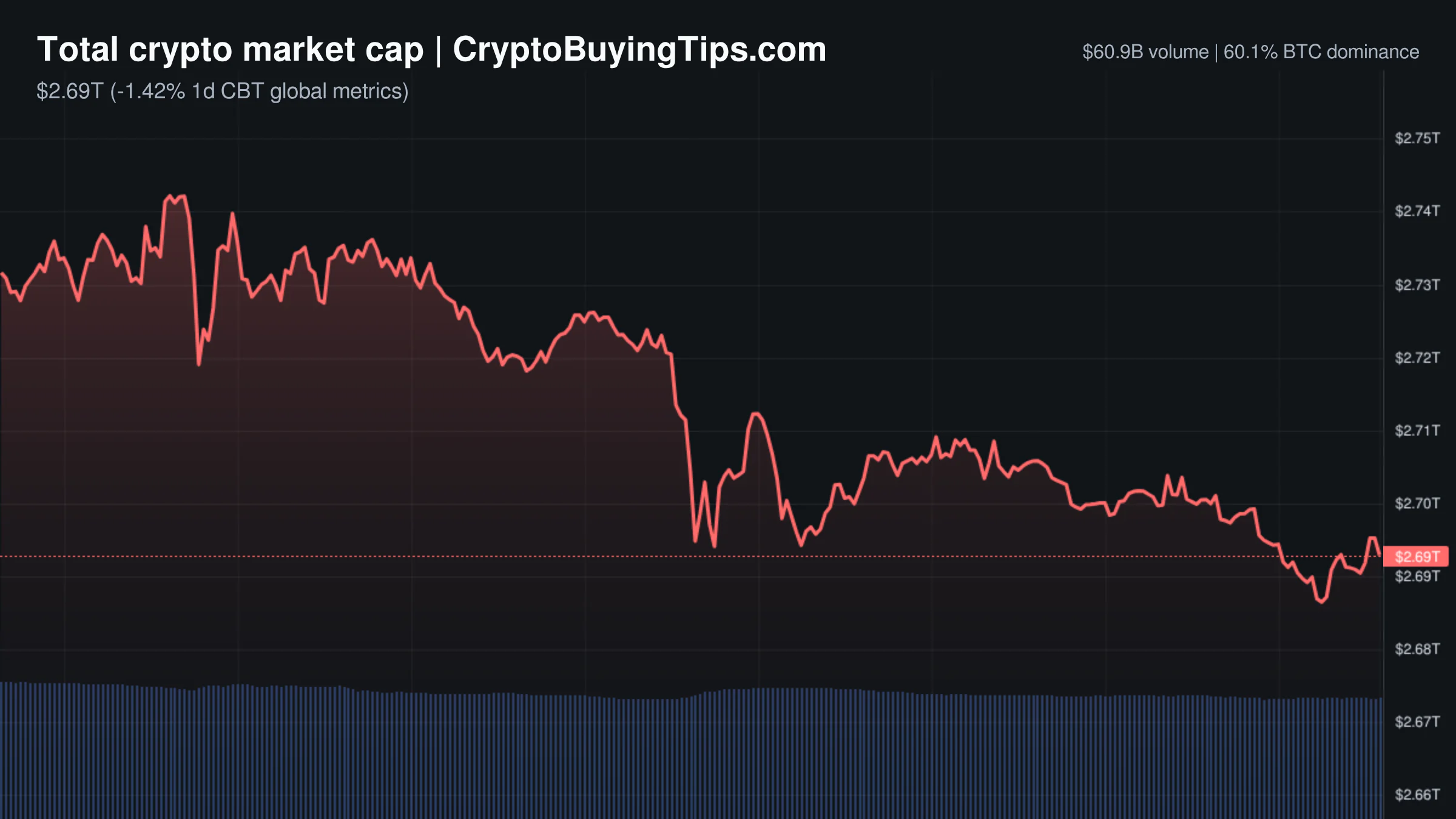
Crypto Market Overview | Derivatives volume dwarfs spot activity amid regulatory uncertainty and institutional outflows | October 24, 2026
Derivatives volume dwarfs spot activity amid regulatory uncertainty and institutional outflows, showing market…

Fidelity outflows and Ethereum OG dumps suggest a hidden exit
Another day of market data suggesting everything is fine until you look at the outflows and OG dumping. Institutional…
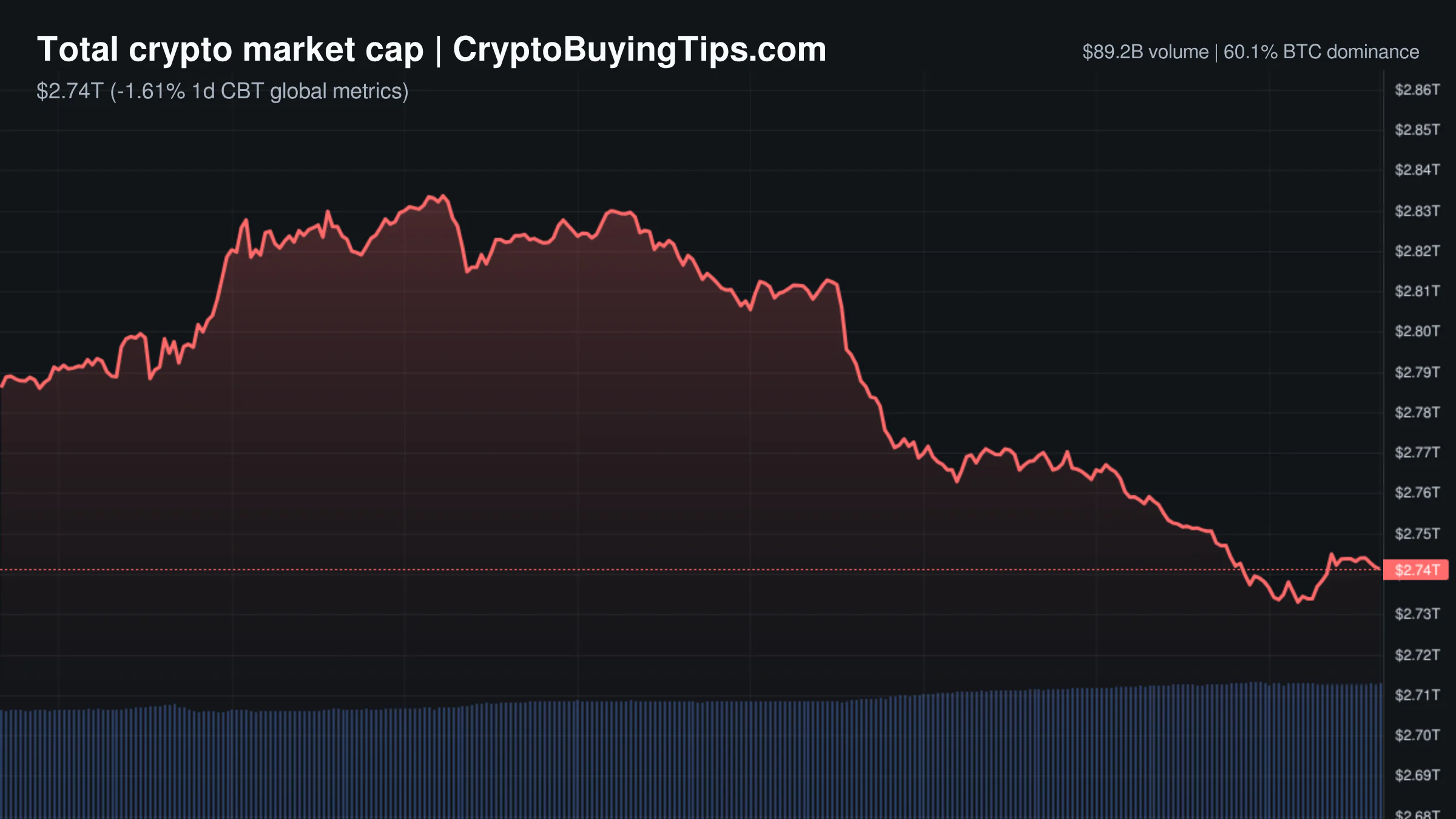
Crypto Market Overview | Leveraged bets surge amid regulatory clarity and institutional inflows | October 22, 2026
The market shows divergence between spot interest and leveraged bets amid regulatory clarity; see our overview here.

Volume is surging but prices are flat. Here is where the trigger is
Volume spikes while prices remain stubbornly flat; this divergence suggests an underlying battle between leveraged…