
Crypto Market Overview | high fear and volume collapse amid regulatory clashes | June 17, 2026
Crypto Market Overview | high fear and volume collapse amid regulatory clashes | June 17, 2026
Market overview
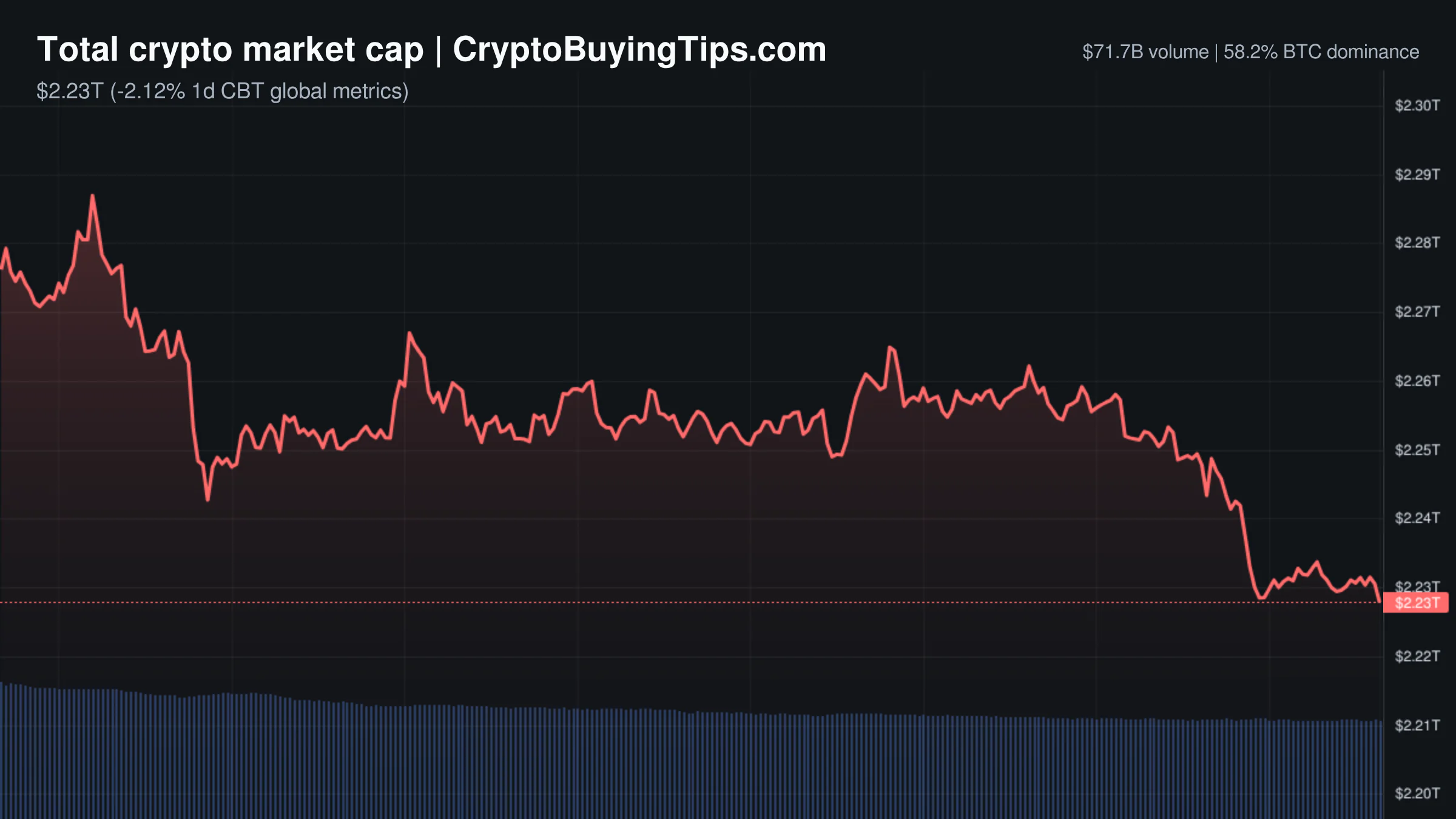
The crypto market is currently in a state of significant distress, with the total market cap sitting at $2.23T after a 2.12% decline. Sentiment has soured quickly, as evidenced by a Fear and Greed Index score of 23, placing the market firmly in the Fear category. This price action is accompanied by a worrying collapse in activity; 24-hour spot volume has dropped by 22.90% to $71.75B. When prices fall and volume vanishes, it usually suggests that buyers are not stepping in to find a floor, but are instead waiting for a catalyst or a deeper flush.
The most glaring disconnect remains the scale of derivatives. With $713.27B in derivatives volume, the leverage market is nearly ten times larger than the spot market. This suggests that the current price movement is being driven by forced liquidations and hedging rather than organic accumulation. While Bitcoin dominance remains high at 58.24%, the Altcoin Season Index is currently neutral, hovering around 47. This means capital is not rotating into alts, nor is it aggressively fleeing to the safety of the king. It is simply frozen.
Macro headwinds are adding to the gloom. The S&P 500 is down 0.60% and the NASDAQ has slipped 1.90%, indicating a broader risk-off mood in traditional finance. The correlation between tech stocks and crypto remains tight, and the current dip in the QQQ is acting as a drag on sentiment across the board.
Bitcoin and Ethereum
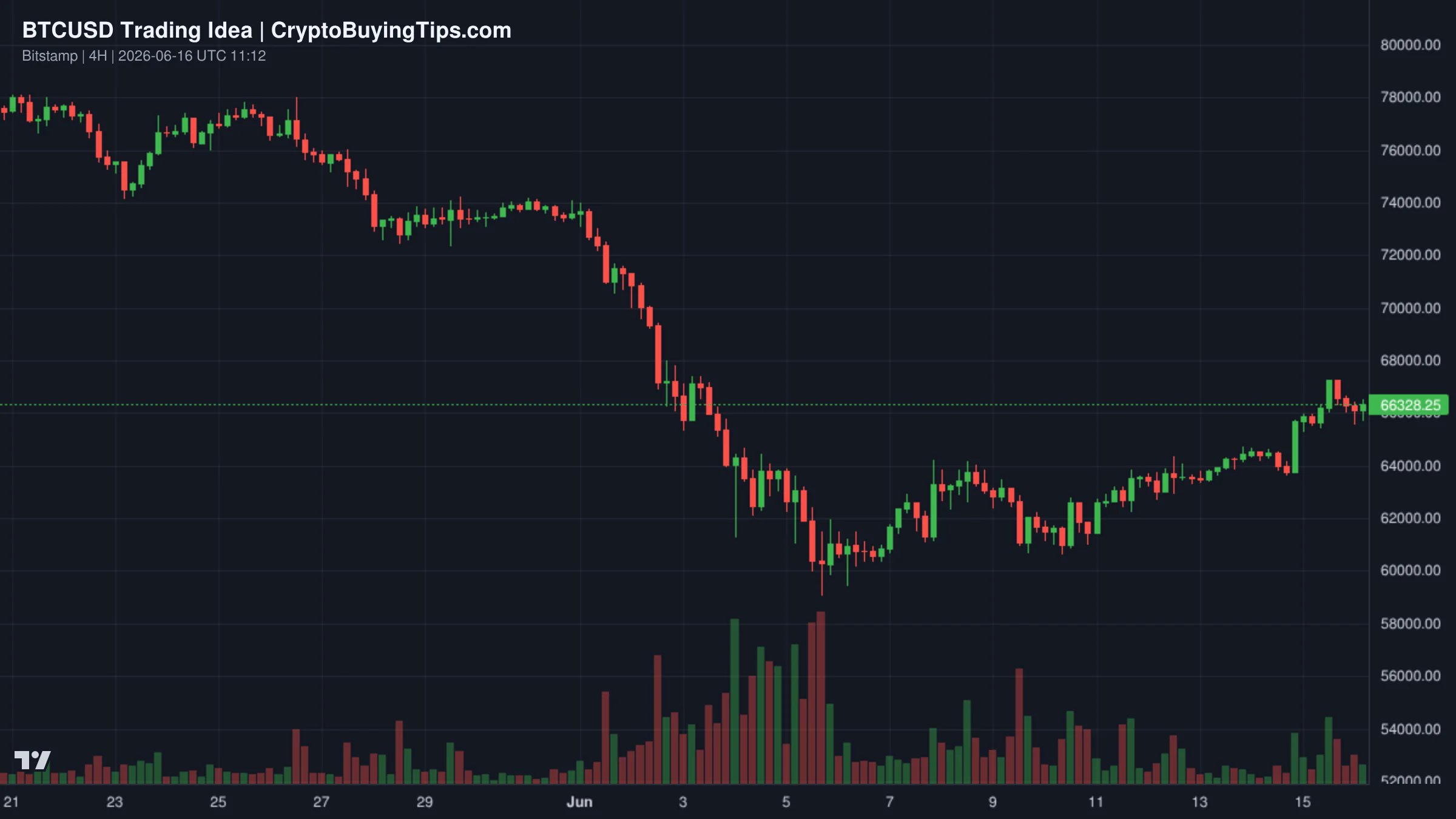
Bitcoin is trading at $64,731.7, down 2.66% over the last 24 hours. The asset is struggling to maintain momentum as the market digests a mix of institutional optimism and regulatory friction. On one hand, BlackRock has introduced a novel BITA ETF that trades some upside for double-digit yield, which shows that the biggest player in finance is still finding ways to monetize the asset. On the other hand, the broader market is spooked by the lack of immediate bid-side depth.
Ethereum is in a more precarious position, priced at $1,767.77 and down 1.54%. The most telling metric here is the network state. Gas fees are exceptionally low, with fast transactions costing only 0.16 Gwei. This is an eerie level of quiet for a network that usually thrives on activity. It suggests that on-chain engagement has plummeted, leaving the price to be dictated almost entirely by exchange order books and derivatives positioning.
Top crypto prices
The general trend across the top assets is one of retreat. BNB has fallen 2.00% to $601.53, while XRP and Solana have been hit harder, dropping 3.55% and 3.57% respectively. Hyperliquid (HYPE) has seen a 4.25% decline to $72.23, reflecting the broader volatility in the derivatives-focused sector.
Interestingly, TRON (TRX) is the lone outlier among the top assets, posting a modest gain of 0.59% to $0.3195. In a market defined by fear, assets that provide consistent utility or perceived stability often become temporary shelters.
News driving today's market
The primary driver today is a sharp divide between legislative wins in the US and regulatory threats in Europe. A bipartisan deal on a US housing bill has included a ban on the Federal Reserve creating a central bank digital currency (CBDC) until 2030. This is a significant de-risking event for decentralized assets, as it removes the immediate threat of a state-controlled digital dollar competing with private stablecoins and Bitcoin. We previously covered volume data suggests fight for more background.
However, the mood is dampened by reports that Binance may be forced to halt services for EU clients next month. With the MiCA deadline of July 1 approaching, the possibility that a major exchange will lose its license creates immediate operational risk and fears of liquidity fragmentation. While BitGo is attempting to offer a compliance lifeline to other European firms, the potential exit of the world's largest exchange from a major economic zone is a heavy weight on the tape.
We are also seeing a push toward the "everything app" model, with Coinbase announcing plans to launch tokenized stock trading and an AI-powered advisor. While the prospect of 1:1 backed stocks on-chain is theoretically bullish, we previously covered how the tokenizing stocks trap can often result in centralized receipts rather than true decentralization. The current volume drop suggests the market is not yet convinced that these features will drive genuine network utility.
Social intelligence
The social mood is a mix of cynical realism and a desperate search for alpha. On X, the narrative is centered on the irony of the Federal Reserve injecting over $6.6 billion into the economy while the dollar continues its slow decline. There is a palpable sense that while the "gatekeepers" are being regulated, the underlying assets remain sovereign.
We are seeing a recurring theme regarding the fragility of AI-driven trading. As platforms like Neyro network push non-custodial AI tools, the community response remains skeptical, with a preference for cold wallets and a "nap" over trusting an algorithm with private keys. The overarching sentiment is that in a market of endless experiments, Bitcoin is the only thing that isn't a beta test.
Trading ideas worth watching
On the Bitcoin front, the focus is on risk management rather than direction. A prominent setup emphasizes the 2% rule, arguing that no single trade should ever risk more than 2% of the total account equity. In the current high-fear environment, this is a necessary discipline. When volatility spikes and the bid-side is thin, forcing position size to chase small account gains is the fastest way to reach a zero balance.
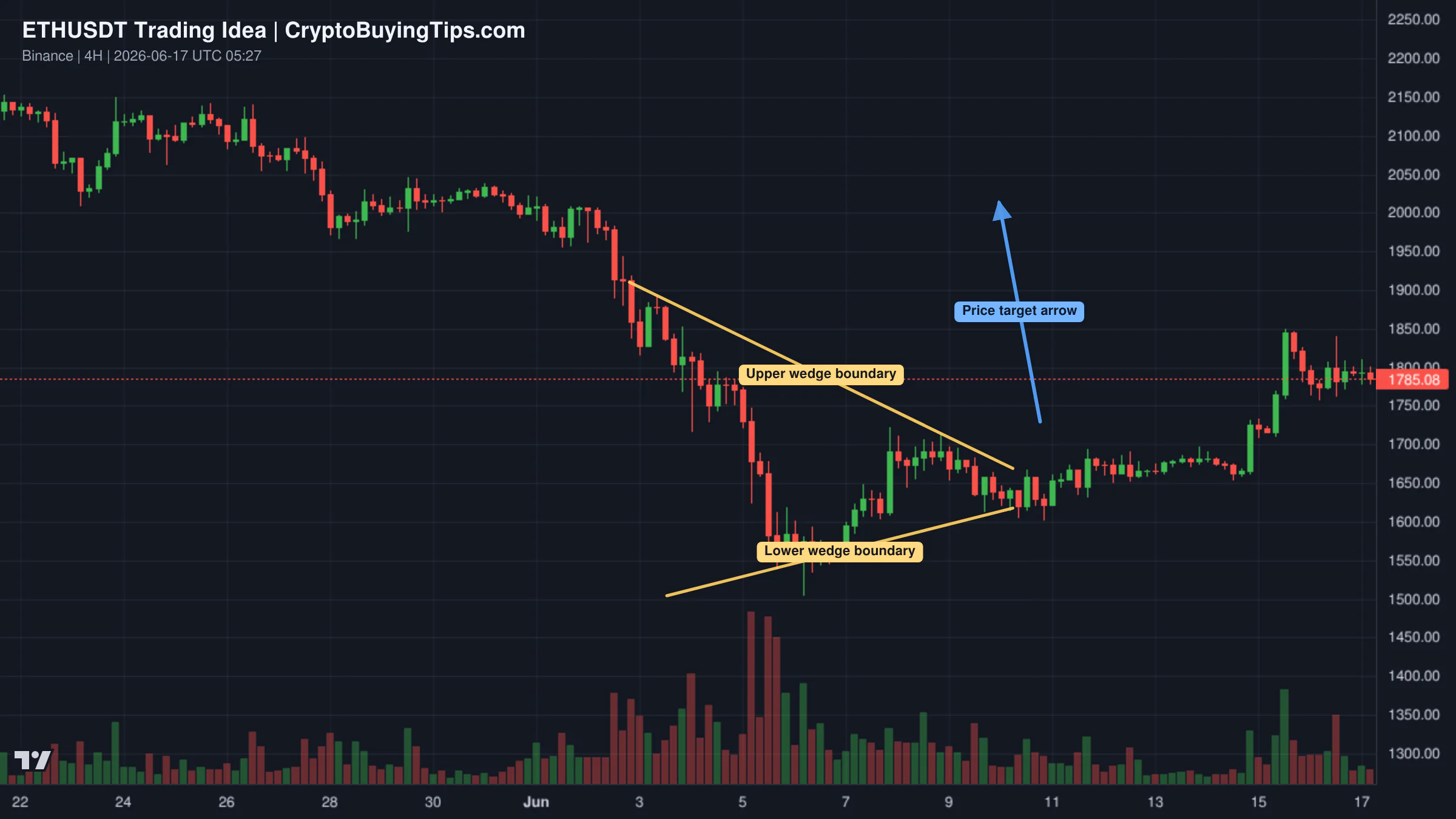
For Ethereum, there is a bullish case based on a contracting triangle pattern that has formed since early June. The analysis suggests a consolidation phase before a potential move toward targets of $1,900 and $2,000. However, this is contingent on the market absorbing the current FOMC meeting volatility and the upcoming US-Iran deal news.
Celestia (TIA) is being flagged as a long-term hold. The asset is currently trading at the bottom of its range, close to all-time lows. The thesis here is a "bottom consolidation" play, similar to the move seen in Worldcoin (WLD) before its breakout. The strategy is simple: buy the blood and hold until the market turns green, though this requires a high tolerance for the current bearish trend.
Smart Money Signals — Hyperliquid Leaderboard
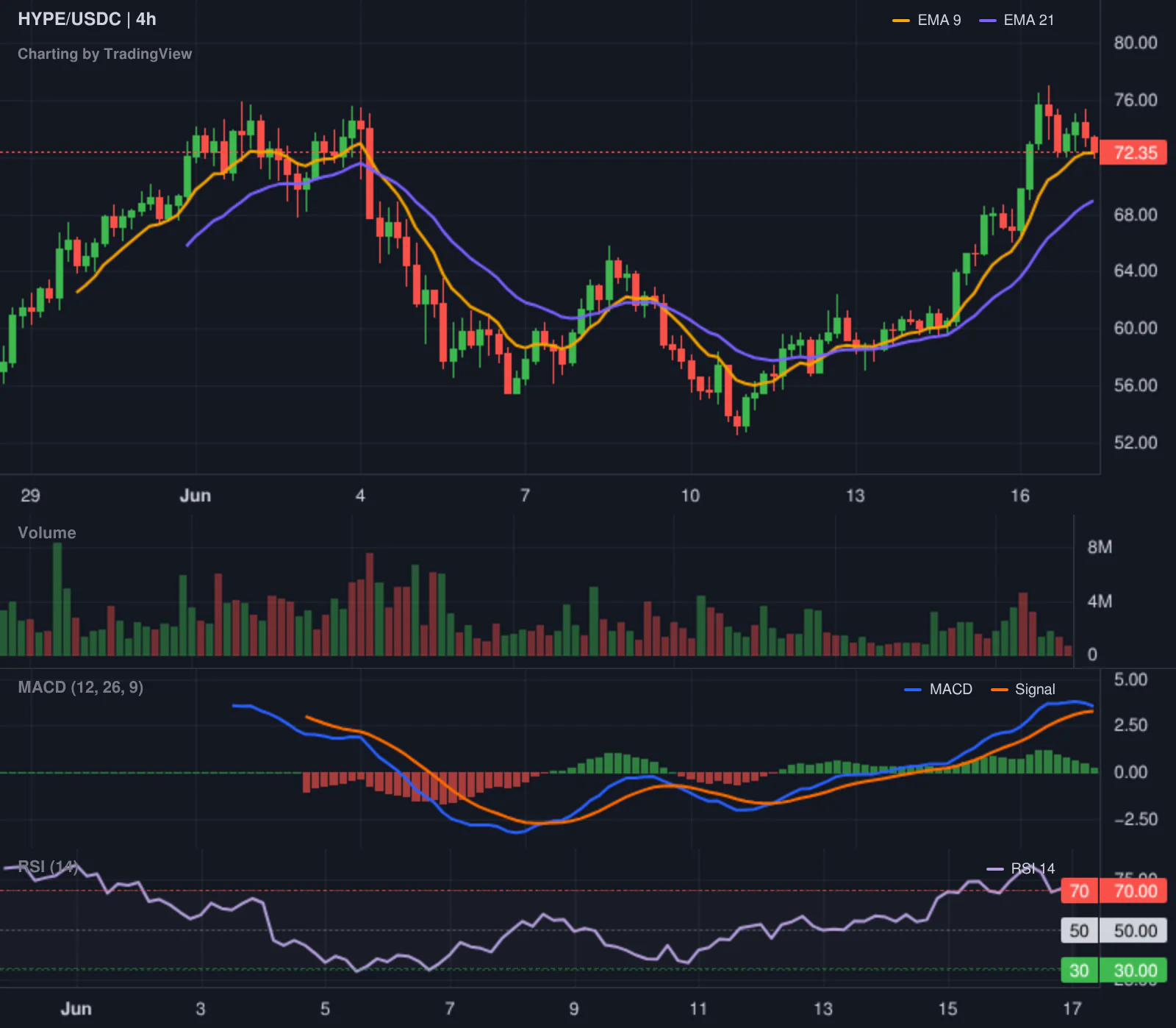
Our tracker has flagged a high-confidence long position in Hyperliquid (HYPE). A trader with an all-time PnL of $1.06M and a 230.7% ROI opened a long at $59.182 with a notional value of $53,908. Given that HYPE has fallen 4.25% today, this entry suggests that top-tier traders are viewing the current dip as a buying opportunity rather than a signal to exit.
What to watch next
The next few days will be defined by the tension between US legislative clarity and EU regulatory crackdown. The June 23 vote on the housing bill will be the key date for the CBDC ban, which could provide the sentiment boost needed to break the current paralysis.
More immediate is the July 1 MiCA deadline. If Binance is indeed forced to restrict EU services, we expect a surge in volatility as users migrate funds to other platforms. Watch for a spike in stablecoin dominance; if capital continues to move into USDT and USDC, the current fear will likely deepen into a more prolonged correction. Until spot volume returns to normal levels, any rally should be viewed as a relief bounce rather than a trend reversal.
Some links in this article may be affiliate links. We may earn a commission at no extra cost to you — this never influences our analysis or coverage.

Sigrid Voss
Crypto analyst and writer covering market trends, trading strategies, and blockchain technology.
More Articles
Crypto Market Overview | Extreme greed meets collapsing volume amid institutional focus | August 26, 2026
Extreme greed meets collapsing volume as market cap sits at $2.95T amid institutional focus and low altcoin activity.

Ethereum gas is at 0.04 Gwei and the network is a ghost town
The market feels extremely greedy for Ethereum price action, yet transaction fees suggest nobody's actually using it.…
Crypto Market Overview | leverage driving bitcoin's move amid institutional adoption and geopolitical risk | August 25, 2026
The market shows contradiction as leverage drives bitcoin's move amid institutional adoption and geopolitical risk…

Coinbase is putting stocks on Base, but the money is still in Bitcoin
Coinbase has launched tokenized stocks on Base, which sounds rather sophisticated for mere digital shares. However, our…