
Crypto Market Overview | Leverage bets surge amid security shocks and institutional interest | August 3, 2026
Crypto Market Overview | Leverage bets surge amid security shocks and institutional interest | August 3, 2026
Market overview
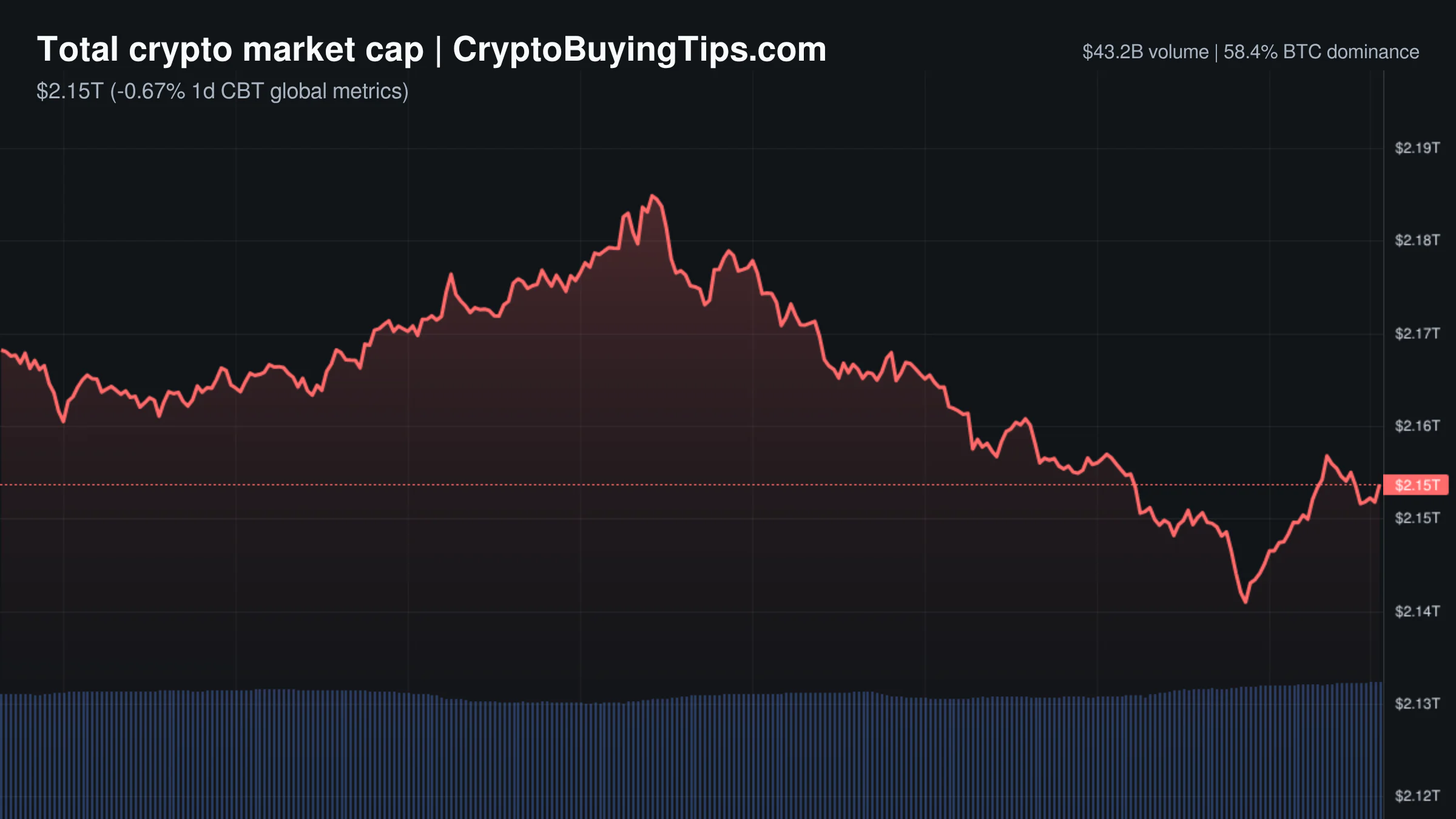
The market is currently a study in contradictions. While the total crypto market cap sits at $2.24T with a modest 0.64% dip, the underlying plumbing suggests a high degree of fragility. We are seeing a massive divergence between spot trading and derivatives. Spot volume is a mere $43.15B, but derivatives volume has surged to $465.56B. When the speculative bets are ten times larger than the actual asset exchange, we are no longer looking at a market for investment. We are looking at a high-stakes casino.
Sentiment has soured, with the Fear and Greed Index landing at 33. This fear is not shared by the traditional markets, where the S&P 500 and NASDAQ are both posting gains. This decoupling is a recurring theme. It suggests that the current selling pressure is internal to the crypto ecosystem rather than a broad risk-off move from Wall Street. Stablecoin dominance remains a heavy weight at 11.40%, meaning a significant amount of capital is sitting on the sidelines, waiting for a reason to enter or simply hiding from the volatility.
Bitcoin dominance is holding strong at 56.22%, though some metrics suggest it has pushed as high as 58.35%. This consolidation of power comes at the expense of the broader altcoin market. The Altcoin Season Index is neutral, hovering around 26 to 52 depending on the timeframe, which is a polite way of saying that most altcoins are simply drifting lower.
Bitcoin and Ethereum
Bitcoin is trading at $62,600.25, down 0.85% over the last 24 hours. The price action is currently battling a wave of negative security news. The Coldcard exploit, which resulted in the loss of roughly $90M, has shaken the faith of those who believed hardware wallets were an absolute sanctuary. It is a bit ironic that the "safe" option became the point of failure. On-chain data from CryptoQuant suggests we have not hit a capitulation-level stress point yet, but the psychological damage of a seed generation flaw is often harder to recover from than a simple price drop.
Ethereum is in a more precarious position, trading at $1,842.5 and down 1.33%. The most telling metric here is not the price, but the gas fees. With gas sitting at a negligible 0.17 to 0.19 Gwei, the network is effectively a ghost town. Low fees are usually a win for users, but in this context, they signal a complete lack of on-chain demand. We have previously noted how Ethereum market share vanishes while the protocol focuses on corporate polish. The data today confirms that the corporate makeover has not yet brought the users back.
Top crypto prices
The top of the leaderboard is mostly red. Bitcoin and Ethereum lead the slide, with XRP also down 1.10% at $1.06 and Solana slipping 0.95% to $72.51.
There are a few outliers. BNB managed a slight gain of 0.49% to $586.03, and TRON is up 0.41% at $0.3276. The most notable performer is Hyperliquid (HYPE), which climbed 2.14% to $52.6. In a market where almost everything is bleeding, a 2% gain looks like a rally.
News driving today's market
The dominant narrative today is the clash between immediate security failures and long-term institutional integration. The Coldcard exploit is the primary drag on sentiment. Losing $90M due to a flaw in seed generation is a systemic shock that reminds traders that no storage is truly risk-free. This is compounded by the SEC keeping Nasdaq Bitcoin options on hold, which creates a regulatory bottleneck for institutional derivatives.
On the other side of the ledger, the "reverse bridge" is gaining momentum. Crypto exchanges are now offering perpetuals for stocks and indexes, with volumes hitting $1.32 trillion in the first five months of 2026. We previously covered how this crypto exchanges reverse bridge shifts the power dynamic, as exchanges move toward an "everything exchange" model.
There are also signs of institutional maturity. Bithumb is targeting a 2028 IPO, and HashKey has received approval from JPMorgan to open client money accounts. Ripple is also deepening its push into tokenized capital markets through investments in ZILO and Licuido. These developments are fundamentally bullish, but they operate on a different timescale than a $90M exploit. The market is currently prioritizing the immediate pain of the exploit over the slow promise of a 2028 IPO.
Social intelligence
The social feed is focused on the macro environment and on-chain stress. Analysts are pointing to the fact that Bitcoin's unrealized loss returns are below the deep-stress band. This suggests that while holders are unhappy, they are not yet in a state of total panic.
Geopolitical noise is adding to the uncertainty. Reports of China's CXMT considering a second memory chip plant in Beijing suggest a continued push in semiconductor independence, which often correlates with shifts in global risk appetite. Simultaneously, falling oil stocks and a 5% decline in crude prices suggest a cooling of industrial demand. For crypto, this is a mixed bag. It may signal a broader economic slowdown, but it also removes some of the inflationary pressure that has plagued the macro environment.
Trading ideas worth watching
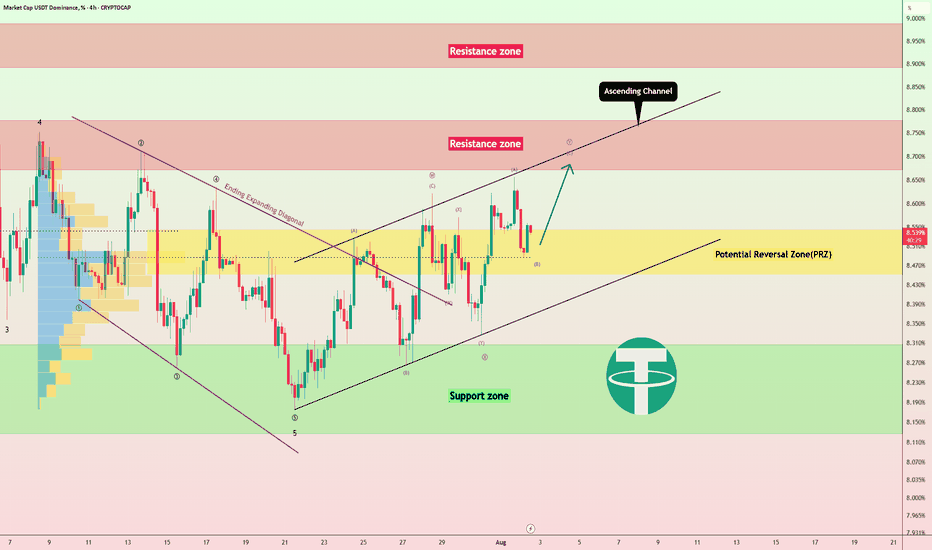
The most critical setup currently involves USDT Dominance. The asset is trading within a potential reversal zone, moving inside an ascending channel. From an Elliott Wave perspective, it appears to be completing an upward corrective structure. If USDT.D pushes toward the 8.65% resistance level, it will signal that capital is fleeing crypto for the safety of stables. This would put immediate downward pressure on the entire market. A move toward 8.40% would be the signal for a relief rally in assets.
For Bitcoin, there is a short-term play on a support bounce. The price is currently testing liquidity near $62,955. A dip toward $62,000 to sweep retail stop-losses could trigger a high-velocity rebound toward $63,200, with a final target of $63,800. This is a classic liquidity sweep. Traders should be cautious about shorting into this floor, as the buy orders from professional desks are likely waiting exactly there.
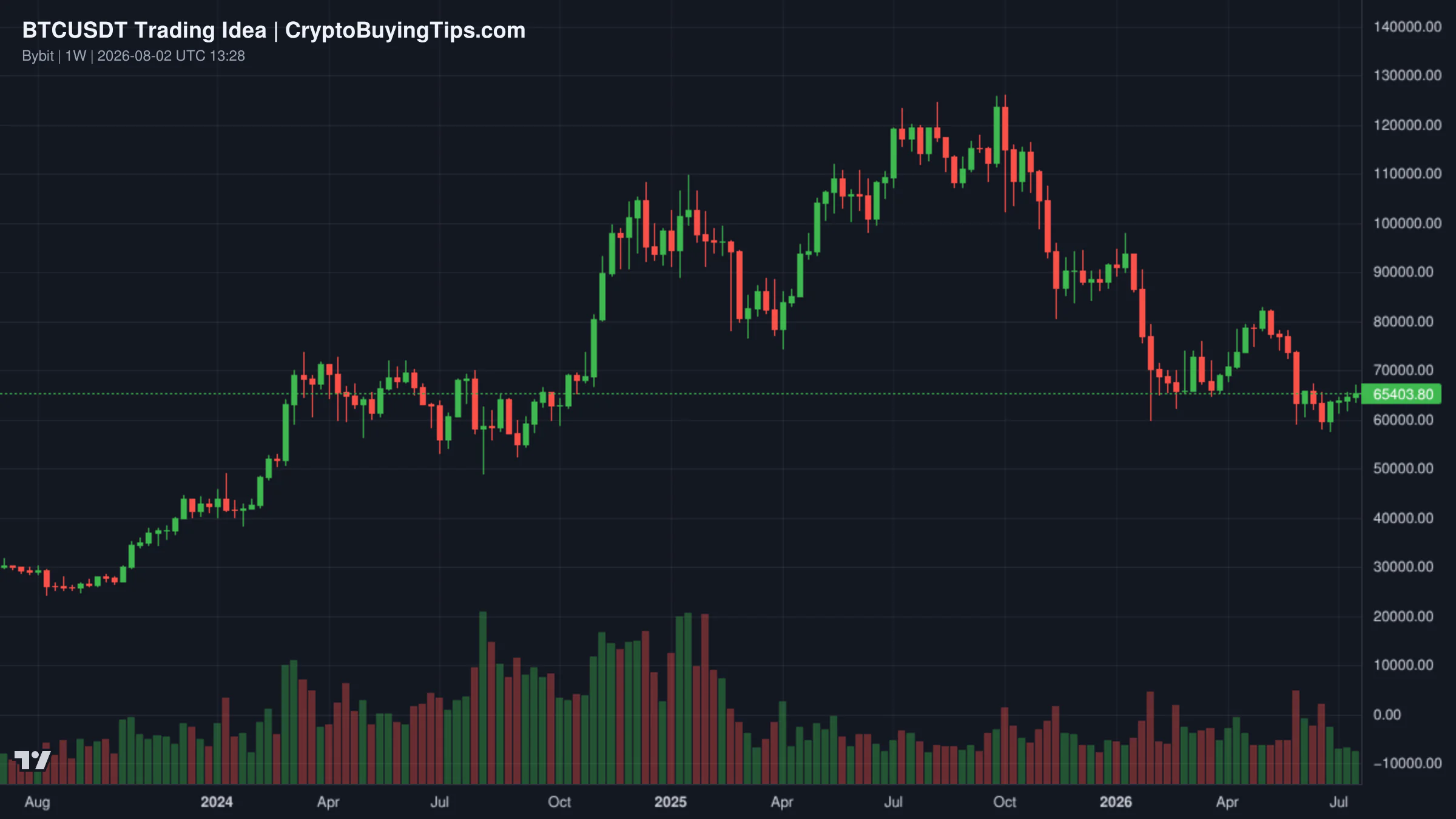
Long-term bulls are ignoring the noise and eyeing a $200,000 target for 2027. This view is based on the observation that the bear market crash of late 2025 lasted only four months, while the recovery and sideways period have lasted six months. The argument is that the market has spent more time recovering than it did crashing, which typically precedes a massive bullish wave.
Altcoin Spotlight
Hyperliquid (HYPE) deserves attention today. While the rest of the market is sliding, HYPE is up 2.14%. This strength is not accidental. As the market shifts toward derivatives and "everything exchanges," Hyperliquid's position as a high-performance perpetual exchange makes it a direct beneficiary of the current trend. When spot trading dies and leverage takes over, the platforms that facilitate that leverage tend to outperform.
What to watch next
The immediate focus is the $62,000 support level for Bitcoin. If this floor fails, the "fear" sentiment will likely accelerate into a genuine panic. We also need to monitor the Clarity Act. Bernstein suggests that if the Act fails to pass, the SEC and CFTC may be forced to accelerate their own rulemaking. This would be a paradoxical win; legislative failure could lead to faster regulatory clarity.
Finally, keep an eye on Ethereum's gas fees. If they stay this low, it confirms that the network is failing to attract meaningful activity, regardless of how many corporate partnerships it announces. The gap between the institutional narrative and the on-chain reality is becoming impossible to ignore.
Some links in this article may be affiliate links. We may earn a commission at no extra cost to you — this never influences our analysis or coverage.

Sigrid Voss
Crypto analyst and writer covering market trends, trading strategies, and blockchain technology.
More Articles
Crypto Market Overview | volume collapses as greed persists amid regulatory friction | August 23, 2026
Volume collapses as greed persists amid regulatory friction; see our market overview on crypto's current state and key…

Brussels is coming for DeFi vaults and the market is ignoring the risk
Brussels seems to think "decentralized" is just an aesthetic choice for now. Our read suggests MiCA regulation isn't…
Crypto Market Overview | Spot accumulation rises while derivatives volume cools | August 22, 2026
Spot accumulation rises while derivatives volume cools in this market overview of crypto activity and macro drivers for…

XRP is ripping while Bitcoin stalls. Here is the setup we're watching
Bitcoin takes its nap while XRP proves it still has something to say about market structure divergence. Our signal…