
Crypto Market Overview — May 4, 2026

Crypto Market Overview — May 4, 2026
Market overview
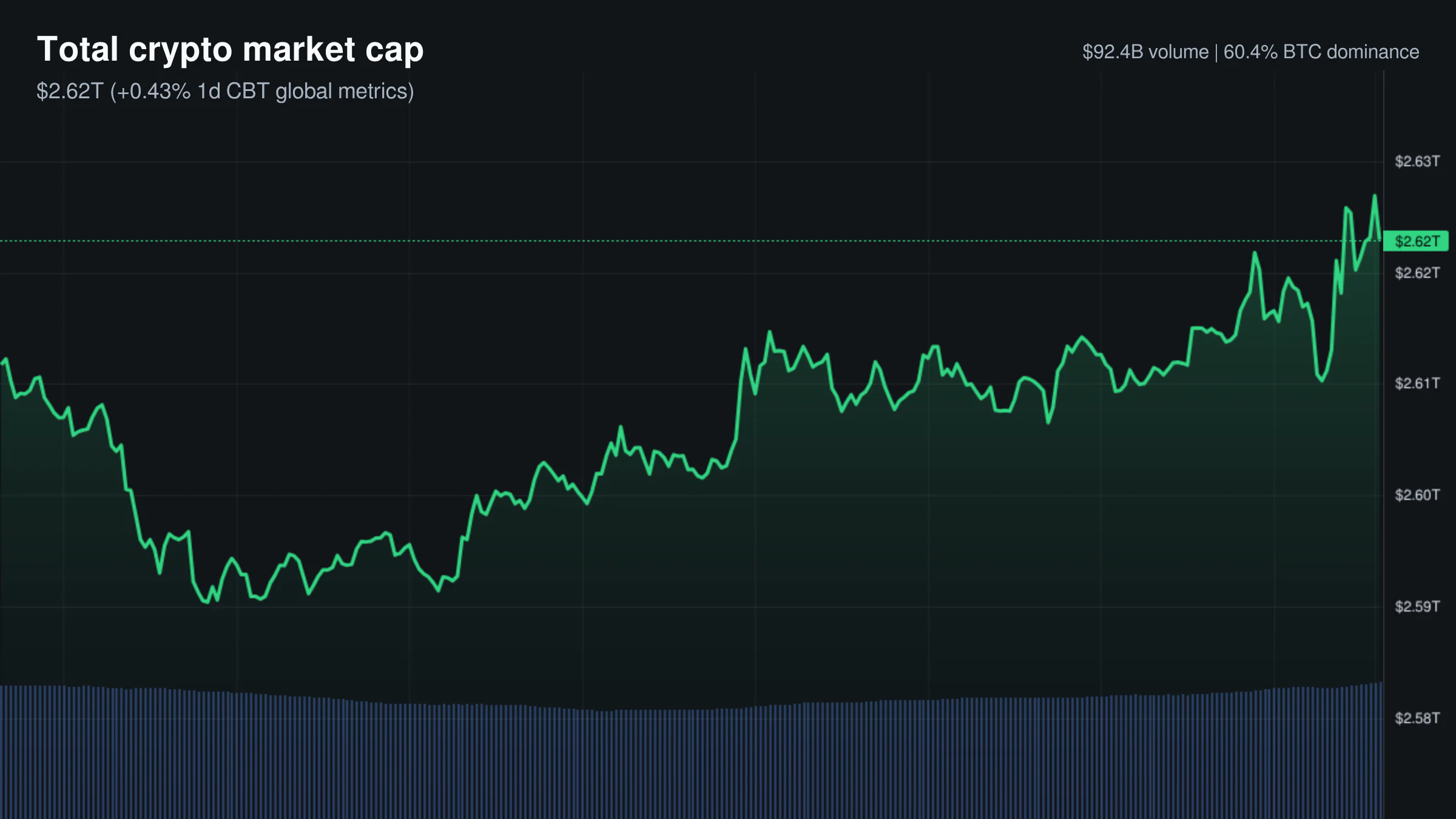
The crypto market is currently characterized by a stark divergence between spot activity and speculative leverage. While the total market cap sits at $2.71T with a modest 24h increase of 0.57%, the underlying data reveals a high-risk environment. Spot volume reached $92.05B, but derivatives volume surged by 21.94% to $429.91B. This massive gap suggests that the current price action is being driven more by leveraged bets than by organic accumulation.
Sentiment remains neutral with a Fear and Greed Index score of 46. This hesitation is reflected in the dominance metrics. Bitcoin continues to crowd out the rest of the market, with dominance hovering between 58.53% and 60.45%. The Altcoin Season Index is deeply in the "Bitcoin Season" zone at 12/100, meaning the vast majority of capital is concentrated in the flagship asset while altcoins struggle to find a catalyst.
Liquidity appears fragmented. Stablecoin dominance is at 9.83%, indicating that a significant amount of capital is sitting on the sidelines. When combined with a neutral sentiment and a heavy reliance on derivatives, the market structure looks fragile. Any sudden volatility could trigger a cascade of liquidations given the $405.57B in open interest for perpetuals.
Bitcoin and Ethereum
Bitcoin is trading at $76,504.74, showing a 0.79% gain over the last 24 hours. The asset is currently locked in a battle with a heavy resistance zone between $76,900 and $79,500. This area has been challenged twelve times recently. Bulls argue that the lack of a strong rejection suggests the resistance is weakening, while bears view the failure to break through as a signal to short.
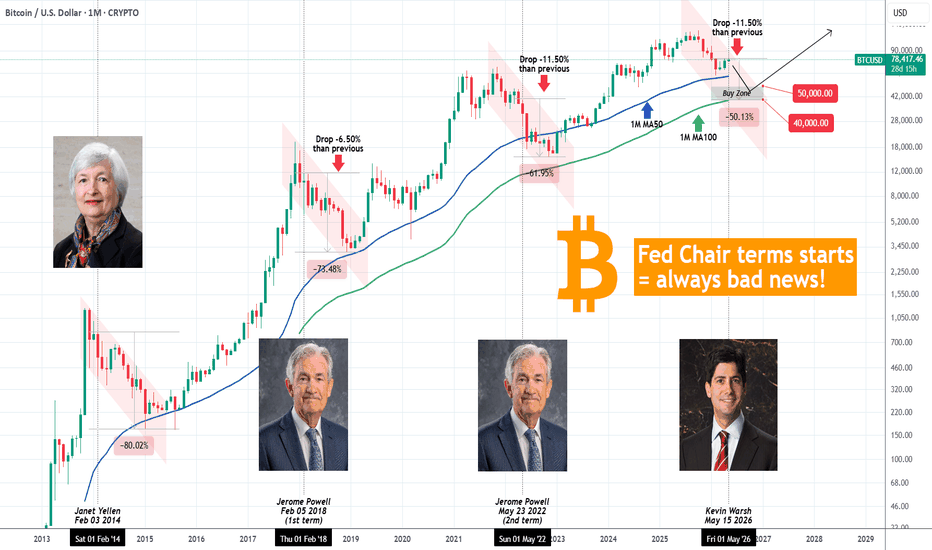
The macro backdrop for Bitcoin is mixed. The Senate's progress on the Clarity Act stablecoin yield compromise provided a bullish spark, pushing prices back toward $78,000. However, this is countered by the looming transition of the Federal Reserve Chair on May 15. Historically, the start of a new Fed Chair term has coincided with significant Bitcoin drawdowns, which is keeping some traders cautious.
Ethereum is trading at $2,261.81, largely flat with a 0.15% change. ETH dominance remains low at 10.44%. One of the most striking data points is the network state; gas fees are extremely low at 0.2 Gwei. While this makes transactions cheap, it also signals a lack of on-chain activity and demand for block space, which typically precedes a price rally. Ethereum is currently lagging behind Bitcoin in both momentum and institutional interest.
Top crypto prices
Bitcoin holds the top spot at $76,504.74. Ethereum follows at $2,261.81. XRP is trading at $1.37, down 0.21%, while BNB is at $616.14, also down 0.21%. Solana is priced at $83.25, showing a slight decline of 0.06%. TRON is a notable gainer among the top assets, up 1.21% to $0.3270. Hyperliquid remains stable at $39.86.
News driving today's market
Regulatory headwinds are creating a cautious atmosphere. Brazil's central bank has banned the use of stablecoins and other cryptocurrencies for settling cross-border payments for fintechs and payment firms. While individual trading is still legal, this closes a major institutional payment rail and restricts liquidity in a significant economy.
In the United States, the Clarity Act is the primary focus. The resolution of the stablecoin yield deadlock is seen as a positive step that could unlock institutional adoption. However, some analysts, including those at Galaxy Digital, expect the banking industry to increase opposition to these rules, which could slow the bill's progress.
The industry is also dealing with security and compliance shocks. A $292M DeFi hack has forced a rethink of risk management as Wall Street moves on-chain. Simultaneously, reports that Iran's largest exchange, Nobitex, is tied to the country's supreme leaders increase the risk of sanctions-related volatility. These events together keep the market in a neutral, wait-and-see mode.
Social intelligence
Macro-level optimism is being voiced by Michael Saylor, who predicts a "Cambrian explosion" in the crypto industry. He argues that liquidity constraints in the $3.5 trillion private credit market will drive capital toward digital credit and Bitcoin, potentially creating a supply shortage that pushes prices higher.
On the technical side, the community is discussing the threat of quantum computing. Alex Thorn of Galaxy Digital notes that there is a growing consensus to leave Satoshi Nakamoto's original P2PK addresses untouched to preserve core ownership attributes. Because these assets are spread across 22,000 addresses, the risk of a total system collapse via quantum attack is viewed as lower than previously feared.
Conversely, Solana co-founder Anatoly Yakovenko has raised concerns about AI's ability to crack post-quantum cryptography signature schemes. He suggests the industry needs better multi-signature support or native processing through Program Derived Addresses to mitigate these hidden mathematical vulnerabilities.
Trading ideas worth watching
A bearish historical pattern is emerging for BTCUSD. Analysis suggests that Bitcoin has crashed significantly following the start of every new Federal Reserve Chair term over the last 12 years. With Kevin Warsh expected to take office on May 15, 2026, some traders are eyeing a potential decline toward the $40,000 to $50,000 range. This setup relies on the theory that Fed transitions trigger bear cycles, though the magnitude of the crash has decreased with each subsequent term.
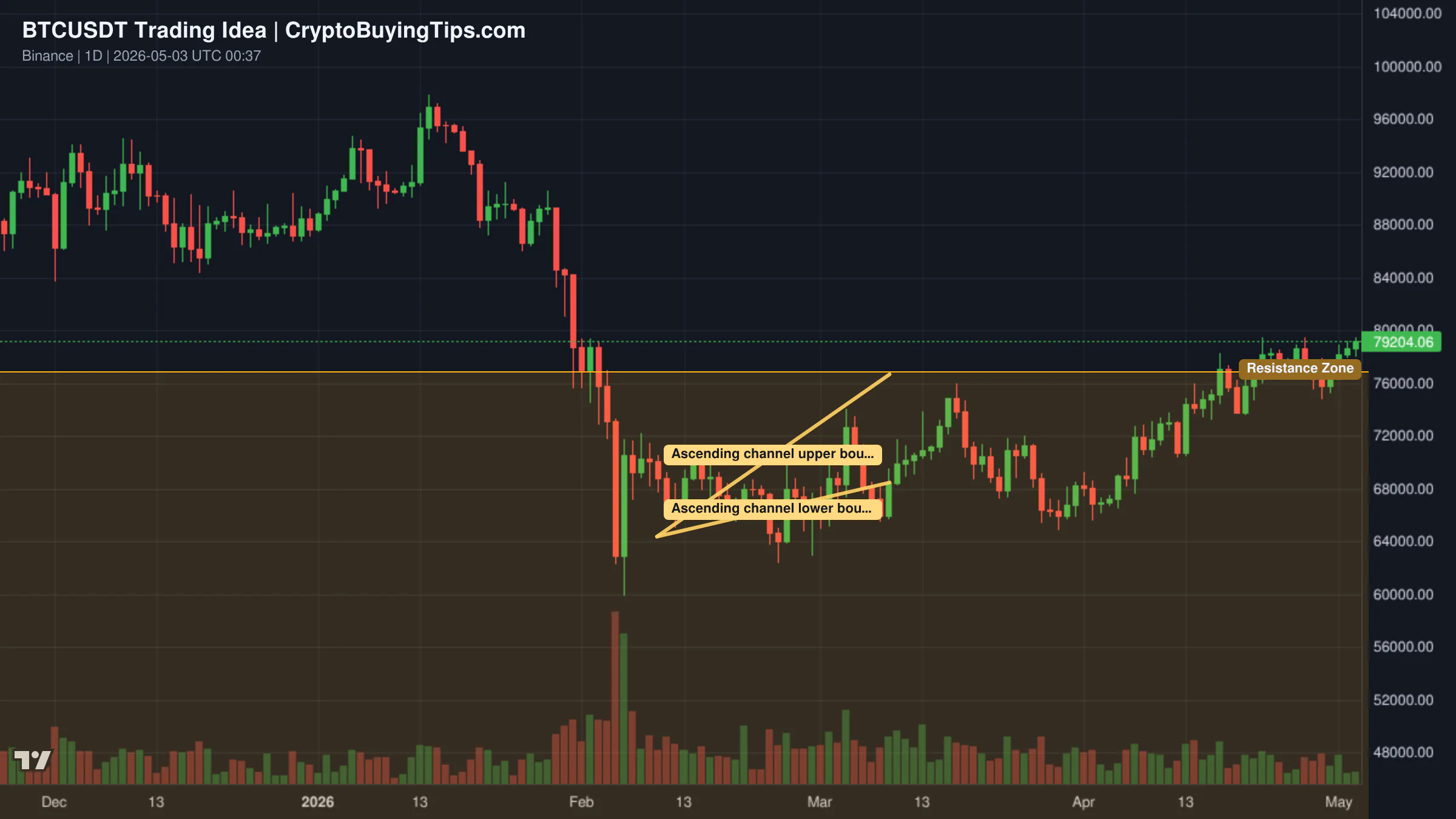
On a shorter timeframe, BTCUSDT is testing a critical resistance zone between $76,900 and $79,500. The setup is a classic battle between bulls and bears. Bulls see the repeated challenges of this zone as a sign that resistance is weakening. Bears, however, point to the lack of trading volume and the geopolitical tension between the USA and Iran as reasons to open short positions. A decisive close above $79,500 would likely invalidate the bearish thesis.
For those looking at altcoins, 1000CATUSDT is showing a potential breakout pattern. After a long period of bottom consolidation, the asset saw a high volume session on April 16. The subsequent retrace was minimal, and the price has since moved sideways. This is viewed as a "get in and get out" trade with potential targets of 150% or more, provided the broader altcoin market begins to recover from its current stagnation.
What to watch next
The next few days are centered on the May 15 Federal Reserve transition. Whether the "Fed Chair crash" pattern repeats or "this time is different" will likely determine the trend for the rest of the month. Traders should monitor Bitcoin dominance closely; if it begins to drop while prices remain stable, it could signal the start of a rotation into altcoins.
Additionally, the implementation of Brazil's cross-border settlement ban and the final markup of the Clarity Act in the US Senate will provide clues about the global regulatory trajectory. With derivatives volume so high, any sharp move in either direction will likely trigger massive liquidations, making tight risk management essential.
Sigrid Voss
Crypto analyst and writer covering market trends, trading strategies, and blockchain technology.
More Articles

Kashkari warns of inflation and war. Is the risk-off trade returning?
Neel Kashkari’s inflation warning amid geopolitical tensions signals a potential shift towards a “risk-off” trade in…
The $465 billion leverage trap and why funding rates matter right now
Bitcoin’s rally is being driven by massive leverage, with derivatives trading exceeding spot volume by a staggering…

The Clarity Act just cleared a major hurdle. Here is what it actually means for your stablecoins
The Senate’s approval of the “yield hurdle” in the Clarity Act signals a major shift in stablecoin regulation. This…
A whale just loaded up on 90,000 ETH. Is the smart money betting on a reversal?
A large whale has purchased 90,000 ETH, challenging the current Bitcoin dominance trend and raising questions about…