

Derivatives volume is 11x higher than spot and it is a warning
When you see a headline saying trading volume is up, it is easy to assume people are actually buying the asset. But there is a massive difference between spot and derivatives volume that most retail traders ignore until their positions are liquidated. One represents actual ownership; the other is essentially a series of bets on where the price might go. When the gap between the two becomes an abyss, the market stops behaving like an investment vehicle and starts behaving like a giant, unstable spring. We previously covered leverage in crypto markets for more background.
The short answer on the volume gap
The current market structure is an anomaly. Our market data tools highlight a $729.12B derivatives volume compared to a spot volume of only $64.57B. That is a factor of eleven. To make things more volatile, we have seen an 80.79% increase in derivatives volume recently.
In plain English, the "buying" we see in the data is not actually buying. It is speculative positioning. When derivatives volume dwarfs spot volume to this extent, it means the price is being driven by leverage and hedging rather than by people moving cash into the underlying asset.
How the difference between spot and derivatives volume actually works
To understand why this matters, you have to understand what is actually happening on the exchange.
Spot trading is straightforward. You pay the current price for a coin, and you own that coin. You can move it to a hardware wallet or hold it for ten years. It is a direct exchange of value for an asset yieldfund.com.
Derivatives trading, specifically perpetual futures, is different. You are not buying the coin. You are entering a contract that tracks the price of the coin. Because these contracts allow for leverage, a trader can control a massive position with a tiny amount of collateral. This is why derivatives volume is almost always higher than spot, as it allows for extraordinary capital efficiency marketrealist.com.
The problem arises when the ratio becomes extreme. When derivatives volume is 11x higher than spot, the "tail is wagging the dog." The spot market is the actual foundation of the asset, but the derivatives market is where the volatility is manufactured.
Where the leverage trap happens
High derivatives volume creates a systemic fragility. Because so many positions are leveraged, a relatively small price move in the wrong direction can trigger a chain reaction.
If the price drops 2%, it might not bother a spot holder. But for a trader using 50x leverage, that is a 100% loss. Their position is liquidated. That liquidation is a forced sell order, which pushes the price down further, which triggers the next round of liquidations.
Our news scoring system rated the potential for these leveraged cascades 10/10. It is the classic "long squeeze." We are currently seeing this play out in a market where the Fear and Greed Index sits at 33. Trading with high leverage while the market is in a state of Fear is a bold strategy, though usually a short-lived one.
This structural weakness is evident in the current dominance metrics. Bitcoin dominance is 59.25350563835302, while Ethereum dominance is 10.573888400341843. While Bitcoin remains the dominant force, the sheer volume of derivatives suggests that the price action is being dictated by bets rather than fundamental accumulation. We've seen this pattern before; we previously covered how derivatives volume warning signs often precede a sharp correction.
How to read these signals
If you want to avoid getting caught in a liquidation cascade, you need to look past the total volume and check the funding rates.
Funding rates are the cost of holding a leveraged position. If funding is deeply positive, too many people are longing the market. If it is deeply negative, the crowd is aggressively shorting. When you combine high derivatives volume with extreme funding rates, you have a recipe for a violent move in the opposite direction.
Our read is that the current 11x volume gap is a red flag. It suggests that the market is over-leveraged and prone to sudden, disorderly moves. The "volume" people are cheering about isn't a sign of strength; it is a sign of a market that has forgotten how to actually buy and hold.
For those who prefer to avoid the casino entirely, moving assets off exchanges and into cold storage is the only way to opt out of this structural risk. A hardware wallet like the Ledger Nano Gen5 ensures you actually own your assets, rather than just holding a contract that can be wiped out by a 3% price swing.
Some links in this article may be affiliate links. We may earn a commission at no extra cost to you — this never influences our analysis or coverage.

Sigrid Voss
Crypto analyst and writer covering market trends, trading strategies, and blockchain technology.
More Articles
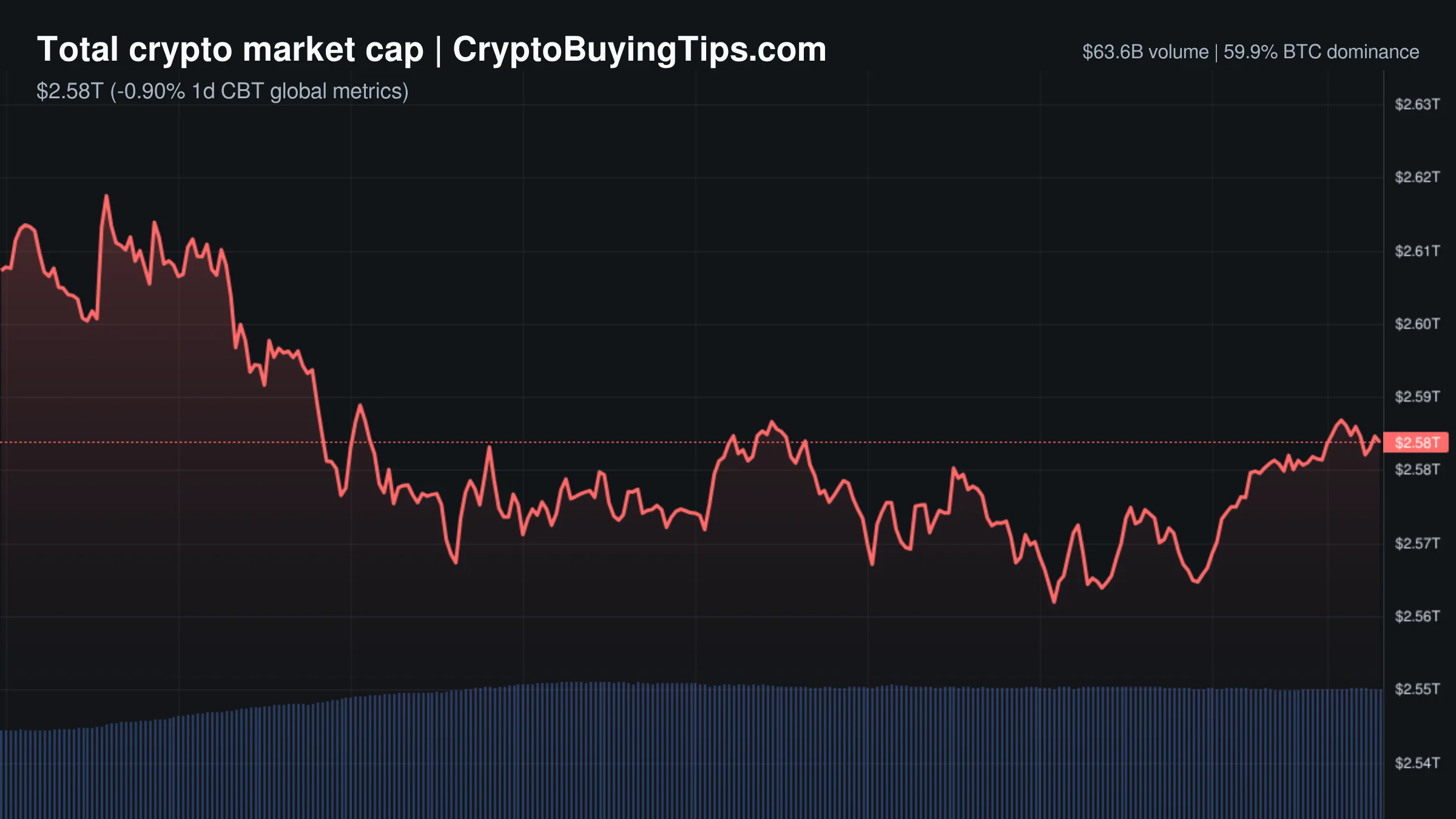
Crypto Market Overview | speculative leverage surges amid exchange security failures and institutional caution | November 3, 2026
Speculative leverage surges amid exchange security failures and institutional caution; see our market overview of…
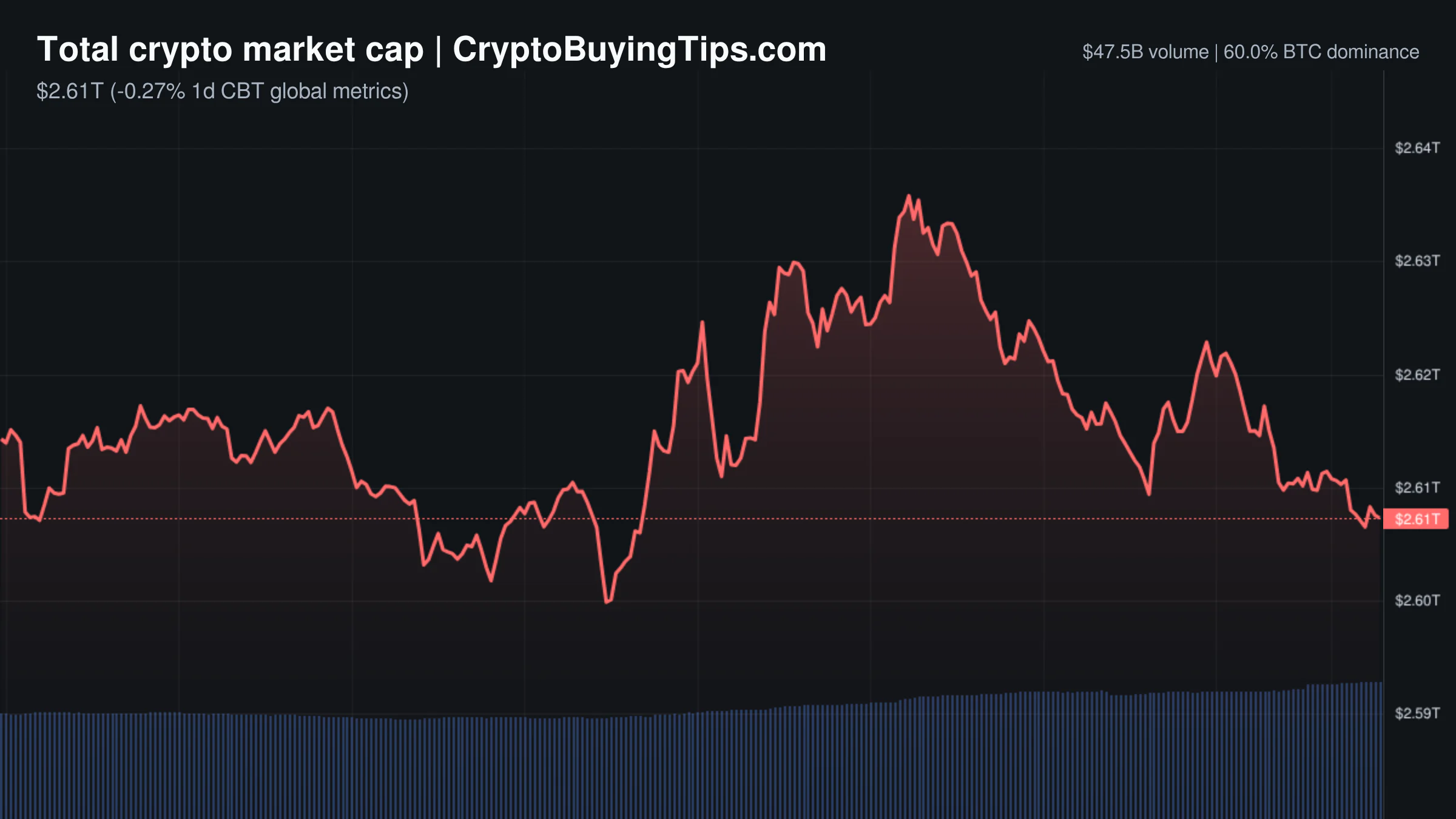
Crypto Market Overview | Derivatives volume surges amid institutional outflows following exchange hack | November 2, 2026
Derivatives volume surges amid institutional outflows following exchange hack; see our market overview on crypto's…

The $3 billion sword of damocles hanging over the binance hack
The focus remains fixed on what has already left Binance; we think the true systemic danger lies with the $3 billion of…
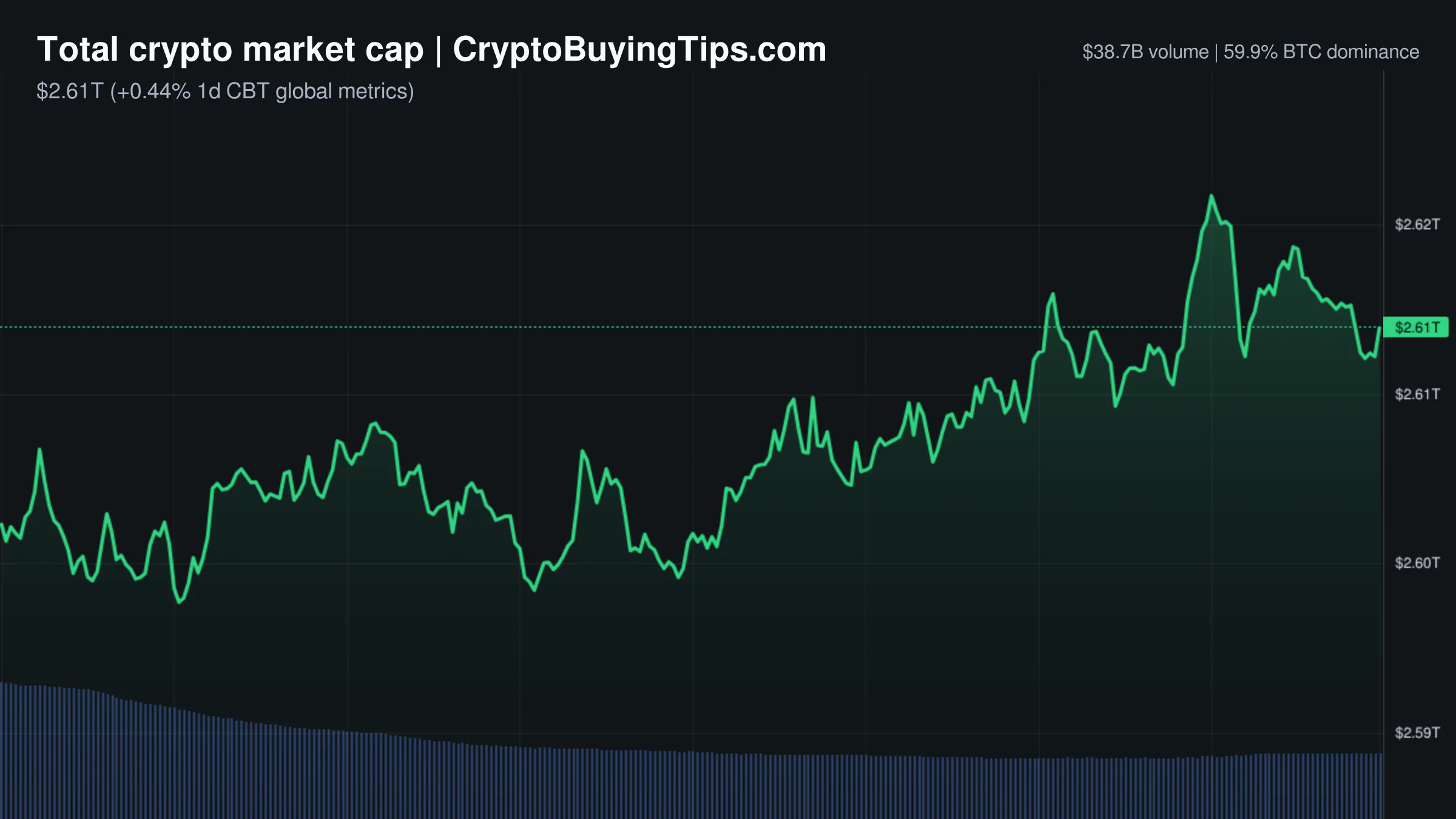
Crypto Market Overview | volume collapse amid systemic fear after major hack | November 1, 2026
Crypto market overview shows volume collapse amid systemic fear after major hack; see how liquidity vanished despite…