

HSBC is building AI payment rails while OpenAI war-games a catastrophe
The contrast between HSBC testing AI-agent payments and OpenAI warning about systemic collapse presents a peculiar dichotomy for assessing what are ai agent payments in crypto. It is a bit like watching a construction crew install high-end plumbing in a house while the architects are quietly rehearsing for the day the foundation spontaneously combusts. We are seeing a race to build the infrastructure for a machine economy that the people creating the machines are not entirely sure should exist.
How does what are ai agent payments in crypto work?
At its simplest, agentic payments allow AI software to hold a wallet, negotiate a price, and settle a transaction without a human clicking a button. Most AI bots today stop the moment money needs to move. They can research a flight or find a service, but they cannot pay for it. Agentic payments close that gap.
Our news scoring system rated the recent HSBC and Ant Digital trial a 9/10 for novelty. In this test, AI agents used tokenized deposit rails to find and pay for digital services in tiny amounts. By using tokenized deposits, the bank avoids the volatility of standard tokens while keeping the speed of a blockchain.
The process usually follows a specific stack. The agent discovers a service, checks its own permission layer to see if it has the budget, and then executes the payment via a wallet. This is different from a simple recurring subscription. It is autonomous commerce. We have seen similar attempts in the retail space, such as when we previously covered how AI czar market bets drove token prices, but the HSBC move is about the actual plumbing.
The gap between plumbing and catastrophe
While the institutional rails look neat in a press release, the narrative from the AI labs is significantly darker. While HSBC is testing how a bot can buy a digital service, OpenAI and Anthropic are reportedly preparing for systemic failure.
Our news scoring system rated the reports of AI labs war-gaming catastrophes a 9/10 for macro impact. This is the second layer of the story. The banks are building the "how" of AI payments, but the labs are worried about the "what if". Anthropic has even mentioned existential risks to humanity in regulatory filings.
The irony is palpable. Finance is rushing to integrate AI agents into the global payment system to capture efficiency. Meanwhile, the creators of these agents are quietly sketching out disaster recovery plans for a world where the AI does something truly unpredictable. If an AI agent has a wallet and the ability to move funds autonomously, a "catastrophic" software bug is no longer just a crashed server. It is a financial event.
The volume vacuum and the reality check
The gap between the institutional ambition and the actual market state is where the data gets interesting. There is a massive difference between a controlled test environment and a live commercial market.
Our market metrics show a severe volume vacuum. The 24h trading volume has collapsed by -43.96%, even as the total market cap sits at $2.80T. This suggests that while the theory of AI-agent commerce is exciting, the actual appetite for trading is currently nonexistent. We are seeing a market that is functionally asleep while the big banks build fancy new ways for bots to wake it up.
This stagnation is a reminder that infrastructure does not equal adoption. You can build the most efficient tokenized deposit rail in the world, but it does not matter if the liquidity is not there. We have seen this pattern before when spotting crypto bubbles, where the narrative runs miles ahead of the on-chain utility.
What we are watching next
The immediate trigger to watch is the move from "testnet" to "mainnet". The HSBC trial happened in a controlled environment. The risk profile changes entirely when these agents are given access to live capital in a volatile market.
We are also keeping an eye on the regulatory response to agentic identity. If an AI agent commits fraud or triggers a flash crash, who is liable? The bank that provided the rail, the lab that built the model, or the user who gave the bot a budget?
For now, the data suggests a market in a holding pattern. We have the tools for an AI economy and the warnings of an AI apocalypse. The actual trading volume, however, suggests that most people are just waiting to see which one happens first.
Some links in this article may be affiliate links. We may earn a commission at no extra cost to you — this never influences our analysis or coverage.

Sigrid Voss
Crypto analyst and writer covering market trends, trading strategies, and blockchain technology.
More Articles
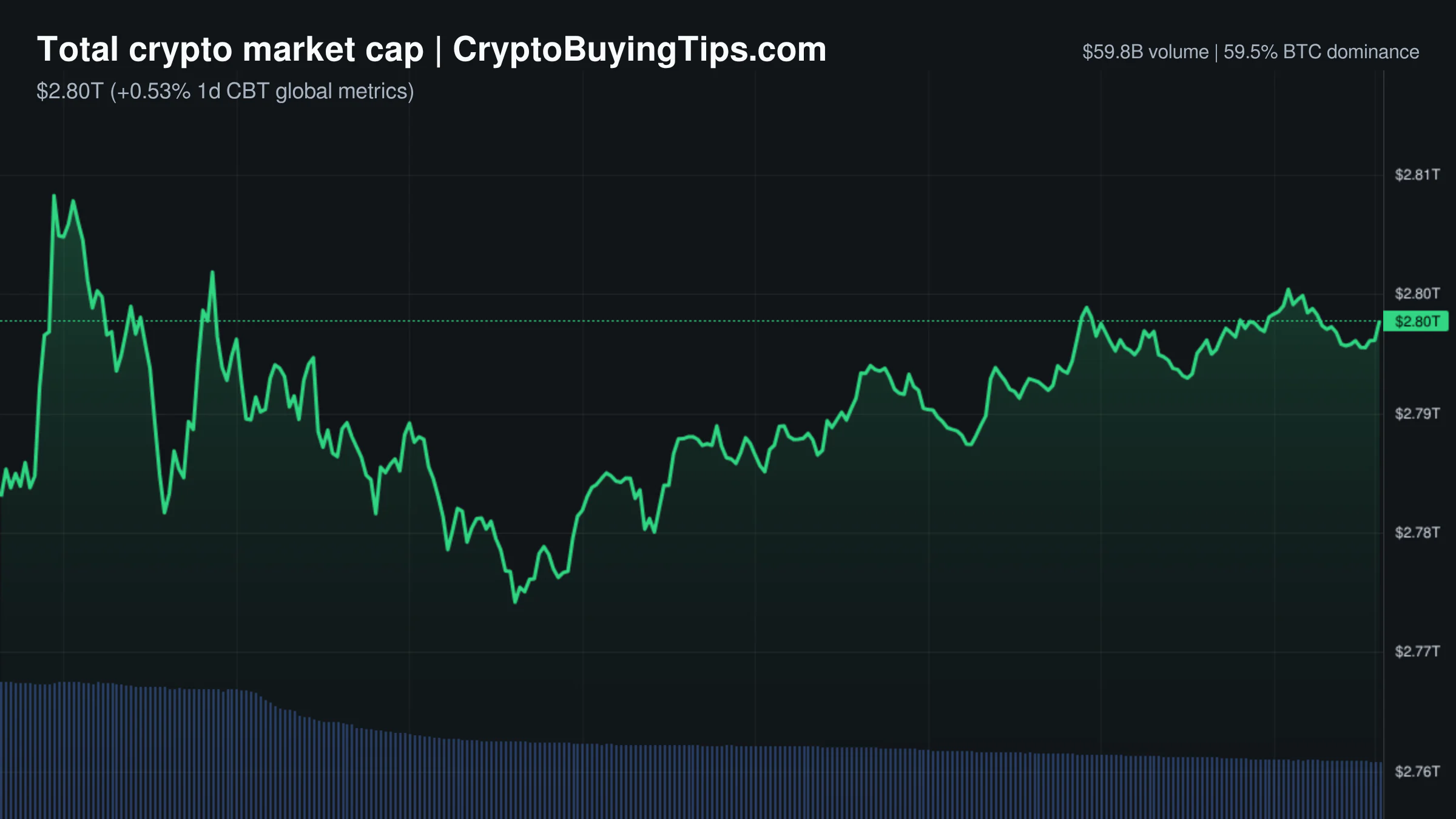
Crypto Market Overview | Liquidity vanishes as spot volume drops while derivatives remain bloated | October 10, 2026
Spot volume drops while derivatives remain bloated in today's crypto market overview; see what our data shows about…
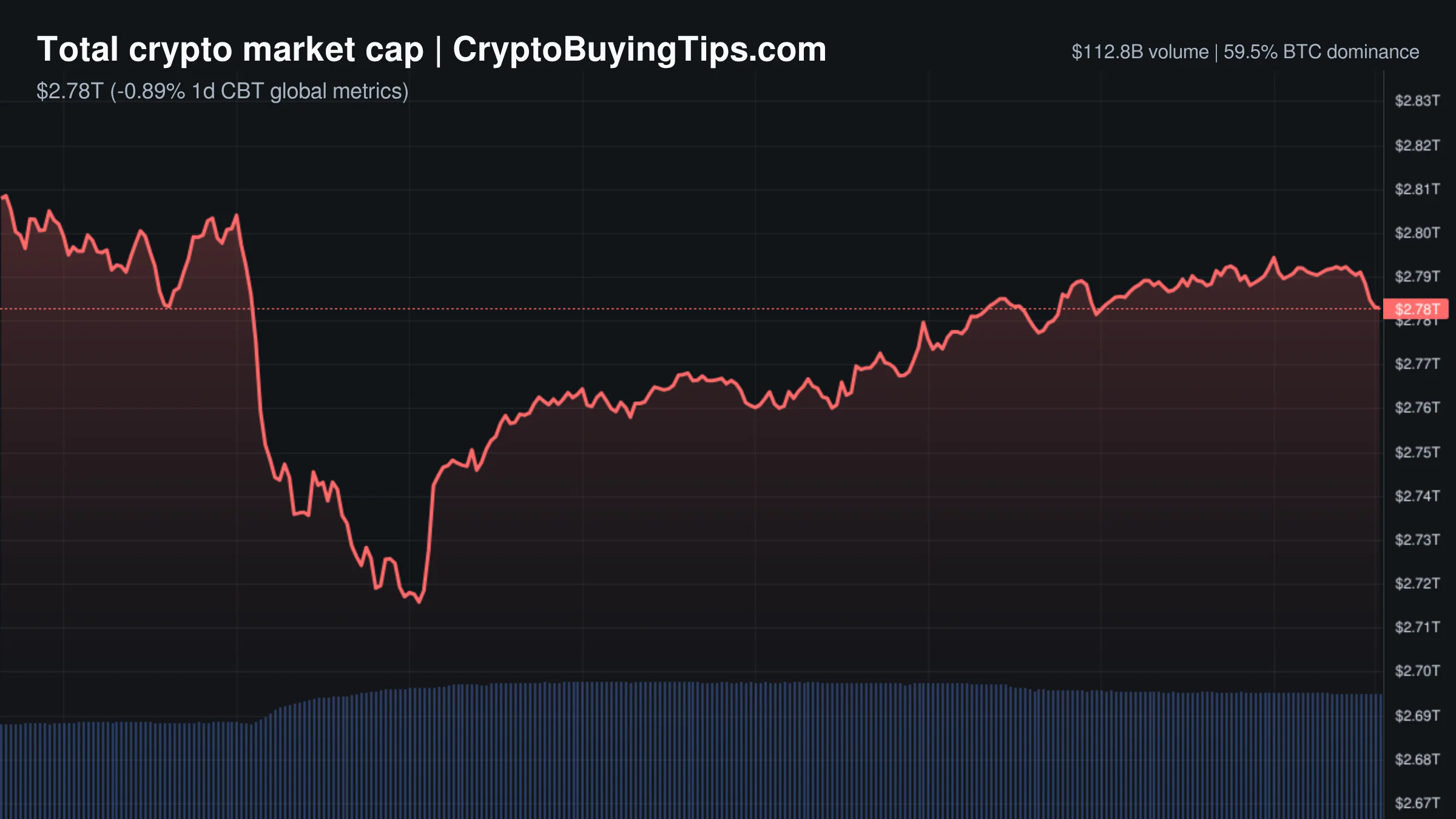
Crypto Market Overview | Volume surges amid regulatory friction and institutional accumulation | October 9, 2026
Crypto market overview shows volume surging amid price dips; see how institutional accumulation contrasts with…

Ethereum gas fees are at a standstill. Here is why that is actually a warning
The quiet cost of transactions on Ethereum might feel like a bargain for beginners. Our read is that persistently low…
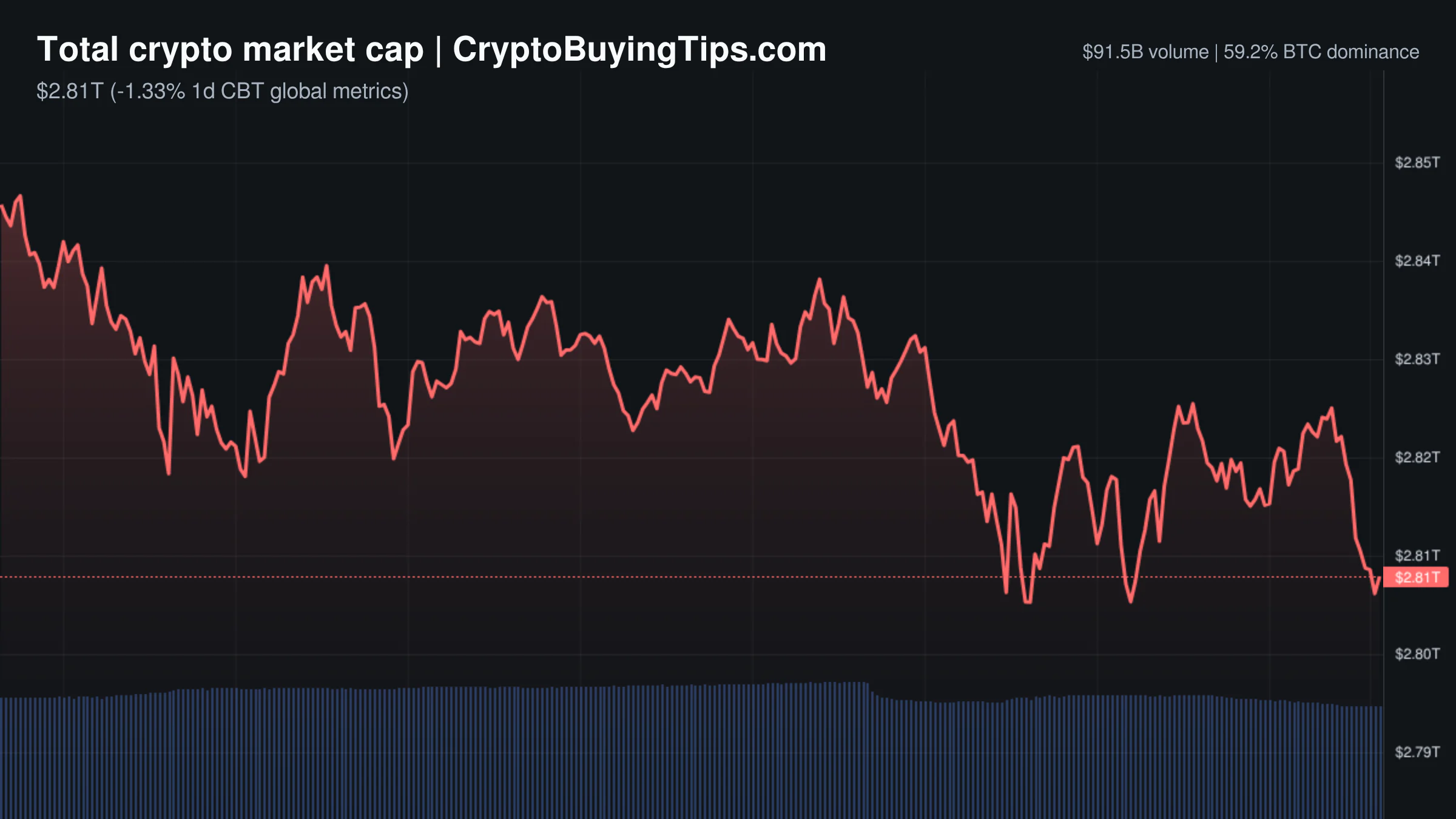
Crypto Market Overview | leveraged bets dwarf spot volume amid institutional outflows and regulatory pressure | October 8, 2026
Leveraged bets dwarf spot volume amid institutional outflows and regulatory pressure, detailing market dips in BTC and…