

OKX lists 113 tokenized stocks while 67 issuers object. Who owns the share?
OKX is trading 113 tokenized US securities on Uniswap v4, around the clock, and 67 of the companies involved asked not to be on the list. That's a slightly awkward guest-list situation, and it points straight at the question underneath: what are tokenized stocks and how do they work, and does the answer change when the company never agreed to the arrangement?
We'll keep the news short, because Cointelegraph's report is where the headline lives and we won't pretend to have seen terms we haven't. Our news scoring system rated this story 9/10 for liquidity impact, the highest liquidity score among the day's top stories, with 6/10 for novelty and 7/10 for macro impact. The more interesting layer is what a token like this actually is, and whether anyone is trading it as if it matters.
What are tokenized stocks and how do they work?
The short answer: a tokenized stock is a crypto token built to follow the price of a company's share. Holding it does not make you a shareholder. It makes you a creditor of whoever issued the token, with a promise attached.
There are broadly two ways to build one. In the backed model, an issuer buys real shares, parks them with a custodian, and mints one token per share (or per fraction). The token is a receipt, and redemption rights decide whether the receipt is worth anything. In the synthetic model, there may be no share anywhere. The token tracks the price through derivatives or through nothing more than a contract and a promise to pay out the difference.
Both look identical on a trading screen. That is the problem, and also the sales pitch.
The trading side is simpler. On Uniswap, a pool holds a token and a stablecoin such as USDC, and the price comes from the ratio between them. Uniswap v4 lets pool creators attach custom code, called hooks, which can in principle enforce rules such as who may trade. Whether OKX's pools use that, and what restrictions the token contracts themselves carry, isn't in the material we have. Smart contracts can freeze or block transfers when written that way. Tokens that can be frozen are a different animal from tokens that can't, and the contract is where you find out.
X Layer is OKX's own network, which means the venue, the chain and the listing all sit close to one company. Readers can draw their own conclusions about decentralization there.
Why 67 companies might object
We don't have the objecting companies' stated reasons, and we won't invent them. What we can say is that a company has plenty of structural reasons to dislike a stranger issuing tokens against its name. Nobody has to tell a company when a third party lists a token tracking its stock, yet the token carries its brand and invites investors to assume some relationship. The company has no say over the redemption terms, the custody, or what happens to dividends and voting.
Our read is that the 67 objections are less a rejection of blockchains than a rejection of being the underlying asset in a product they didn't design. If you've read our piece on Ondo's custodial model, you'll know the same theme: the asset is rarely the story, the custody arrangement is.
Is on-chain money following the headline?
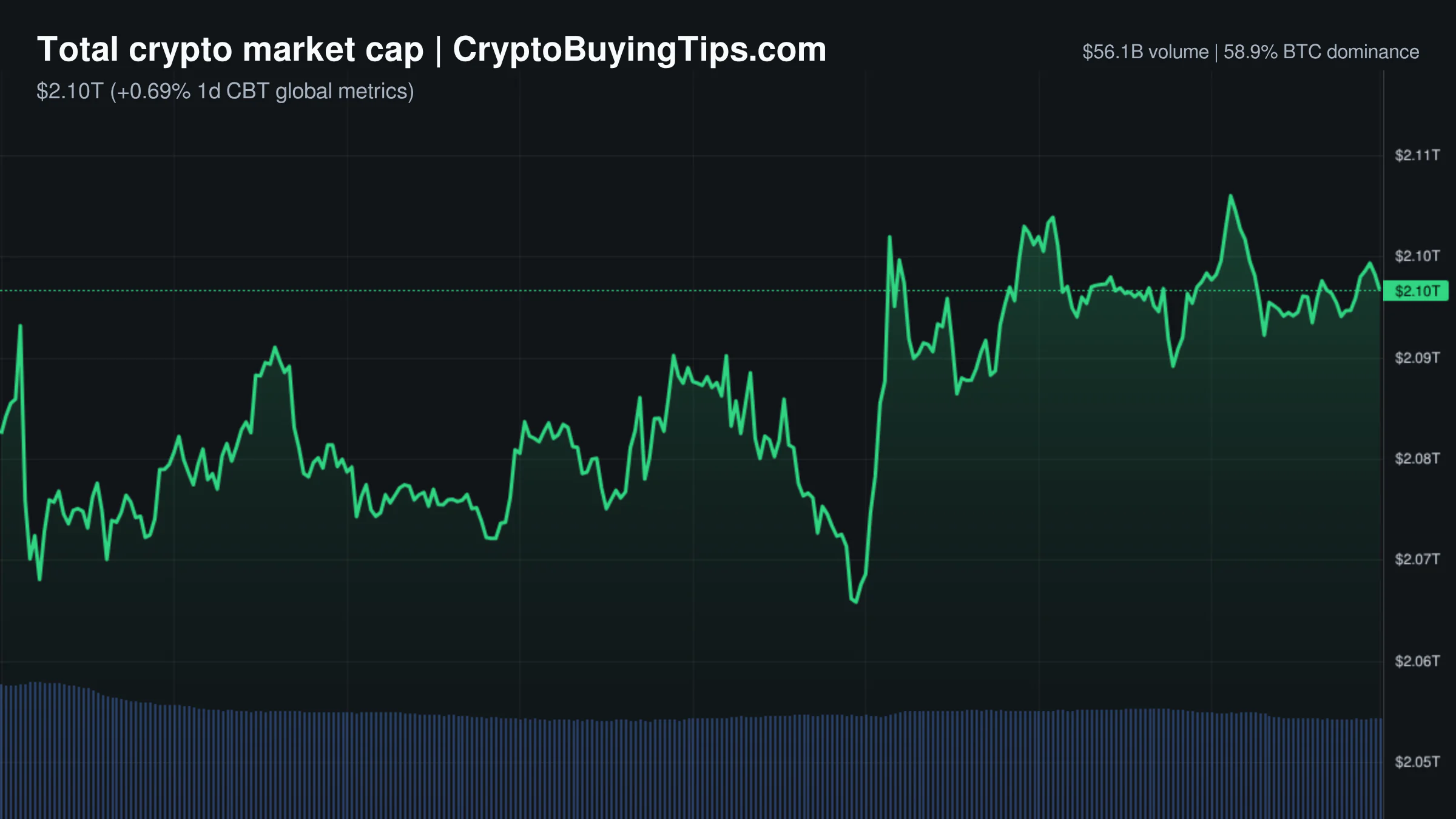
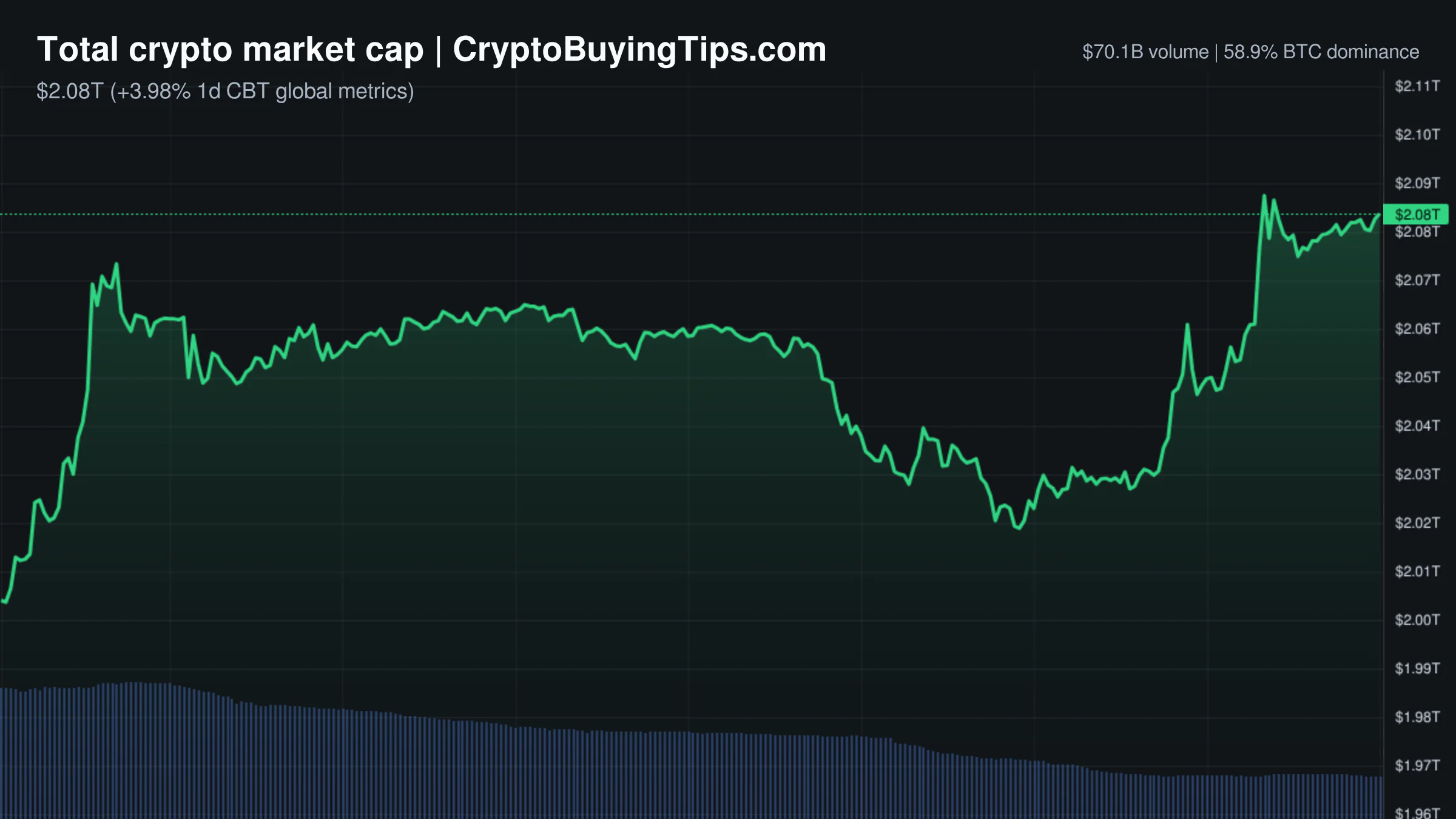
Here the worked example gets less exciting. Fear & Greed sits at 9, total market cap is $2.08T, and Bitcoin trades at $60,313.75. In that mood you'd expect any shiny new market structure to be ignored, and mostly it is.
Our DEX trending data does show tokenized stocks moving, though not the ones in this story. In the portion of the feed in front of us, the top-ranked token over 24 hours is NVDA on Robinhood Chain, priced at $162.40 with $68.8M in volume against $9.5M of liquidity. That's about 7.2 times as much volume as liquidity, and roughly three times its listed market cap of $20.5M. Plenty of trading on a thin pool tells you people are active. It doesn't tell you they're comfortable. It's also a different venue from OKX's listing, and we can't see OKX's X Layer tokens in that excerpt, so we won't claim they're drawing the same flow.
The broader numbers argue against a tokenization-led story. Spot volume is $100.46B, up 68.38%, and derivatives volume is $975.68B, up 65.48%. DeFi volume is $13.15B, up 65.44%. If tokenized equities were pulling capital on-chain, you'd expect DeFi to outrun the rest. It slightly lagged. The jump looks uniform across the board, which reads more like broad participation in a selloff than a rotation toward tokenized shares.
Leverage dominates all of it. Perpetual open interest is $283.07B, about 13.6% of total market cap, and derivatives account for roughly 9.7 times spot volume. Ethereum gas is 0.07 Gwei, which is close to free. Cheap settlement hasn't summoned a crowd. Funding rates and liquidation data didn't load for us, so we can't say whether longs or shorts are being flushed.
The ownership question: who really holds the share?
Take the simplest case, Bitcoin. Bitcoin holds 58.6% of the market on CoinMarketCap's overview widget, and the question of who owns a bitcoin has a boring, correct answer: whoever holds the keys. Nobody needs to trust a custodian's paperwork.
A tokenized stock has layers. There is the company that issued the real share, the registered holder of record, the custodian (if any), the token issuer, the smart contract, the pool, and finally you. Legal ownership of the share sits at the top of that stack, and your token is only as good as the weakest link below it. When the issuer hasn't consented, the stack has one more gap in it.
So the practical test before buying any tokenized stock is dull and useful. Find out whether the token is backed or synthetic, who the custodian is, whether you can redeem for the share or just for cash, and whether the contract can freeze your balance. If the answers aren't published, treat the token as a price tracker with a logo on it.
Our earlier piece on tokenizing stocks as a trap made a similar argument about centralized receipts in blockchain paint. Nothing in this launch changes that view, and 67 reluctant issuers add some weight to it. The technology works fine. The unresolved part is who you're actually trusting, and that part doesn't run 24/7.
Some links in this article may be affiliate links. We may earn a commission at no extra cost to you — this never influences our analysis or coverage.

Sigrid Voss
Crypto analyst and writer covering market trends, trading strategies, and blockchain technology.
More Articles
Crypto Market Overview | extreme fear meets thin-volume bounce amid mounting etf outflows | November 23, 2026
The crypto market overview shows extreme fear with a Fear & Greed Index of 9, as a thin-volume price bounce occurs amid…

Bitcoin ETFs shed $1.8B in a week. Is it panic, or a carry trade closing?
Institutional investors are quietly exiting Bitcoin ETFs even as the price bounces. We think this is less about a loss…
Crypto Market Overview | Bitcoin recovers above $60,000 on declining volume while extreme fear persists | November 22, 2026
Bitcoin recovers above $60k amid extreme fear despite declining volume; see our market overview read on the latest…
Venice Token is up 24% while Nvidia sits 48% below its peak. Rotation or a one-off?
The AI trade is cooling while Venice rises 24 percent. Low trading volumes and thin order books are driving price drifts…