

The SEC is finally letting banks tokenize securities. Here is why your portfolio should care
I've spent the last few years watching the SEC treat every single crypto project like a potential crime scene. But things are shifting. The new SEC Chair, Paul Atkins, is moving toward an "innovation exemption" that basically gives banks a green light to put securities on-chain. For most people, this sounds like boring corporate jargon, but it's actually the first time we're seeing a concrete regulatory bridge for institutional liquidity. If you're trying to figure out the difference between tokens and tokenized securities, you're not alone. Most people use the terms interchangeably, but in the eyes of the law (and your bank), they are worlds apart.
The difference between tokens and tokenized securities
To understand this shift, we have to stop thinking of "tokens" as one thing. When I talk about a token in the context of a meme coin or a governance token for a DeFi protocol, I'm talking about a digital asset that usually derives value from its own ecosystem or community hype. These are often "unbacked" in the traditional sense.
A tokenized security is different. It's a digital representation of a real-world asset (RWA) that already has a legal claim attached to it. Think of a corporate bond, a piece of real estate, or a share of Apple stock. The asset exists in the physical or legal world, and the token is just a high-tech wrapper that allows it to be traded on a blockchain.
In my experience, the "token" is the vehicle, but the "security" is the actual value. If a bank tokenizes a Treasury bill, the token is just a digital receipt. If that bank goes bust, you aren't just holding a useless piece of code; you have a legal claim to the underlying government bond.
Why the Atkins exemption changes the game
For years, banks wanted to do this, but they were terrified of the "regulation by enforcement" era. They didn't want to launch a product only to have the SEC sue them three years later. The innovation exemption is a signal that the SEC is willing to let institutions experiment with on-chain securities without the constant threat of a lawsuit.
This is a massive catalyst for liquidity. Right now, the crypto market is still heavily driven by retail speculation and a few big ETFs. We're seeing Bitcoin dominance climb to 60.06%, which tells me that capital is staying safe in the flagship asset while the rest of the market waits for a real reason to move. Tokenization gives them that reason. When banks start moving trillions of dollars in bonds and equities onto chains, the "utility" of networks like Ethereum and Solana stops being a theoretical talking point and becomes a business requirement.
What this means for your holdings
I'm not a permabull, and I'm not saying this is an immediate moon mission for every altcoin. In fact, this could be a double-edged sword.
On one hand, it validates the tech. If the biggest banks in the world are using blockchains to settle trades, the "blockchain is a scam" argument dies completely. This usually leads to a higher floor for the major Layer 1 assets that host these securities.
On the other hand, this is the "institutionalization" of crypto. The wild west days of 2019 are gone. We're moving toward a world of KYC, gated pools, and regulated rails. If you're holding your assets on an exchange, you're essentially trusting a middleman. As these professional-grade securities enter the space, I've become even more convinced that owning your keys is the only way to actually benefit from the system. I personally use a Ledger Nano Gen5 because it's an affordable way to get CC EAL6+ security and a touchscreen without spending $400 on a luxury model. If the banks are moving in, the risk of exchange contagion or regulatory freezes only goes up.
My honest take on the RWA trend
I've been tracking Real World Assets since the first few projects popped up in 2020. Back then, it was all vaporware. Now, with RWA tokenization hitting $29 billion, it's a real trend. But I still have concerns.
Most of these "tokenized securities" won't be permissionless. You won't be able to just swap a tokenized building for some SOL on a DEX without a dozen identity checks. We're creating a parallel financial system that looks a lot like the old one, just faster.
Still, the efficiency gain is undeniable. Settlement times that used to take two days (T+2) can now happen in seconds. That's a win. I'm watching to see if this liquidity actually leaks into the broader crypto market or if the banks just build their own private "walled gardens" and leave the rest of us in the dust. For now, I'm betting on the infrastructure. The banks might not love the ethos of crypto, but they love the efficiency of the ledger.
Some links in this article may be affiliate links. We may earn a commission at no extra cost to you — this never influences our analysis or coverage.

Sigrid Voss
Crypto analyst and writer covering market trends, trading strategies, and blockchain technology.
More Articles

Ripple just got a US banking license. Here is why the RLUSD stablecoin is the real story
The industry's insistence on being purely decentralized seems to take a brief holiday when the OCC grants Ripple a US…
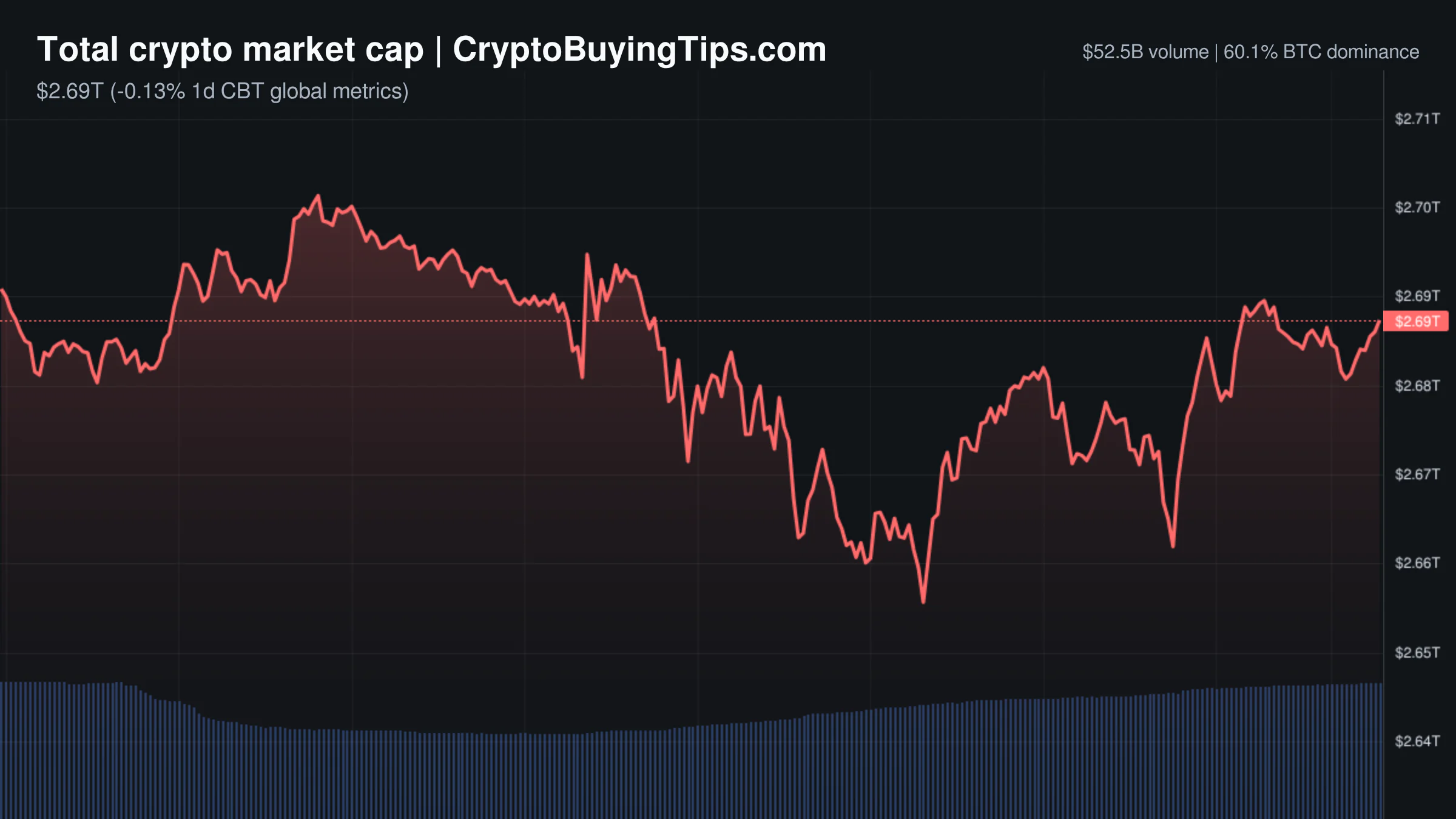
Crypto Market Overview | Derivatives volume dwarfs spot activity amid macro caution and ETF inflows | October 26, 2026
Derivatives volume dwarfs spot activity amid macro caution and ETF inflows; see our market overview for key asset…

Hyperliquid whales are net short HYPE as $37M hits Coinbase
The crowd loves the hype, but our tracker shows whales betting otherwise as $37M hits Coinbase. Professional positioning…
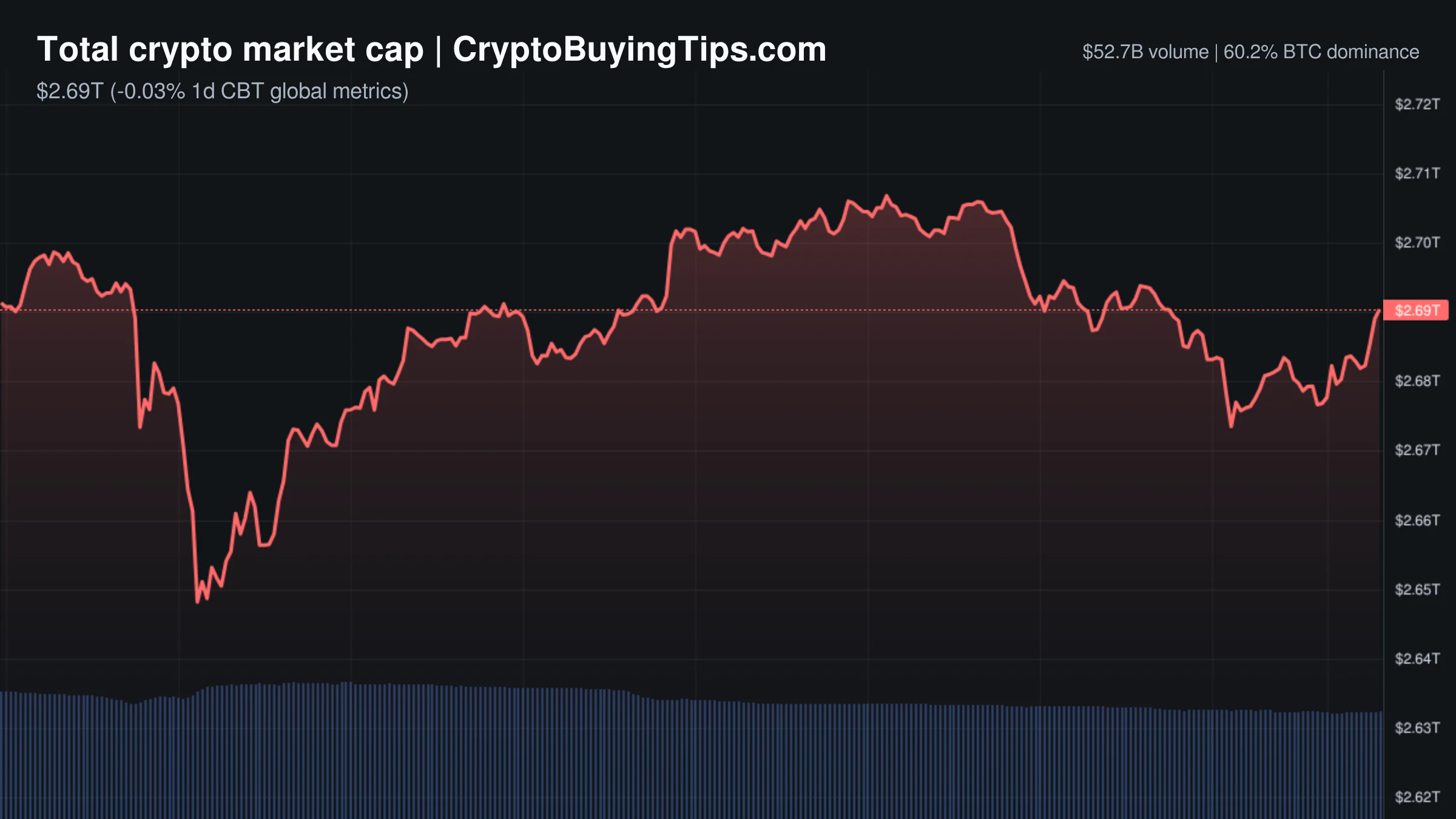
Crypto Market Overview | volume collapses as bitcoin holds $80k amid mixed institutional signals | October 25, 2026
Crypto market overview shows collapsing volume as bitcoin holds $80k amid mixed institutional signals and geopolitical…