

Coinbase warns that quantum computers could break Ethereum. Is your ETH actually safe?

I remember when I first started digging into the crypto rabbit hole back in 2019, the biggest fear was just getting scammed by a fake ICO or losing a seed phrase. Now, we're talking about a threat that sounds like it's ripped straight from a sci-fi movie. Coinbase recently put out an advisory suggesting that quantum computers could eventually crack the cryptography that keeps Ethereum and other blockchains secure. If you're wondering about quantum computing vs blockchain security explained in simple terms, it basically comes down to a race between the people building these super-computers and the developers trying to update the code before the "big break" happens.
The short answer
No, you don't need to panic and sell your ETH today. Quantum computers aren't powerful enough yet to steal your funds. However, the threat is real because once a "cryptographically relevant" quantum computer exists, it could theoretically derive your private key from your public address, allowing someone to move your coins without your permission.
How it actually works
Most of the crypto we use, including Bitcoin and Ethereum, relies on elliptic curve cryptography (ECC). For those of us who didn't major in math, ECC is just a way to create a public key (your address) and a private key (your password) that are mathematically linked but nearly impossible to reverse. A traditional computer would take billions of years to guess your private key.
Quantum computers don't just work faster; they work differently. They use qubits, which allow them to process a massive number of possibilities at once. There is a specific mathematical formula called Shor's algorithm that can solve the exact kind of problem ECC uses. If a quantum computer with enough stable qubits is built, it could run that algorithm and find your private key in a fraction of the time.
I've been following this since the Google research reports a few years back, and the scary part is that Proof-of-Stake chains like Ethereum and Solana might be more vulnerable in certain ways than Bitcoin. Bitcoin's Proof-of-Work is robust, but the way we sign transactions on almost every major chain is the weak point.
Where people get tripped up
The biggest misconception I see is the idea that a hardware wallet is a "quantum shield." It isn't. I use a Ledger Nano X for my long-term holdings because its CC EAL5+ certified chip is great for stopping today's hackers, but if the underlying math of the blockchain is broken, the wallet is just holding a key that is no longer secret.
Another point of confusion is the timeline. You'll see some people claiming this will happen next week, while others say it's a century away. The truth is usually in the middle. We are seeing steady progress in qubit stability, but we aren't at the "break everything" stage yet.
Putting it into practice
So, what do you actually do? For now, the best move is to stay informed and not let the FUD dictate your portfolio. The Ethereum community is already discussing "quantum-resistant" signatures. This would involve a hard fork to update the cryptography to something a quantum computer can't easily solve.
If you're holding a lot of assets, the most practical step is to ensure your funds are not sitting on a centralized exchange. While an exchange can't stop a quantum attack on the network, they are much more likely to be hit by a standard hack in the meantime. I prefer keeping my main bags in a hardware wallet and only keeping what I'm actively trading on an exchange.
I'm keeping a close eye on the developers. If I see a formal proposal for a quantum-resistant upgrade on the Ethereum roadmap, that's a sign that the industry is taking the Coinbase warning seriously. Until then, I'm not selling my ETH over a theoretical computer that doesn't fully exist yet.
Sigrid Voss
Crypto analyst and writer covering market trends, trading strategies, and blockchain technology.
More Articles
Microsoft's new quantum chip is a wake-up call for Bitcoin's security
Microsoft’s new quantum chip poses a serious threat to Bitcoin’s security, potentially exposing private keys and…
The SEC just made crypto a priority through 2030. Here is the catch
The SEC is signaling a major shift in its approach to crypto, prioritizing regulation through 2030—a move that could…
Fear is peaking, but the big money isn't panicking
Bitcoin’s Fear and Greed Index is spiking, but major investors are quietly accumulating, revealing a significant…
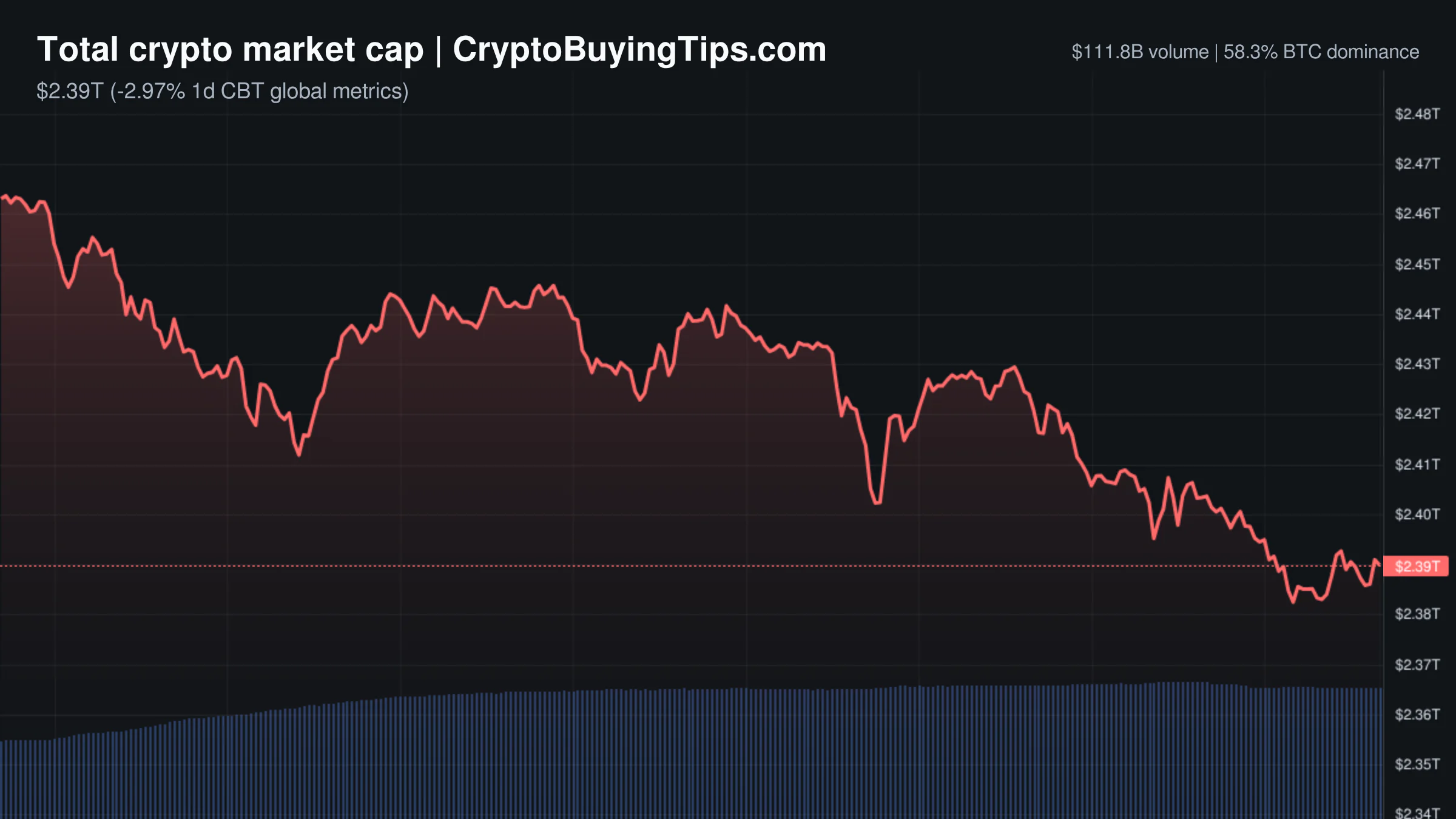
Crypto Market Overview | Leveraged traders fuel price drops | June 2, 2026
Crypto market plunges amid leveraged trading. Total market cap down 3.05% with soaring volume. Stablecoin rotation…