
Crypto Market Overview | institutional tokenization drives capital flow despite fear sentiment | August 4, 2026
Crypto Market Overview | institutional tokenization drives capital flow despite fear sentiment | August 4, 2026
Market overview
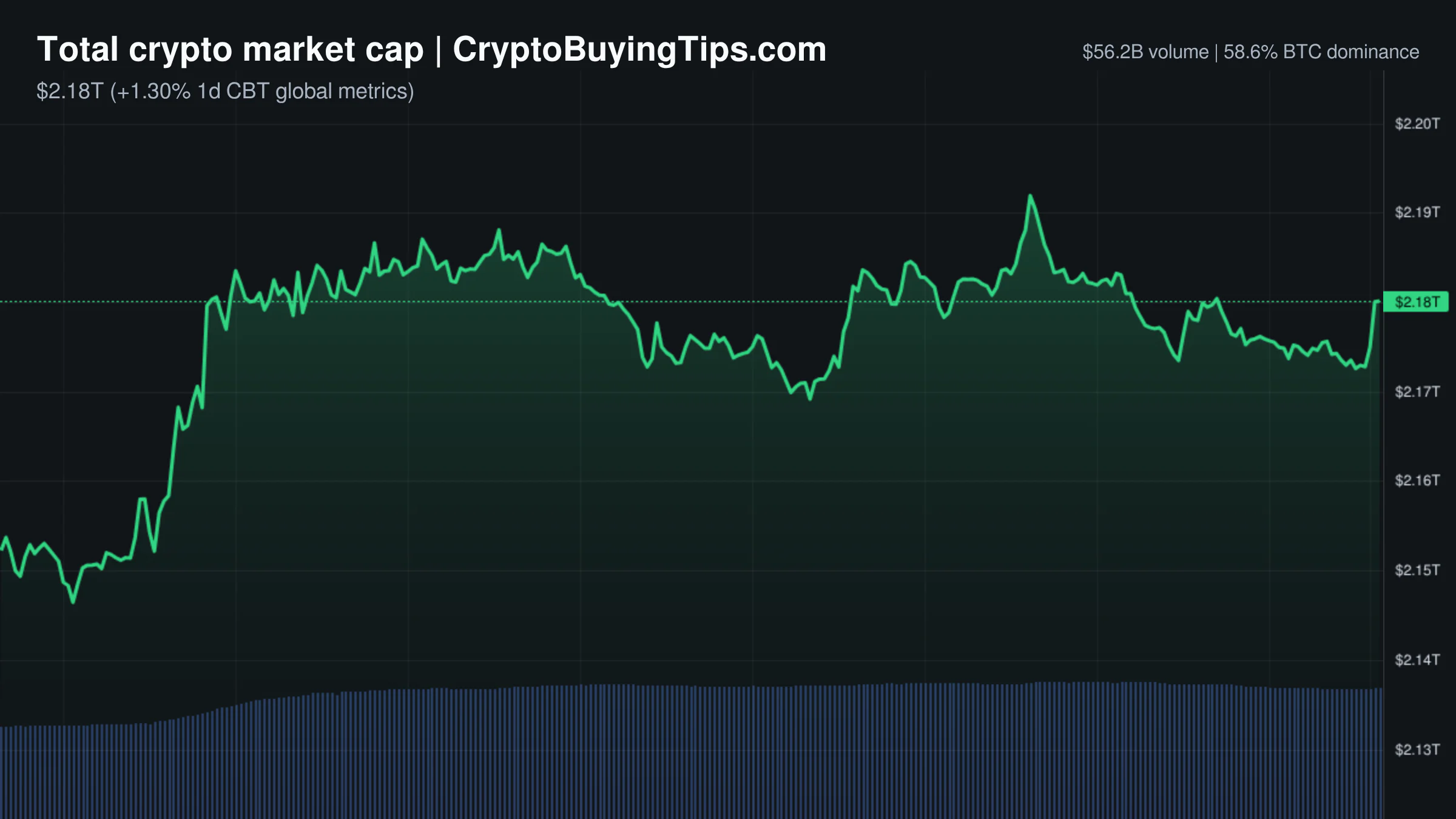
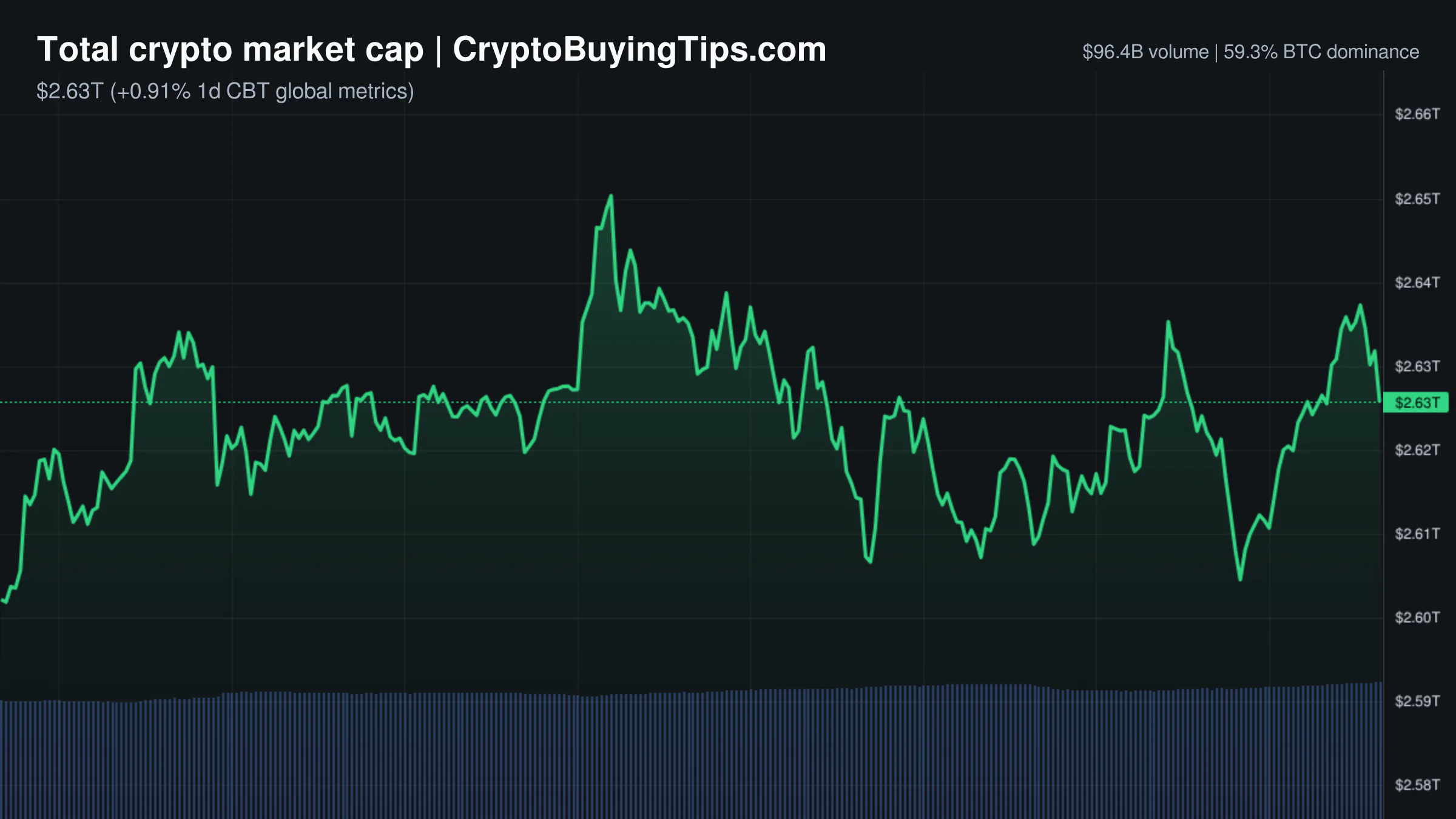
The crypto market is currently operating in a state of strange contradiction. While the total market cap sits at $2.26T with a modest 24 hour increase of 1.21%, the sentiment remains firmly rooted in fear. The Fear and Greed Index is at 36, which suggests a level of anxiety that is not reflected in the actual price action. We see the CMC20 and CMC100 indices both climbing over 1.4%, yet the collective mood is one of deep suspicion. This gap between price and sentiment is often where the most interesting opportunities live, as retail traders typically wait for "extreme greed" before buying, while the indices climb in spite of them.
Liquidity is heavily skewed toward the derivatives market. With a 24 hour derivatives volume of $580.71B compared to a spot volume of $56.23B, the ratio is roughly 10.3 to 1. This is a high leverage environment. It means the current price stability is built on a foundation of bets rather than raw accumulation. When derivatives volume dwarfs spot activity to this extent, any sudden move in the wrong direction can trigger a cascade of liquidations. The market is essentially a coiled spring, held in place by high open interest in perpetuals, which currently stands at $386.88B.
Bitcoin dominance continues to climb, reaching 58.64%. This confirms that we are in a Bitcoin season, with the Altcoin Season Index sitting at a neutral 44. Capital is not rotating into smaller assets yet. Instead, it is concentrating in the largest cap assets, which is a typical flight-to-safety move during periods of geopolitical instability. The stablecoin dominance of 11.26% suggests a decent amount of capital is still sitting on the sidelines, waiting for a clearer signal before deploying into riskier altcoins.
Bitcoin and Ethereum
Bitcoin is trading at $63,681.17, up 1.82% over the last day. While the price is ticking higher, the underlying demand from U.S. investors remains stubbornly weak. The Coinbase Premium has been negative for 77 consecutive days. This is a rare and telling metric. It indicates that Bitcoin is being bought more aggressively on offshore exchanges than on Coinbase, which usually serves as the primary gateway for American institutional and retail capital. The price is rising, but the "smart money" in the U.S. is not the one driving the bus.
Ethereum is priced at $1,866.31, showing a 1.32% gain. Its dominance has slipped to 10.33%, a trend that has been consistent for months. The most striking data point for Ethereum today is the network activity. Gas fees are incredibly low, ranging between 0.14 and 0.23 Gwei. This means the network is practically a ghost town. It is a bit ironic that the price is climbing while the actual utility and on-chain stress are almost non-existent. The market is pricing in future institutional adoption rather than current network usage.
Top crypto prices
Bitcoin leads the pack at $63,681.17, maintaining its rank as the dominant asset with a market cap of $1.27T. Ethereum follows at $1,866.31 with a market cap of $225.25B. BNB is at $589.62, up 0.60%, while XRP is trading at $1.07. Solana has seen a 1.06% increase to $73.32. TRON is at $0.3290, and Hyperliquid is the standout performer among the top ten, climbing 4.58% to $55.02.
News driving today's market
The dominant narrative today is the aggressive push into tokenization by BlackRock. The asset manager has launched tokenized money market funds on Solana and Ethereum, specifically designed for stablecoin reserve management. By recording ownership on-chain and investing in short-term U.S. Treasuries, BlackRock is effectively turning the blockchain into a high-efficiency filing cabinet for government debt. This is not the "financial revolution" that moon-boys dream of, but it is the kind of boring, institutional plumbing that actually brings liquidity. We previously covered how active crypto management is becoming the new standard for institutions, and BlackRock's move into tokenized cash is the logical next step.
The scale of this move is significant. BlackRock is debuting tokenized share classes for European money market funds with $311 billion in assets, using JPMorgan's Kinexys. This bridges the gap between traditional finance and digital rails in a way that is hard to ignore. However, we should be cautious. We previously warned that the tokenizing stocks trap can lead to centralized receipts that look like blockchain assets but offer little actual decentralization. Still, the inflow of potential capital is a bullish signal for the underlying networks.
Mastercard has also entered the fray by completing a $1.8B acquisition of BVNK. This is a clear effort to expand stablecoin payments and treasury services for enterprises. When a payment giant like Mastercard spends nearly two billion dollars on stablecoin infrastructure, it validates the utility of these assets beyond mere speculation. Additionally, Ripple's strategic investment in Zilo and Licuido shows that the industry is pivoting toward real-world asset tokenization. Even sovereign entities are changing their strategy, as Bhutan's GMC has decided to put part of its 10,000 BTC treasury to work on a market-neutral basis rather than just holding it as a static national asset.
Social intelligence
The geopolitical atmosphere is currently the primary weight on market sentiment. Reports of a dry bulk ship being hit by a projectile near the Strait of Hormuz have sent a ripple of anxiety through the risk-asset markets. The Strait of Hormuz is one of the most critical shipping chokepoints in the world. Any escalation there typically leads to a spike in energy prices and a general retreat from risk. While the Iraqi Oil Ministry claims tankers are still passing through, the initial shock is why the Fear and Greed Index remains low despite the green candles.
In the U.S., the market is eyeing a scheduled set of remarks from President Trump on Wednesday. In this environment, a single tweet or a stray comment about digital assets can move the market more than a week of technical analysis. Meanwhile, data from Japan suggests that the Bank of Japan may not have intervened in the FX market on Monday. This lack of intervention keeps the volatility in currency pairs high, which often spills over into the crypto markets as traders hedge their global macro positions.
The internal politics of Iran are also adding to the noise. President Pezeshkian's insistence that he will not resign and his alignment with the military suggests a period of continued instability. For the crypto market, this is a double-edged sword. Geopolitical chaos usually drives a flight to the U.S. dollar and treasuries, but it can also reinforce the narrative of Bitcoin as a hedge against state failure. For now, the fear is winning.
Trading ideas worth watching
Bitcoin is currently fighting a battle at the $62,000 level. One bullish setup suggests that if buyers can defend the support zone between $61,920 and $62,220, a recovery toward $63,560 is likely. However, this is complicated by some grim data. Roughly 1,816 BTC, worth about $114 million, were recently stolen from over 5,200 addresses in an expanded attack on Coldcard wallets. On top of that, Strategy sold 1,638 BTC for approximately $104.7 million. These are significant sell-side pressures that could easily overwhelm the bid at $62k.
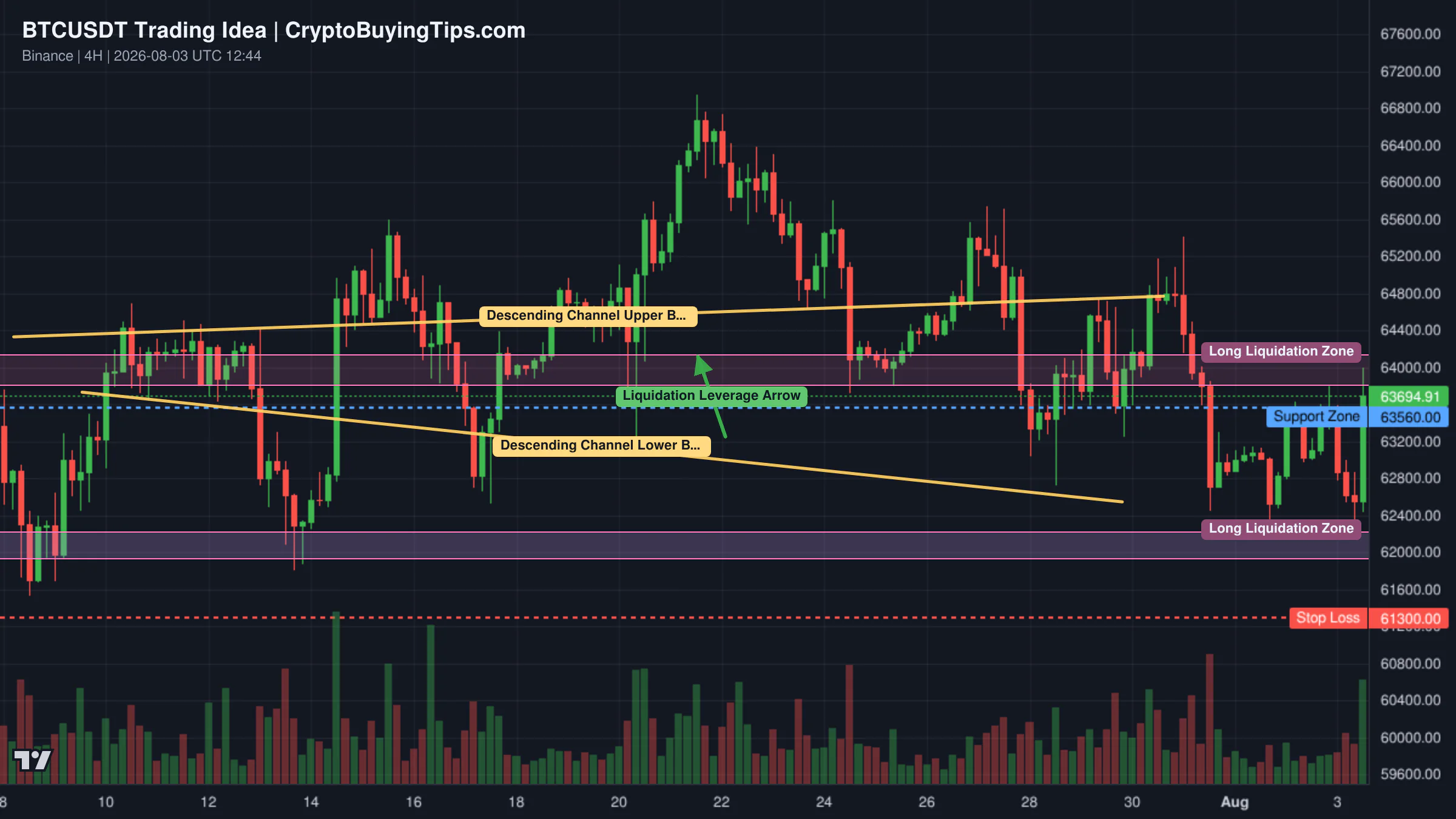
A more cautious view sees a bearish breakdown. If Bitcoin fails to hold the $63,700 level, it could trigger a slide through the $62,300 neckline. This would open a path down to the $58,300 to $58,600 demand zone. The aggressive buying we saw at the start of the week often snaps back, and a failure to maintain momentum here would suggest that the recent rally was merely a short squeeze rather than a trend reversal.
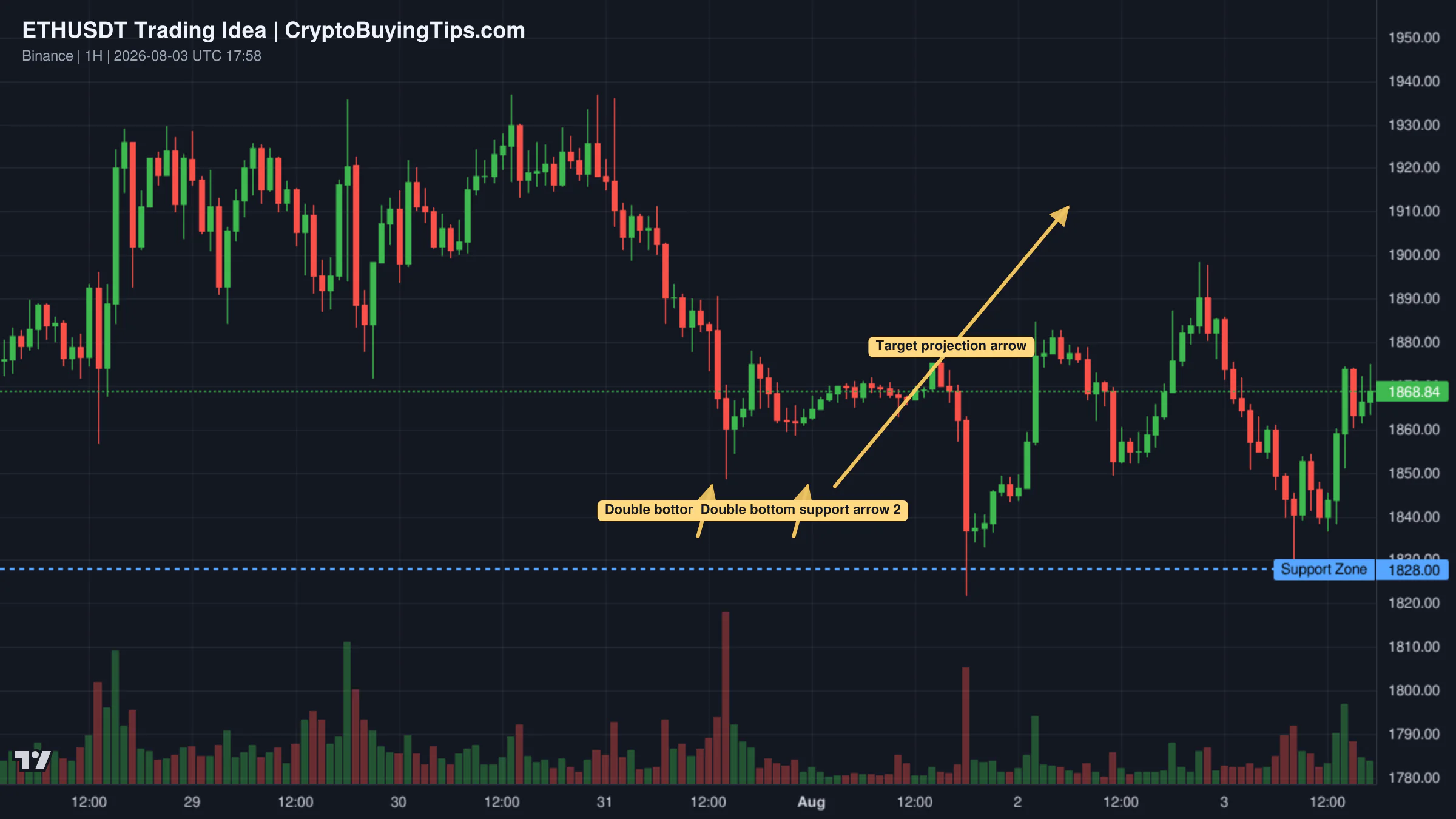
Ethereum presents a more interesting technical pattern. There are signs of a double bottom forming around $1,828. Buyers have stepped in twice at this level, creating a strong demand zone. If this support holds, the path of least resistance is higher, with targets at $1,897 and $1,934. The risk here is the lack of on-chain activity. A double bottom is a great pattern, but without a catalyst to drive actual network usage, the move could lack the volume needed to break through the nearest resistance levels.
What to watch next
The coming days will be a tug-of-war between institutional adoption and geopolitical risk. On one side, we have BlackRock and Mastercard building the infrastructure for a tokenized global economy. This is a long-term bullish driver that provides a floor for the market. On the other side, we have a fragile situation in the Strait of Hormuz and an unpredictable political calendar in the U.S.
The most important metric to watch is the Coinbase Premium. If it remains negative while the price climbs, it means the rally is being driven by offshore speculators and not by the deep-pocketed U.S. institutions. That would make the current price action fragile. We also need to see if Ethereum's gas fees start to rise. If the price continues to climb while the network remains a ghost town, the divergence will eventually become unsustainable. For now, we are in a "fearful bull" market, where the data is positive but the traders are too scared to admit it.
Some links in this article may be affiliate links. We may earn a commission at no extra cost to you — this never influences our analysis or coverage.

Sigrid Voss
Crypto analyst and writer covering market trends, trading strategies, and blockchain technology.
More Articles
Crypto Market Overview | leverage driving bitcoin's move amid institutional adoption and geopolitical risk | August 25, 2026
The market shows contradiction as leverage drives bitcoin's move amid institutional adoption and geopolitical risk…

Coinbase is putting stocks on Base, but the money is still in Bitcoin
Coinbase has launched tokenized stocks on Base, which sounds rather sophisticated for mere digital shares. However, our…
Crypto Market Overview | Leverage-driven rally amid strong ETF inflows as BTC targets 80k | August 24, 2026
Leverage-driven rally sees BTC near 80k amid strong ETF inflows; see our market overview on current crypto dynamics.

Derivatives volume is 8x higher than spot. Here is why that is a warning
The market's current price action seems to be driven by bets rather than cash; with derivatives volume eight times…