
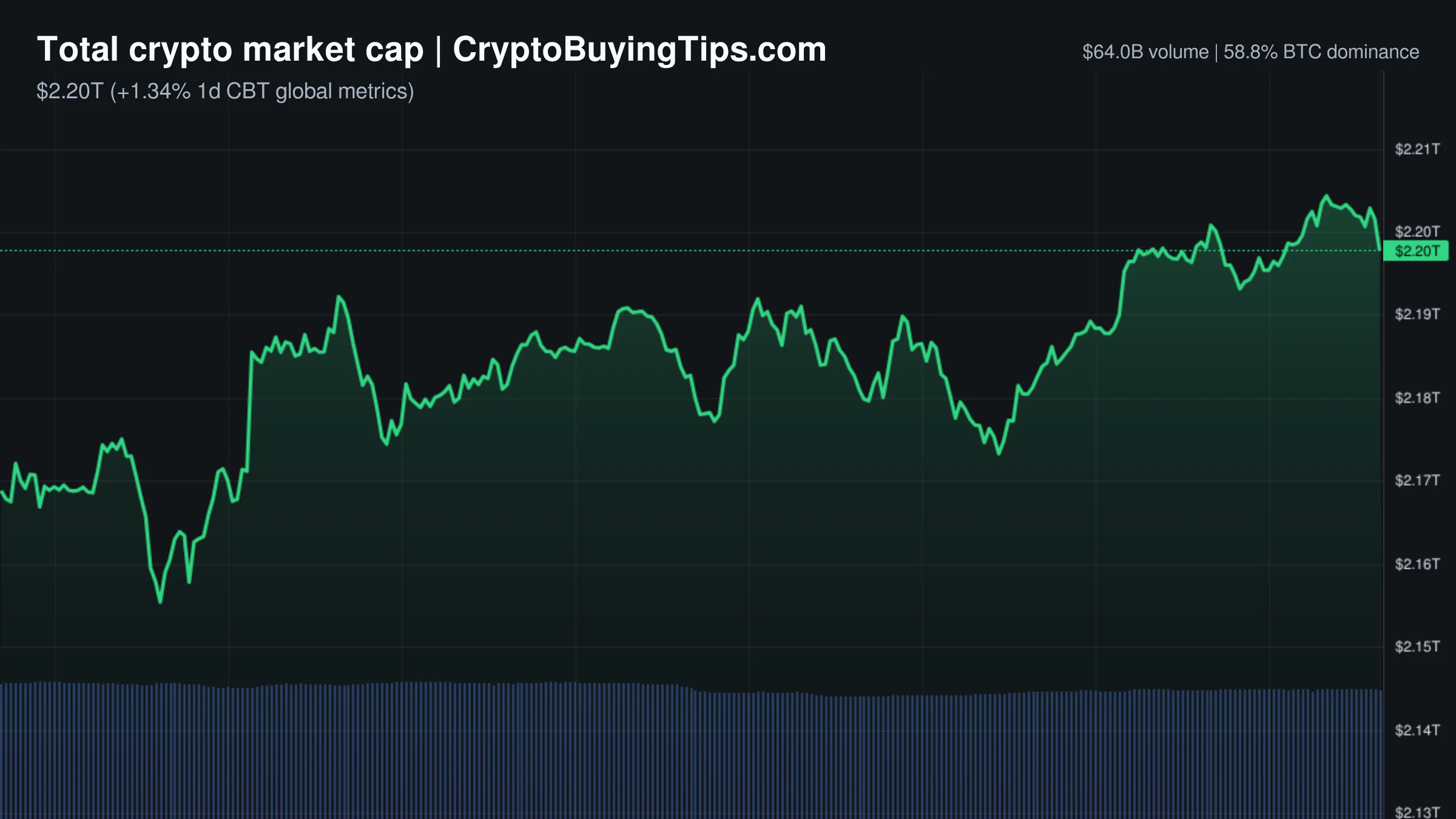
Crypto Market Overview | leverage-fueled rally amid fear index divergence | July 29, 2026
Crypto Market Overview | leverage-fueled rally amid fear index divergence | July 29, 2026
Market overview
The current market state is a study in contradiction. We are seeing a modest price recovery across the board, with the total crypto market cap sitting at $2.28T, yet the Fear and Greed Index remains stubbornly in the "Fear" zone at 36. This is the kind of divergence that usually suggests a "paper rally." The data supports this read. While the total market cap rose by 1.13% in the last 24 hours, the underlying liquidity is remarkably thin.
The most telling metric is the massive gap between spot and derivatives volume. Spot volume is hovering around $64B, but derivatives volume has exploded to roughly $718B. This means the current price action is being driven by leverage at a ratio of more than 11 to 1. When a move is fueled by perpetuals and futures rather than actual asset acquisition, the floor is often made of cardboard. A sudden shift in sentiment could turn these gains into a liquidation cascade.
Macro correlation remains a mixed bag. The S&P 500 is slightly positive at $740.86, but the NASDAQ is lagging at $675.49. This suggests a rotation out of high-growth tech, which typically drags on crypto. We are currently in a Bitcoin season, with the Altcoin Season Index at 22, meaning capital is staying concentrated in the largest asset rather than flowing into the broader ecosystem. Stablecoin dominance is at 11.23%, which indicates a decent amount of dry powder is still sitting on the sidelines, waiting for a reason to trust the market again.
Bitcoin and Ethereum
Bitcoin is currently trading at $64,391.98, up 1.52% over the last day. Its dominance is the primary story here, holding a commanding 56.63% of the total market. The asset is behaving as the only safe harbor in a volatile environment. However, the price action is fragile. The reliance on derivatives to push the price higher suggests that the current bid is more about short-covering than long-term accumulation.
Ethereum is priced at $1,910.09, marking a 1.71% gain. While the price is ticking up, the network fundamentals are worrying. Gas fees are exceptionally low, ranging between 0.07 and 0.1 Gwei. In plain English, the network is a ghost town. Low fees are great for users, but they signal a complete lack of on-chain demand. This supports our previous observation that Ethereum market share vanishes even as the corporate narrative improves.
The dominance of ETH has slipped to 10.11%. The asset is caught in a tug-of-war between institutional adoption and a lack of organic utility. The launch of new ETPs provides a price floor, but without a surge in actual network usage, ETH is essentially becoming a regulated security that happens to have a blockchain.
Top crypto prices
The broader market is seeing a modest green day, though the gains are uneven. XRP is the standout among the majors, climbing 3.03% to reach $1.08. Solana has managed a 1.01% increase to $73.93, while BNB is up 0.72% at $569.91. TRON is nearly flat, moving only 0.10% to $0.3261.
Hyperliquid is trading at $54.84, showing a negligible gain of 0.13%. The CMC20 and CMC100 indices are both trending upward, with gains between 1.42% and 1.97%. This suggests the rally is broad, but the lack of conviction in the Fear and Greed index tells us that traders are not yet convinced this is a trend reversal.
News driving today's market
The dominant headline is Morgan Stanley's expansion into the space. The firm has debuted Ethereum and Solana ETPs with some of the lowest fees in the market, including staking rewards. This is a significant move. We previously covered the SOL ETFs filing news and it is clear that the institutional appetite for alt-L1s is growing. When a giant like Morgan Stanley lowers the barrier to entry, it creates a steady stream of institutional liquidity that is less prone to the emotional swings of retail traders.
This institutional push is further supported by BlackRock and Fidelity, who are now backing the Clarity Act. This legislation aims to provide a clearer market structure for digital assets. When the largest asset managers in the world lobby for legal clarity, they are essentially de-risking the sector for the next wave of capital.
However, there is a darker undercurrent. Anthropic's Claude Mythos model has reportedly cracked post-quantum cryptography, specifically targeting the HAWK digital signature system. This is a systemic risk. If the math underpinning private keys can be broken by AI, the entire security premise of blockchain is called into question. We previously discussed how Claude Mythos breaking math is being largely ignored by a market preoccupied with ETF fees. It is a classic example of the market focusing on the furniture while the house is on fire.
Geopolitical tension is also adding to the noise. Russia has charged Telegram founder Pavel Durov with aiding terrorism and issued an arrest warrant. This creates a layer of regulatory uncertainty around one of the most important communication hubs for the crypto community. Meanwhile, Myanmar has approved the death penalty for forced scam labor and life imprisonment for crypto fraud. While this targets criminals, it highlights the extreme legal volatility in regions that have historically been hubs for crypto-related activity.
Social intelligence
The social feed is currently dominated by regulatory wins in Europe. Hungary has repealed mandatory third-party checks for crypto conversions and granted its first MiCA license to CoinCash. This is a practical victory for the industry. Removing the requirement to verify asset origins for every conversion reduces friction and makes the EU a more attractive place for institutional operations.
On the institutional front, BNY is reportedly adopting blockchain technology to process trades and maintain fund ownership records. This is a subtle but important signal. When an $8.6T custodian moves from "experimenting" with blockchain to "adopting" it for core records, it validates the technology's efficiency regardless of what the price of a token is doing today.
On the macro side, Saudi Aramco is rerouting oil to Asia due to Houthi attacks in the Red Sea. While this seems distant from crypto, it adds to the global inflationary pressure and shipping costs. This keeps the Fed in a difficult position regarding interest rates, which continues to be the primary gravity well for all risk assets.
Trading ideas worth watching
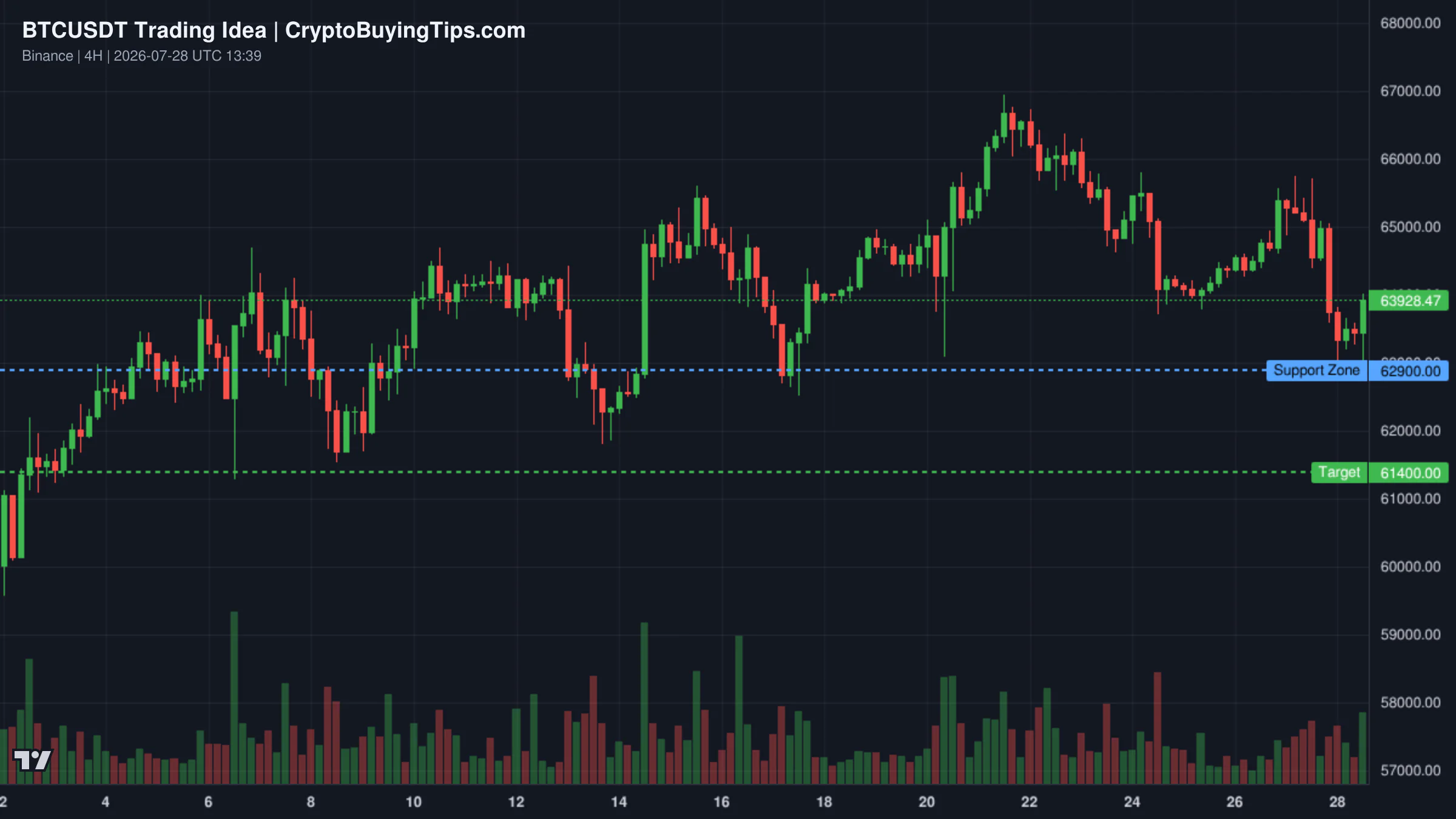
On the Bitcoin 4-hour chart, a Head and Shoulders pattern has formed. The right shoulder has been completed after a rejection of higher prices, and the ascending trendline has been broken. The asset is currently testing support at $62,900. If Bitcoin closes below this level, the bearish setup is validated. The measured move points toward a target of $61,400. As long as the price remains below the broken trendline, the technical outlook remains bearish.
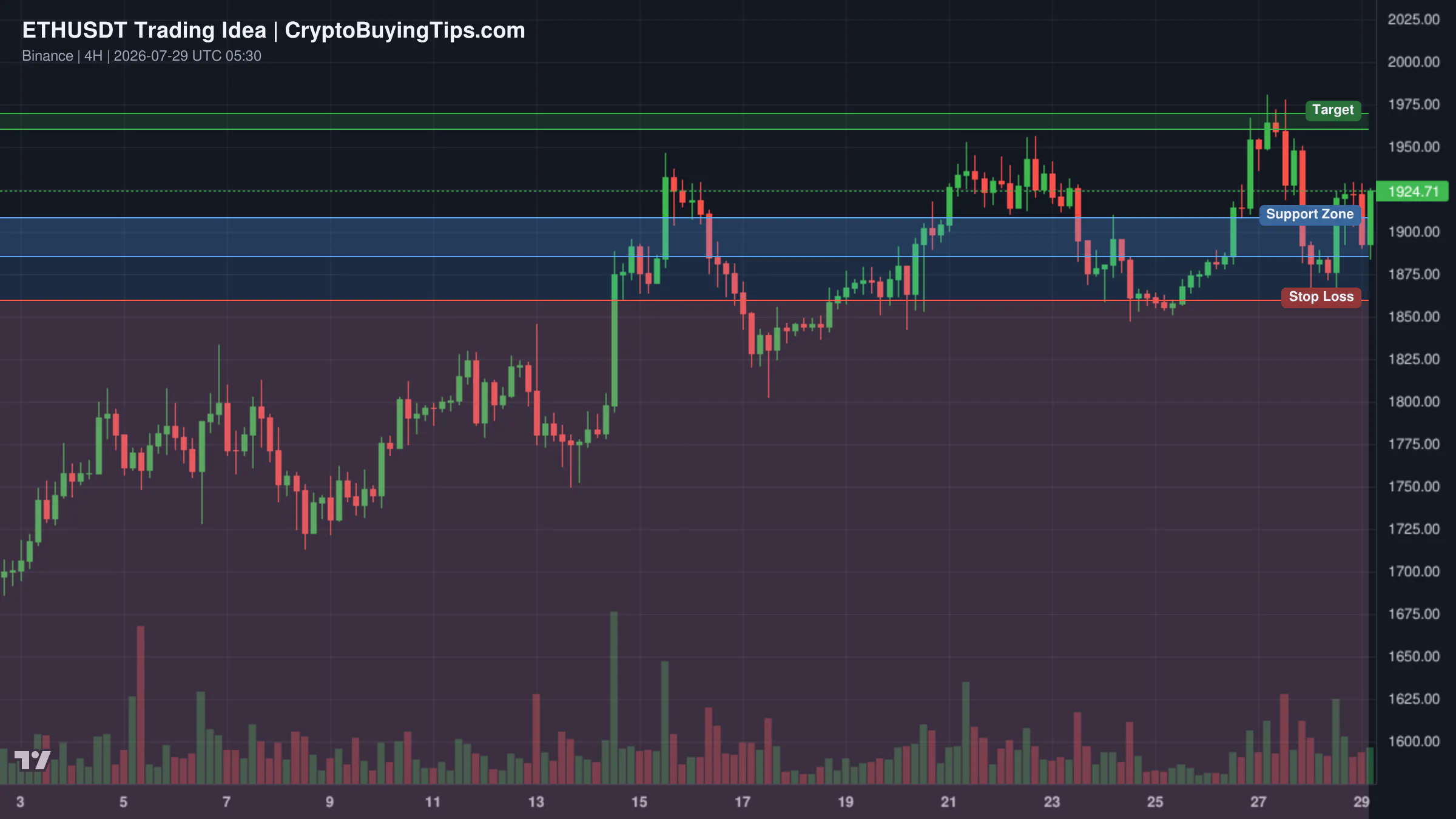
Ethereum presents a more bullish setup on the 4-hour timeframe. It has bounced off a lower trendline support between $1,885 and $1,908. This looks like a clean retest of a wedge structure. The current target is a break of the horizontal resistance at $1,960, followed by a push toward the upper wedge boundary at $2,125. A close below $1,860 would invalidate this setup.
For those watching memecoins, PEPE is showing signs of distribution. The price has failed to break above its descending resistance line, and the RSI is showing a clear bearish divergence. This suggests that the recent recovery was a corrective move rather than a reversal. The immediate downside target is 2470. If that level breaks, we can expect a move toward lower liquidity zones as the broader bearish structure remains intact.
What to watch next
The market is currently in a state of fragile optimism. We have a clash between institutional validation and fundamental risk. On one hand, Morgan Stanley and BNY are integrating crypto into the global financial plumbing. On the other, AI is beginning to eat through the cryptographic walls that make these assets secure.
The immediate focus should be on the $62,900 support level for Bitcoin. If that holds, the leverage-driven rally might actually find a floor. If it breaks, the massive derivatives open interest will likely lead to a disorderly move lower. We will also be watching the Ethereum gas fees. Until we see a spike in on-chain activity, the ETH price gains are purely a result of ETF flows and lack any internal engine. The market is essentially betting on the wrapper, not the asset.
Some links in this article may be affiliate links. We may earn a commission at no extra cost to you — this never influences our analysis or coverage.

Sigrid Voss
Crypto analyst and writer covering market trends, trading strategies, and blockchain technology.
More Articles
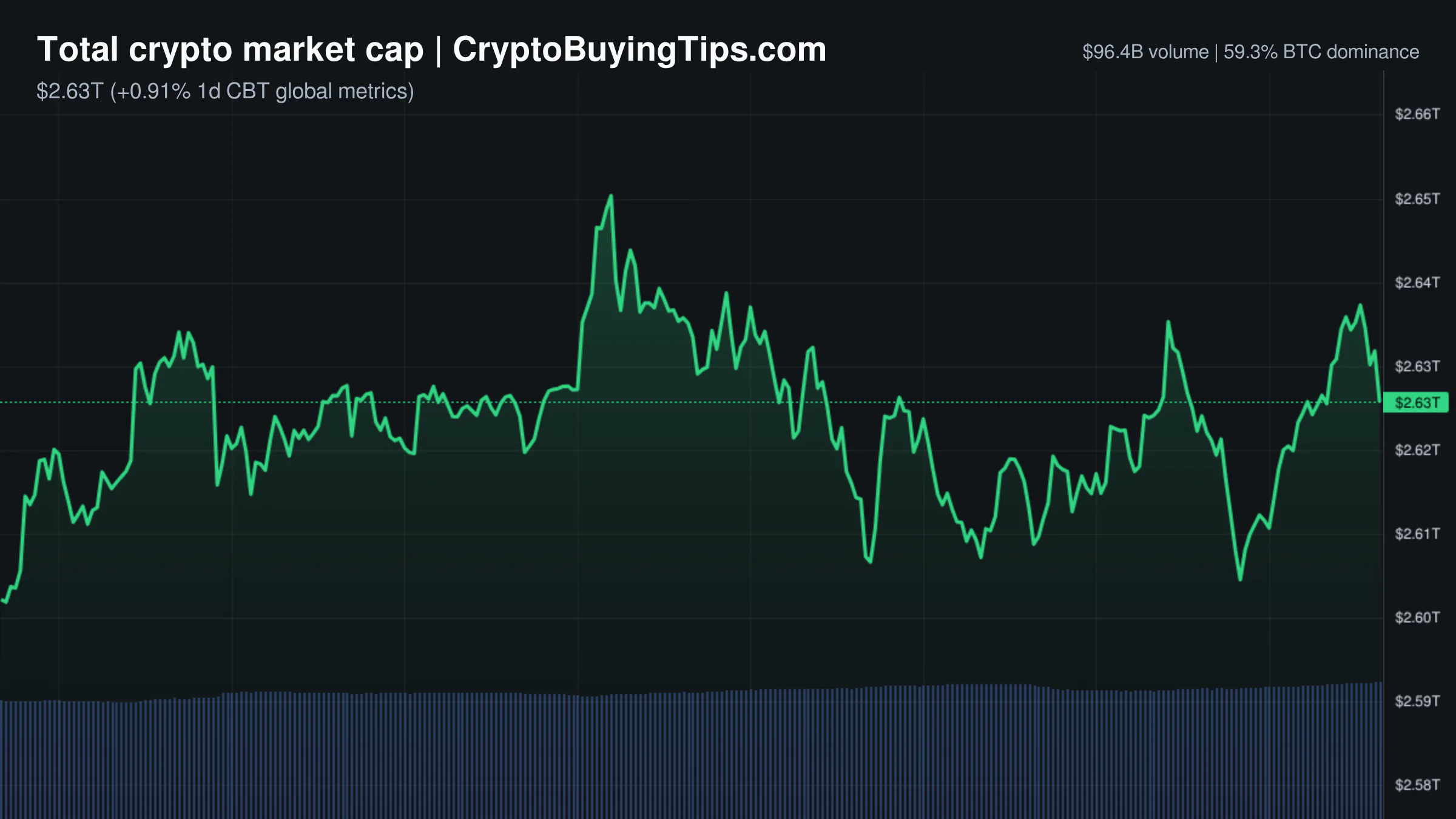
Crypto Market Overview | Leverage-driven rally amid strong ETF inflows as BTC targets 80k | August 24, 2026
Leverage-driven rally sees BTC near 80k amid strong ETF inflows; see our market overview on current crypto dynamics.

Derivatives volume is 8x higher than spot. Here is why that is a warning
The market's current price action seems to be driven by bets rather than cash; with derivatives volume eight times…
Crypto Market Overview | volume collapses as greed persists amid regulatory friction | August 23, 2026
Volume collapses as greed persists amid regulatory friction; see our market overview on crypto's current state and key…

Brussels is coming for DeFi vaults and the market is ignoring the risk
Brussels seems to think "decentralized" is just an aesthetic choice for now. Our read suggests MiCA regulation isn't…