
Crypto Market Overview | Liquidity drought amid record exchange breach concerns | October 31, 2026
Crypto Market Overview | Liquidity drought amid record exchange breach concerns | October 31, 2026
Market overview
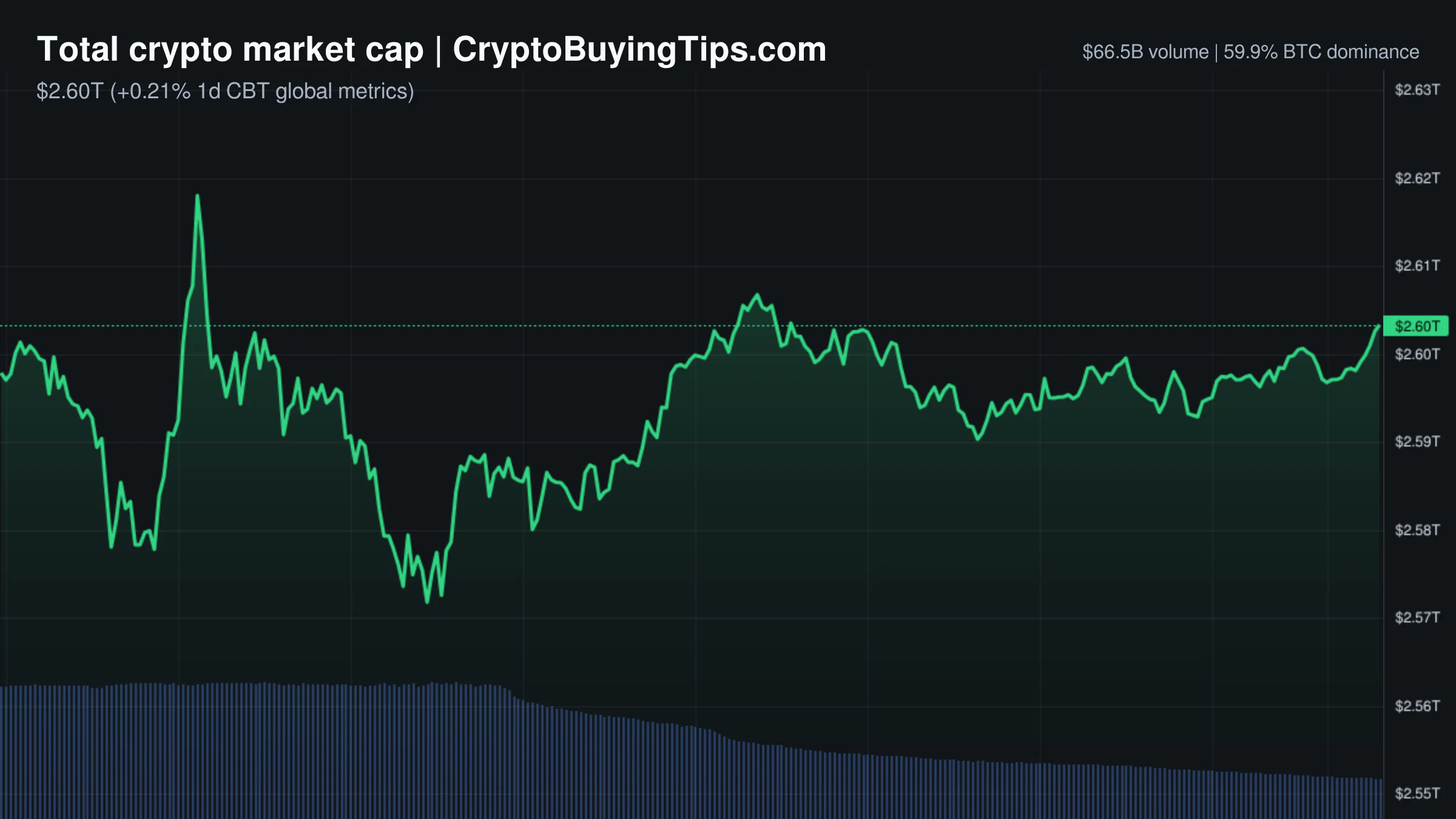
The crypto market is currently in a state of suspended animation. While the total market cap remains relatively stable at $2.60T, showing a negligible increase of 0.13%, the underlying activity has effectively evaporated. Trading volume across every single major metric has collapsed by over 50% in the last 24 hours. Spot volume has fallen 55.32% to $66.49B, and derivatives volume has seen a similar plunge of roughly 52%, landing between $617B and $619B.
This is not the kind of consolidation that precedes a breakout. It is a liquidity drought. When spot, derivatives, and stablecoin volumes all drop by half simultaneously, it suggests a collective decision by market participants to stop trading entirely. The Fear and Greed Index sits at 36, confirming a mood of fear, yet prices are not crashing. Instead, the market is simply refusing to move.
This paralysis is occurring against a backdrop of significant weakness in traditional risk assets. The S&P 500 is down 1.77% and the NASDAQ has dropped 3.47%. Usually, crypto follows the NASDAQ's lead during risk-off events, but today the digital asset market is too frozen to even manage a proper sell-off. With Bitcoin dominance hovering at 59.86%, capital is not rotating into altcoins. It is simply sitting still.
Bitcoin and Ethereum
Bitcoin is trading at $77,528.95, up a modest 0.51%. The price action is remarkably dull given the news of the day, but the dominance figure tells the real story. At nearly 60%, BTC continues to act as the only viable sanctuary for those who refuse to exit the market entirely. The current "Neutral" altcoin season index of 47 reflects a market where BTC is the only asset with any perceived stability.
Ethereum is priced at $2,247.25, up 0.74%. However, the on-chain data is ghostly. Gas fees have plummeted to extreme lows, with slow transactions costing 0.04 Gwei and fast ones 0.07 Gwei. This suggests that almost no one is interacting with the network. The only exception is in the MEV space. We saw a strange spike where the Titan Builder briefly topped protocol revenue rankings with $22.83M. This wasn't a sign of organic growth. It was the result of arbitrageurs exploiting the chaos and panic caused by the Binance hack.
Top crypto prices
Bitcoin leads the market at $77,528.95. Ethereum follows at $2,247.25. BNB is holding at $704.61, up 0.78%, which is surprising given the exchange's current predicament. XRP is flat at $1.24.
Among the larger altcoins, Solana has dipped 0.65% to $95.79. TRON has taken a harder hit, falling 5.91% to $0.3196. Hyperliquid is down 4.36% at $88.23. The general trend for assets outside the top two is one of slow bleeding or complete stagnation.
News driving today's market
The dominant story is the $6.3 billion breach of Binance, the largest theft in the history of the industry. The scale of the loss is staggering. While Binance CEO Richard Teng has stated that assets are safe and the exchange has set aside $6.34 billion to cover the losses, the systemic implications are far more worrying. The involvement of the FBI and the U.S. Secret Service transforms this from a technical failure into a regulatory event.
The attack has been attributed to the North Korean group TraderTraitor, the same group linked to the previous Bybit hack. This adds a geopolitical risk premium to the market. When a major exchange's hot-wallet signing infrastructure is compromised on this scale, it calls into question the security of the entire centralized exchange model. We have seen this pattern before, where regulatory promises of safety are met with a reality of vanishing liquidity. We previously covered how BTC dominance data analysis often reveals capital consolidating during these liquidity pauses.
The fallout has already hit the equity markets. Coinbase shares dropped over 13%, and MicroStrategy fell about 8%. This suggests that institutional investors are pricing in a broader crisis of trust. The market is currently ignoring the "covered losses" narrative and focusing on the fact that $6 billion disappeared. This is a classic example of the stocks ripping vs crypto fear dynamic, though today both are feeling the pressure.
Social intelligence
The social feed is a mix of institutional exits and political commentary. Tokyo-listed Iole is selling its entire holding of 151.21 BTC by the end of November. They are doing this at a loss of ¥254M to fund AI data centers. There is a certain irony in selling the "hard money" of the future to build the physical hardware that may eventually make the tokens less relevant.
President Donald Trump has also weighed in on the Binance hack. Speaking from the Oval Office, he expressed a long-standing wariness of digital money, comparing it to traditional paper checks and calling the lack of physical money "a little bit dangerous." While he noted that Binance claims to have the situation under control, his "we'll see" attitude adds to the general sense of uncertainty.
On a more positive note, the AI sector continues to attract massive capital. Baseten, an AI inference startup backed by Nvidia, is reportedly raising $2B at a $30B valuation. This suggests that while the crypto market is frozen in fear, the broader appetite for AI infrastructure remains aggressive.
Trading ideas worth watching
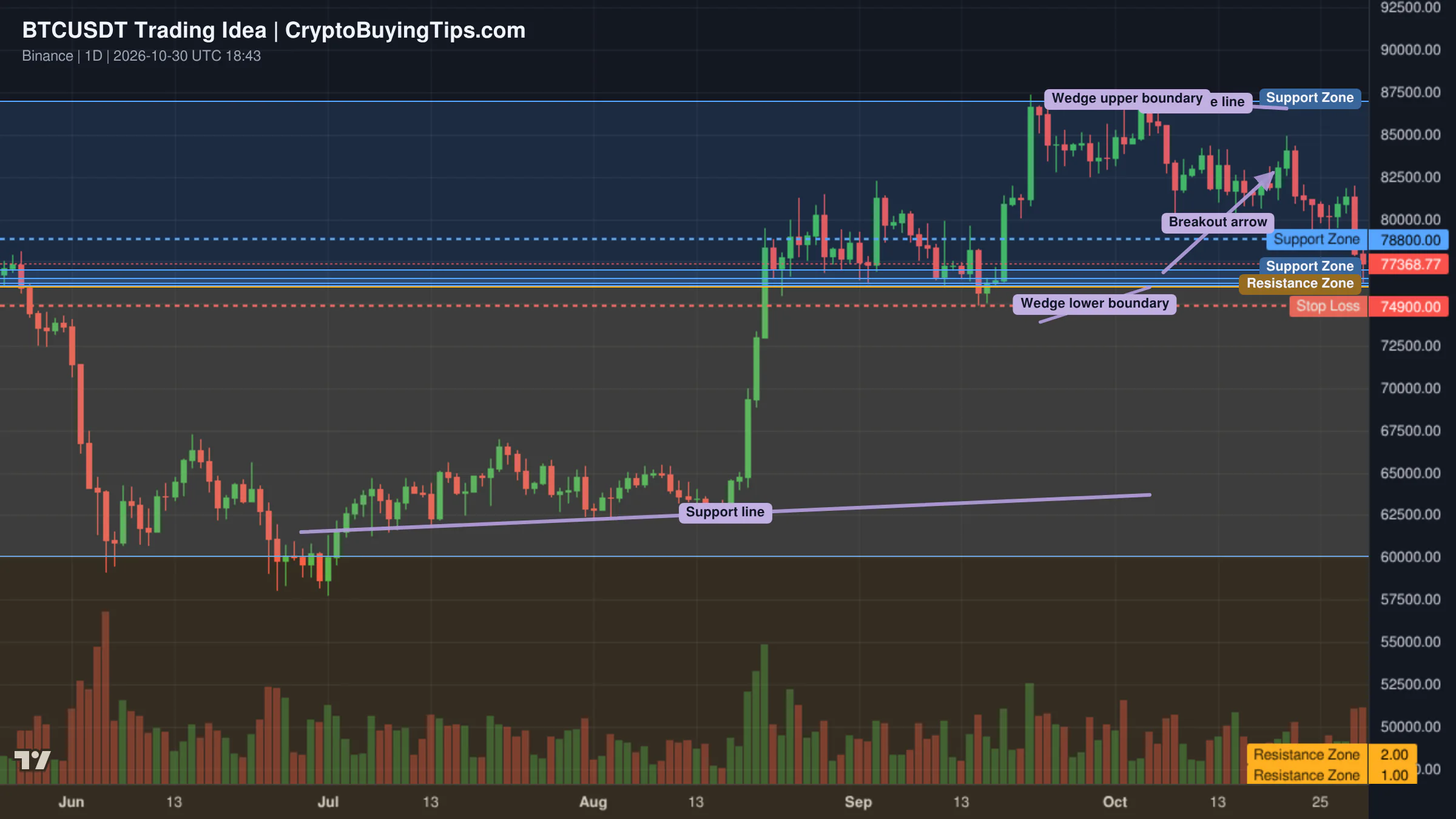
There is a strong bullish consensus on Bitcoin despite the news, provided it holds key support levels. One setup identifies a descending corrective wedge on the daily chart. Price is currently testing a multi-month ascending support line near 76,000. The read here is that sell-side liquidity is being absorbed. A confirmed break of structure above 78,800 would suggest a reversal toward the 81,500 mark.
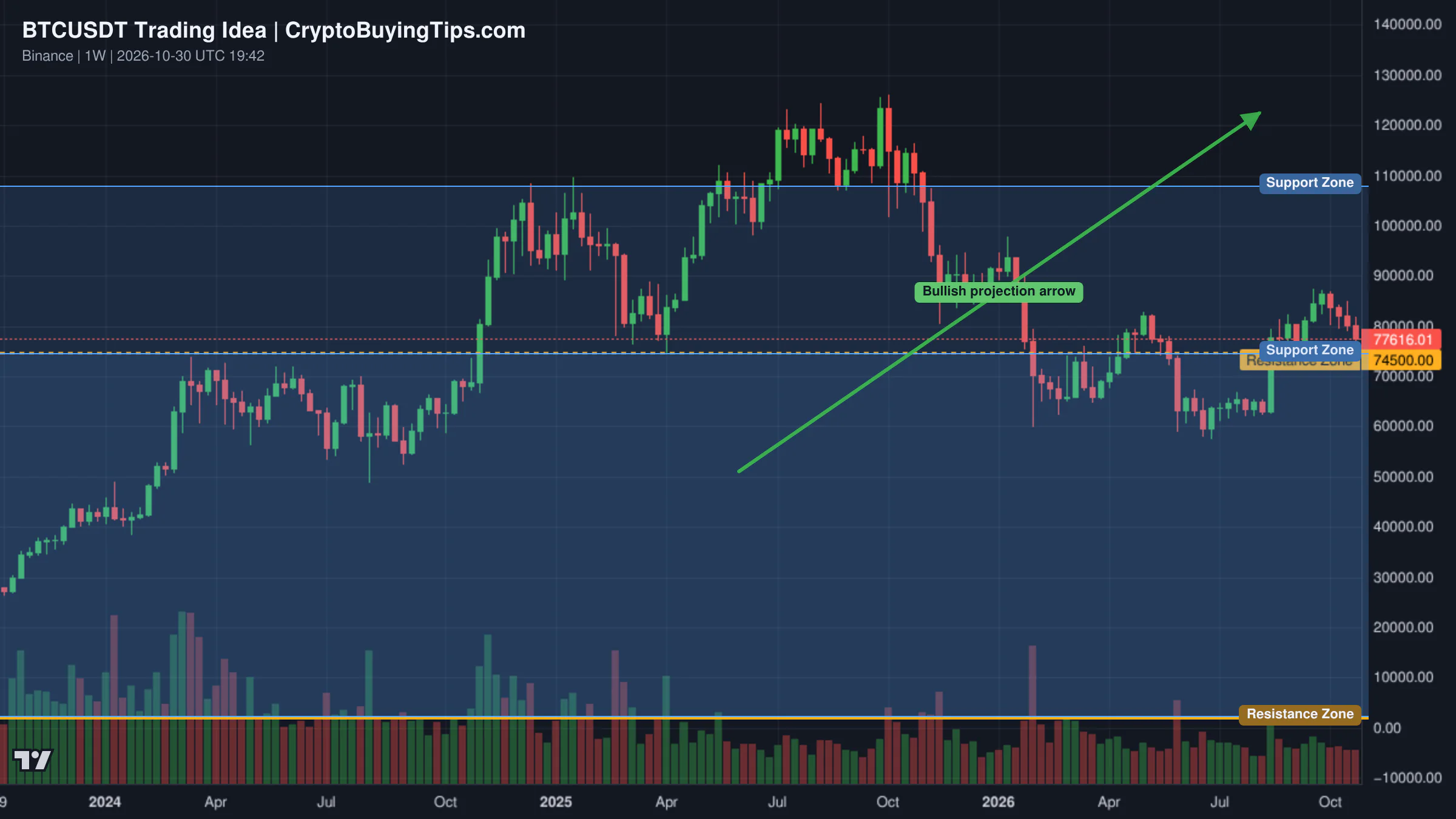
Another perspective looks at the historical support of April 2025. BTC is trading safely above the $74,500 low from that period. The argument is that because Bitcoin has held this level throughout a month of bearish action, the bulls have the upper hand. If 74,500 holds, it could propel a new wave toward a new all-time high.
A third setup compares current action to early 2024. The pattern suggests a liquidity sweep below key support followed by a strong rally. While BTC is facing rejection near 81,000 to 82,000, a further correction toward the 73,000 to 75,000 zone could set the stage for a move toward 100,000. The common thread across these ideas is that the 74,000 to 76,000 range is the line in the sand.
What to watch next
The immediate focus is on Monday. Binance has promised to publish its proof of reserves and intends to restart withdrawals. If the restart is smooth and the reserves are verified, the market may find its voice again. If there are delays or discrepancies, the current "frozen" state could turn into a disorderly sell-off.
We are also watching the macro correlation. The NASDAQ's 3.47% drop is a significant drag on sentiment. If traditional tech stocks continue to slide, the "safe haven" narrative for Bitcoin will be tested. For now, the market is simply waiting to see if the largest exchange in the world can actually make $6 billion reappear.
Some links in this article may be affiliate links. We may earn a commission at no extra cost to you — this never influences our analysis or coverage.

Sigrid Voss
Crypto analyst and writer covering market trends, trading strategies, and blockchain technology.
More Articles

Ethereum gas is 0.04 Gwei. Here is why a cheap network is actually a bearish signal
A cheap transaction fee feels like a bargain, but our read suggests it's more accurately described as an empty auction…

The Binance panic is systemic, but our signal scanner flags a critical BTC floor
The market seems determined to test every single floor; our signal scanner suggests $76,600 remains the immediate line…
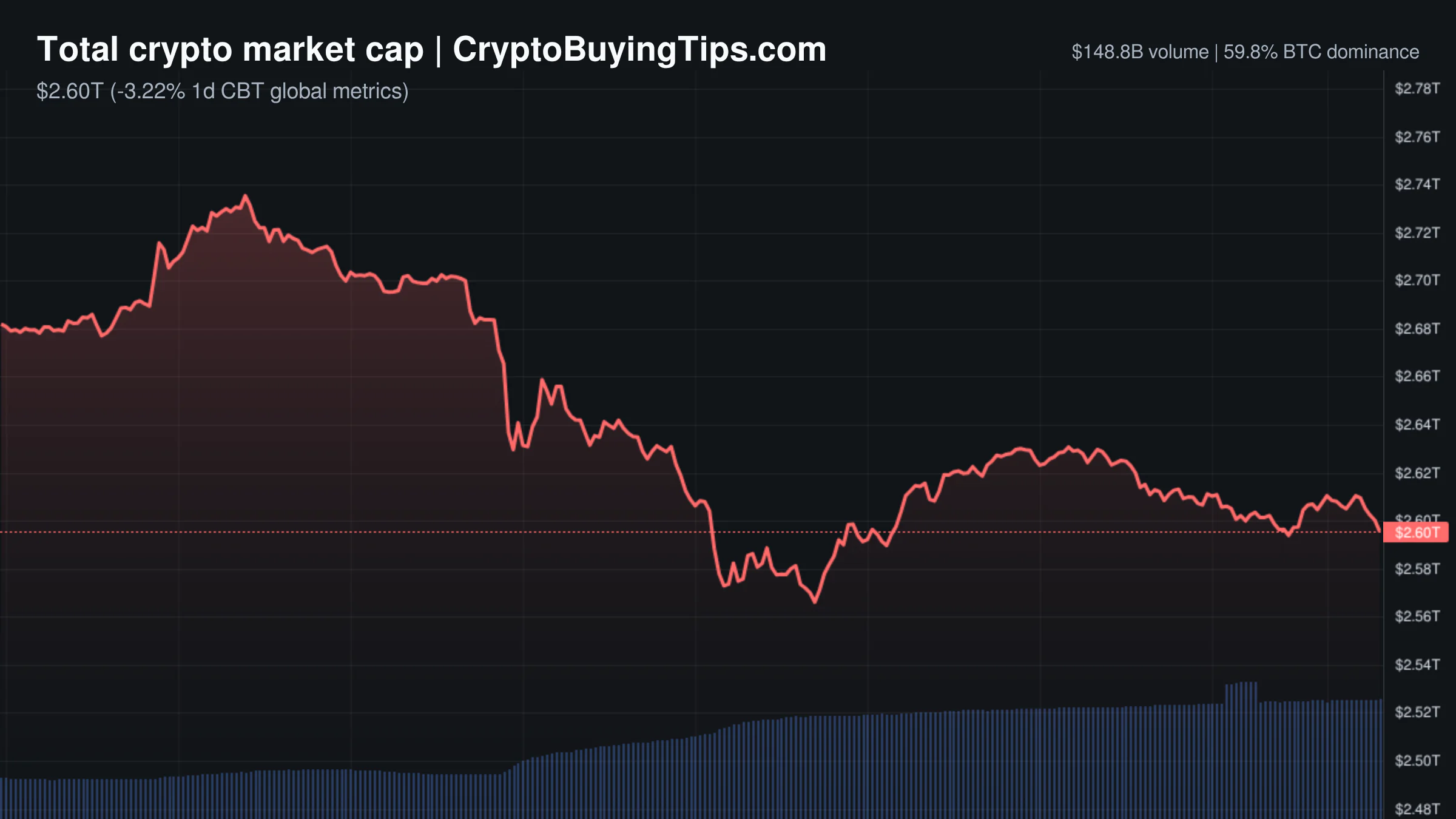
Crypto Market Overview | Systemic shock from breach triggers leverage flush and stablecoin rotation | October 30, 2026
Crypto market overview shows leverage flush amid systemic shock; see how stablecoin rotation and BTC dominance are…

Binance is bleeding but Hyperliquid is ripping. The great CEX exit has begun
The market's current mood suggests everyone needs an exit strategy; meanwhile, HYPE continues its ascent despite the…