
Crypto Market Overview | Volume spikes as regulatory friction meets institutional accumulation | October 1, 2026
Crypto Market Overview | Volume spikes as regulatory friction meets institutional accumulation | October 1, 2026
Market overview
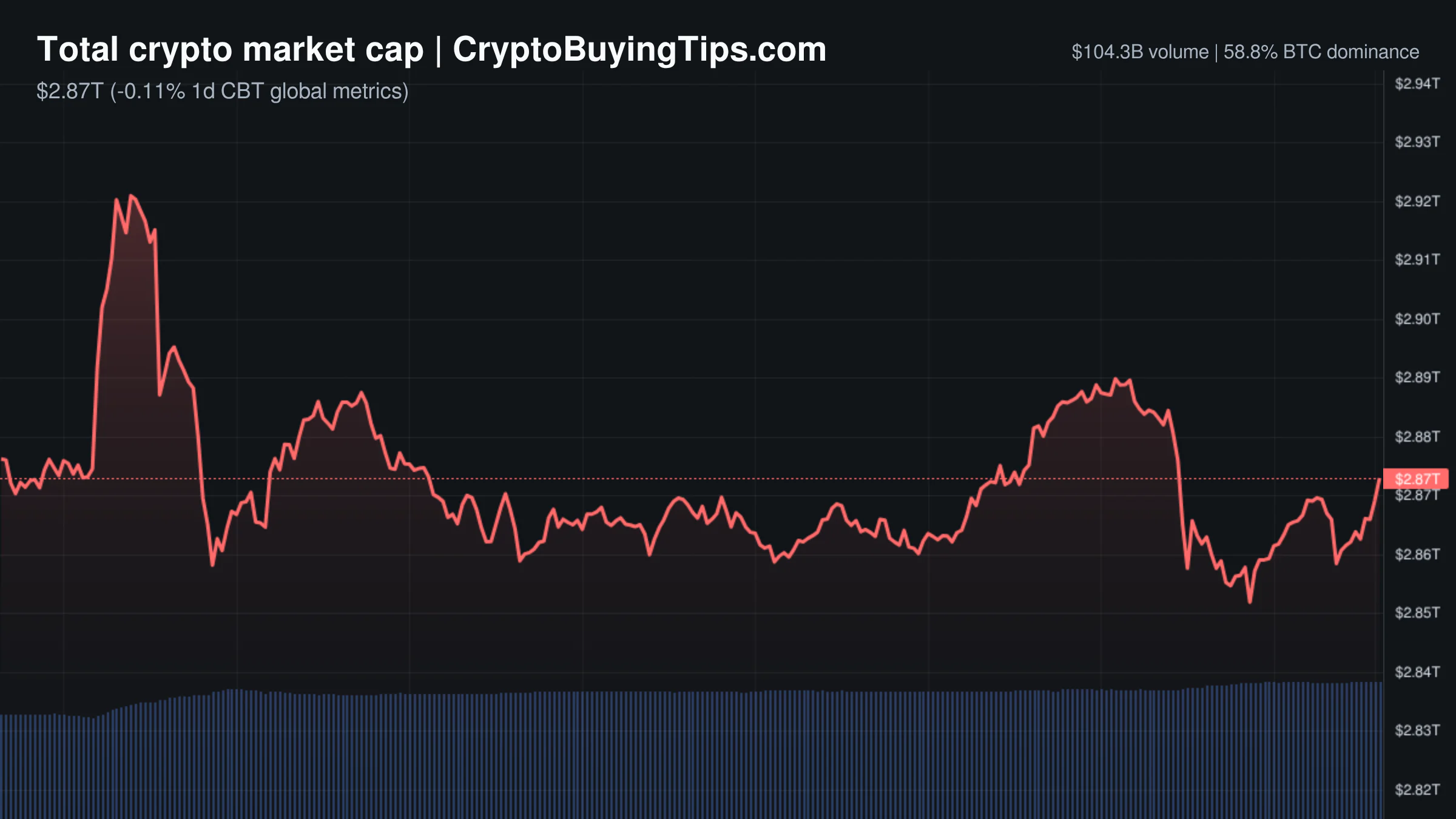
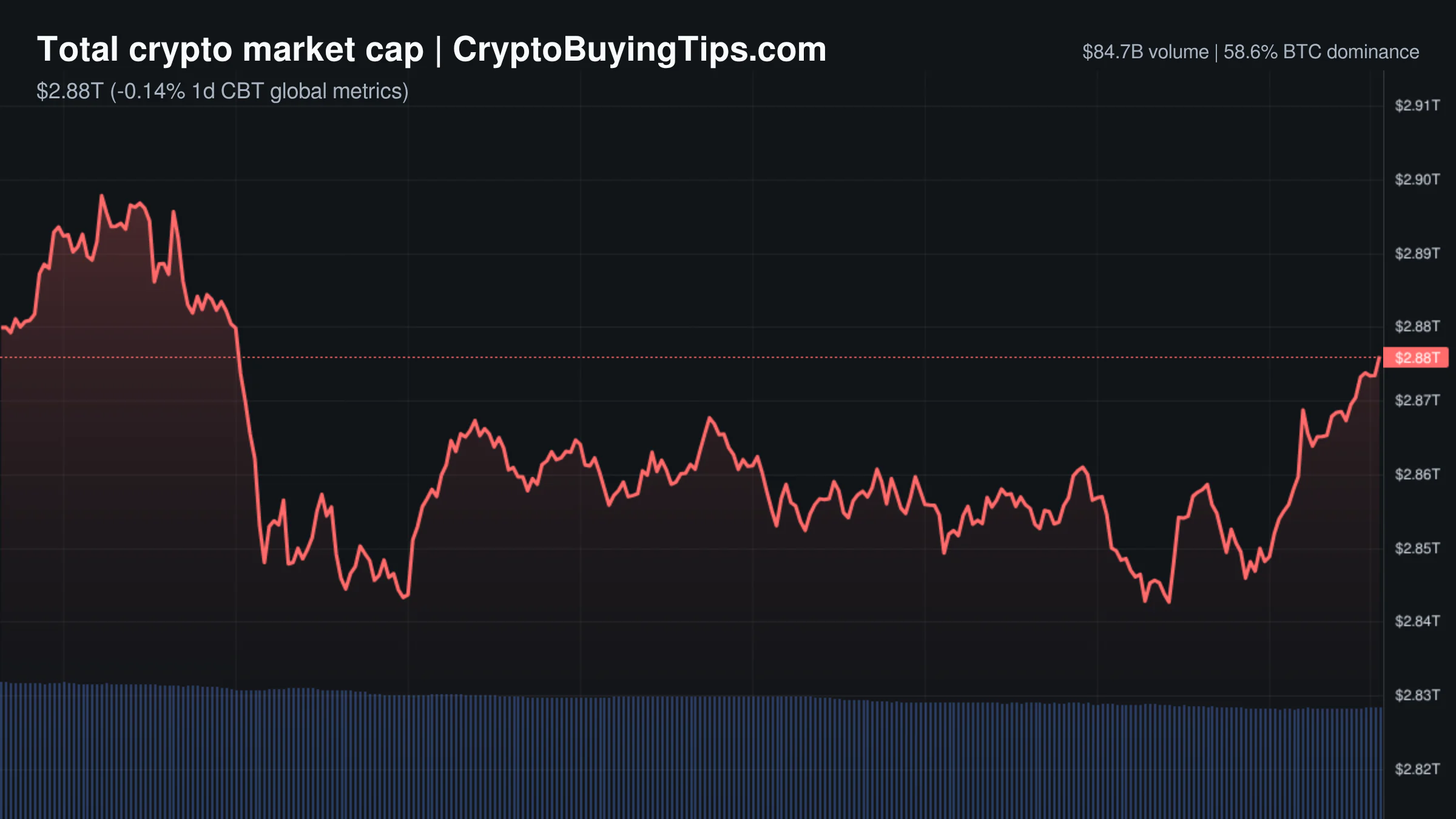
The market is currently exhibiting the peculiar habit of trading with massive volume while going nowhere in particular. While the total crypto market cap sits at $2.86T, down 3.32% over the last 24 hours, the underlying activity suggests a violent repositioning. Spot volume has jumped 23.18% and stablecoin volume has surged 26.26%. This divergence between flat price action and spiking volume usually means a fight is happening between buyers and sellers, and neither side has won yet.
Sentiment remains in the greed zone with a Fear and Greed Index of 67, yet the macro environment is providing a cold shower. The US 10-year yield has climbed to 5.33%, the highest level since 2002. Usually, when government bonds offer that kind of guaranteed return, the appetite for volatile assets like Bitcoin and Ethereum drops. However, the market is ignoring the yield curve for now, likely because institutional rails are still being laid.
The most concerning data point is the derivatives market. Perpetual open interest is sitting at $389.23B, which completely dwarfs traditional futures at $1.15B. The market is essentially a giant leveraged bet. When open interest is this high relative to spot activity, the risk of a liquidation cascade increases. A small move in either direction could trigger a chain reaction of forced closures.
Bitcoin and Ethereum
Bitcoin continues to act as the only game in town for institutional capital. With a dominance of 58.86%, it is absorbing the majority of the available liquidity. The Q3 data confirms this trend, with US spot ETFs attracting $6.34 billion in net inflows. This institutional bid helped BTC rise nearly 43% in the third quarter. The current price of $83,978.35 shows a market that is consolidating after a massive run, waiting for a new catalyst to push it higher.
Ethereum is in a different state of mind. At $2,701.88, it is struggling to maintain its share of the market, with dominance slipping to 11.50%. The most telling metric is the network activity. ETH gas fees are currently at 0.12 Gwei for slow transactions and 0.2 Gwei for fast ones. This is an incredibly quiet network. While low fees are great for the user, they suggest a lack of on-chain urgency. The market is treating ETH more like a passive institutional asset than a thriving ecosystem of decentralized applications.
Top crypto prices
Bitcoin leads the pack at $83,978.35, showing a negligible 24h change of 0.09%. Ethereum is slightly more active with a 0.30% increase to $2,701.88. BNB is holding steady at $770.23, up 0.14%.
The mid-cap assets are seeing more volatility. XRP has slipped 1.36% to $1.49, while Solana is down 1.46% at $118.01. TRON is also in the red, falling 1.65% to $0.3331. Hyperliquid is the notable outlier among the top ten, climbing 3.48% to $89.66.
News driving today's market
Regulatory friction in Europe is the primary headwind today. Reports suggest that European regulators are scrutinizing Binance's use of reverse solicitation to serve EU customers without full MiCA authorization. This is a high-stakes game of jurisdictional hide-and-seek. We previously covered how Mica crypto regulation explained creates operational hurdles for centralized exchanges. If regulators decide that "reverse solicitation" is being used to bypass the law, it could force more exchanges to restrict EU access, impacting global liquidity. We also noted the DeFi vaults risk analysis in our previous coverage, which suggests that the EU is targeting the actual function of these protocols regardless of their labels.
In the US, the CFTC is attempting to tighten its grip on prediction markets. By proposing to define event contracts as "swaps," the regulator is trying to move these platforms under its exclusive federal authority. This is a direct hit to the operational model of platforms like Polymarket. It suggests that the era of "move fast and break things" in the prediction space is meeting a very slow and methodical regulatory wall.
On a more positive note, the UK FCA has opened an authorization window for crypto businesses ahead of the 2027 regime. This provides a clear timeline for compliance and signals that the UK is positioning itself as a mature hub for digital assets. Similarly, the SEC is modernizing transfer-agent rules to prevent a "paperwork crisis" in the blockchain age. These moves are boring but necessary; they fix the plumbing of the industry so that institutional money can flow without the fear of a custodial disaster.
Finally, the Base network has completed its Cobalt upgrade. By adding tools for tokenized assets and compliance checks, Base is making itself more attractive to institutional issuers. This increases the utility of the underlying ETH ecosystem, even if the mainnet gas fees are currently dormant.
Social intelligence
The macro data circulating on social media is dominated by the US 10-year yield. Analysts are pointing out that a yield of 5.33% is a massive headwind for any risk-on asset. When the "risk-free rate" is this high, the hurdle for crypto to attract new capital becomes much higher. It is a stark contrast to the narrative that Bitcoin is a hedge against everything; it still behaves like a high-beta tech stock when the bond market gets aggressive.
Interestingly, data from Santiment shows that BTC outperformed both stocks and gold in September, rising about 7% while the S&P 500 stayed flat and gold fell over 6%. This suggests a rotation where investors are abandoning traditional hedges in favor of the digital version.
In the protocol space, the Zcash community has approved $8.4 million in retroactive grants to reward developers who fixed a critical vulnerability in the Orchard system. This is a rare example of a protocol actually paying its security researchers through formal governance. Meanwhile, the tech sector is seeing massive capital flows, with Tencent signing a $7 billion deal to lease AI chips from Oracle. While this doesn't move crypto prices directly, it confirms that the AI infrastructure build-out is still in high gear, which generally supports the broader tech-optimism that crypto rides on.
Trading ideas worth watching
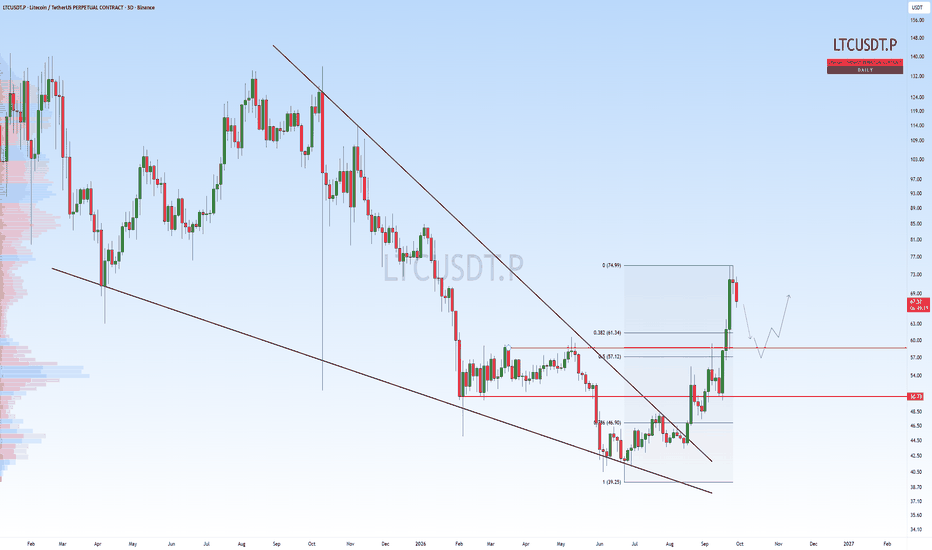
BNB is currently testing a critical breakdown area. The asset has broken below a rising wedge structure and is now retesting that broken trendline around the $766 to $770 zone. This is a classic "breakdown and retest" setup. If BNB is rejected at this level, it confirms the bearish shift. The key resistance is now $780 to $802. A failure to reclaim this zone could lead to a move toward $720, with major support sitting at $679. The reaction at the $780 level will be the deciding factor.
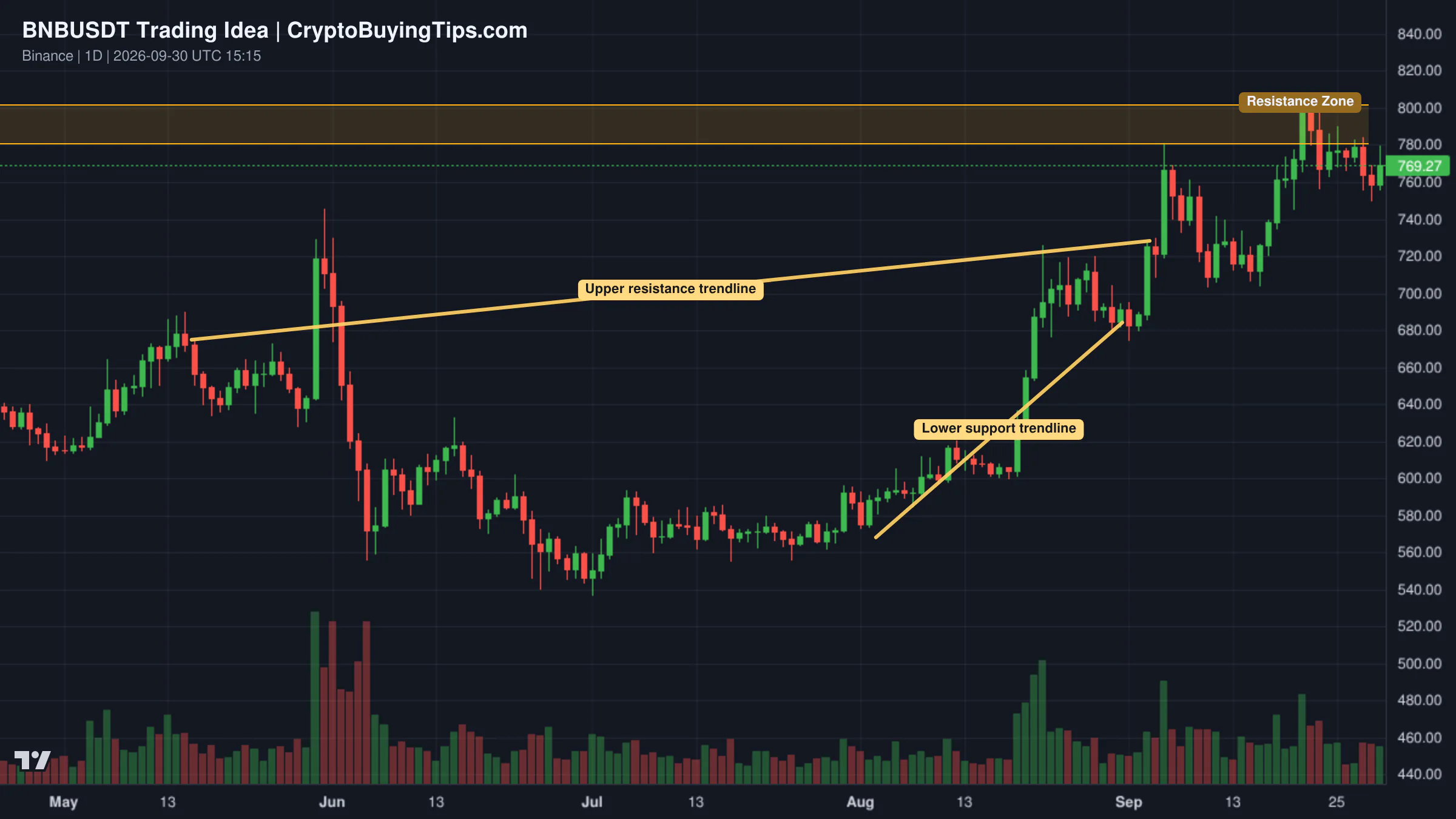
Litecoin is in the middle of a healthy pullback after a strong breakout from a long-term descending trendline. Having rallied from $39 to $75, the price is now drifting lower. The key is whether the breakout area holds. Support is concentrated between $58.7 and $61.3, which aligns with the 0.382 Fibonacci level. If LTC forms a higher low in this zone, a move back toward $75 is likely. However, if $58.67 is lost, the bullish structure weakens significantly.
Quant remains in a bullish structure, characterized by a series of higher highs and higher lows. The price is currently correcting toward a strong intersection of a rising trendline and a key structure zone. As long as this intersection holds, the long-term trend is intact. Traders are looking for lower-timeframe confirmation to catch the next impulse move. A clear break below this support would force a complete reassessment of the bullish case.
Smart Money Signals — Hyperliquid Leaderboard
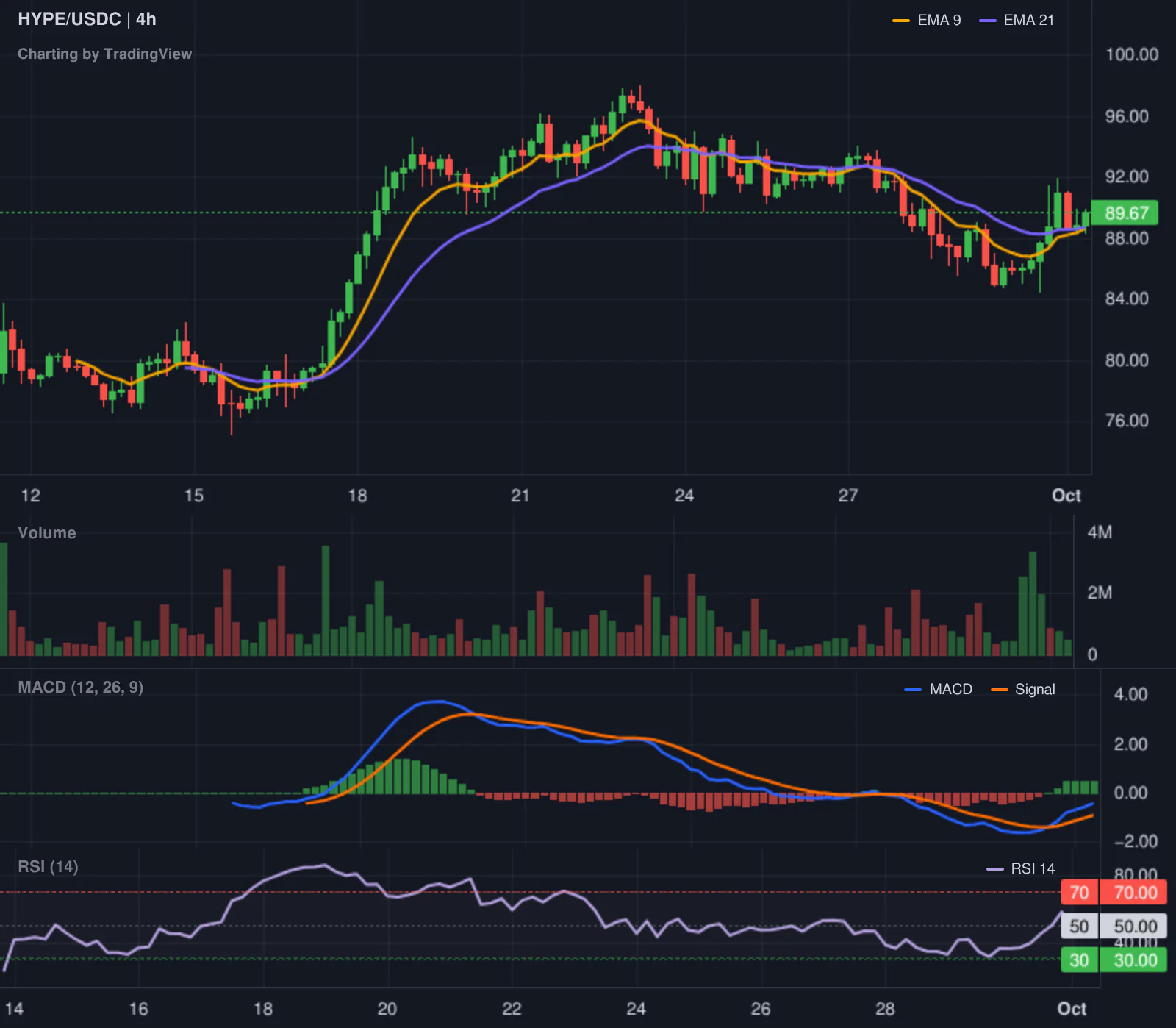
Our tracker has flagged a significant move from a high-confidence trader. Wallet 0xb67c4c, which boasts a 574% 30-day ROI, has opened a short position in HYPE at $86.731. The notional value of the trade is $12,970. This is a contrarian bet, as HYPE has been one of the top gainers over the last 24 hours. When a trader with a consistent track record bets against a pumping asset, it often suggests that the move has become overextended.
What to watch next
The primary focus for the next few days is the tension between institutional inflows and macro headwinds. The Q3 ETF data is a powerful bullish signal, but it is fighting against a US Treasury yield that is at a twenty-year high. If the 10-year yield continues to climb, we may see a period of stagnation where Bitcoin trades sideways while the leveraged bets in the perpetuals market are slowly wound down.
We are also watching the Binance EU situation closely. If the ESMA and other national regulators move from "scrutiny" to "enforcement," it could trigger a sudden exit of liquidity from several European markets. This would be a negative catalyst for the broader market, as it increases the risk of fragmented liquidity.
Finally, the extreme low gas fees on Ethereum are a signal that the network is waiting for something to happen. Whether that is a new narrative or a surge in DeFi activity, the lack of congestion suggests that ETH is currently a sleeping giant. If activity returns, the spike in gas will be the first lead indicator that the rotation back into altcoins has actually begun.
Some links in this article may be affiliate links. We may earn a commission at no extra cost to you — this never influences our analysis or coverage.

Sigrid Voss
Crypto analyst and writer covering market trends, trading strategies, and blockchain technology.
More Articles

Ethereum gas is at 0.1 Gwei. Here is why the network feels like a ghost town
The network feels quiet enough that even a simple transaction costs pennies; this low gas price suggests subdued demand…
Crypto Market Overview | Volume collapses as institutional rails clash with regulatory friction | September 30, 2026
Volume collapses as crypto rails clash with regulation; see how market cap dipped 2.32% while ETF flows continue to move…

NEAR just got an ETF while the SEC is falling apart
The SEC seems rather preoccupied with its own structural integrity; meanwhile, institutional money appears quite…
Crypto Market Overview | Leveraged bets drive gains amid expanding institutional rails | September 29, 2026
Leveraged bets drive gains amid expanding rails; see how $1.04 trillion in derivatives volume impacts crypto market…