Market Overviews

Daily crypto market overviews, trend analysis, and key updates from our editorial team.

Crypto Market Overview | Price stability masks collapsing trading volume amid fear sentiment | August 2, 2026
Sigrid Voss·

Crypto Market Overview | Price stability masks collapsing trading volume amid fear sentiment | August 2, 2026

Market overview

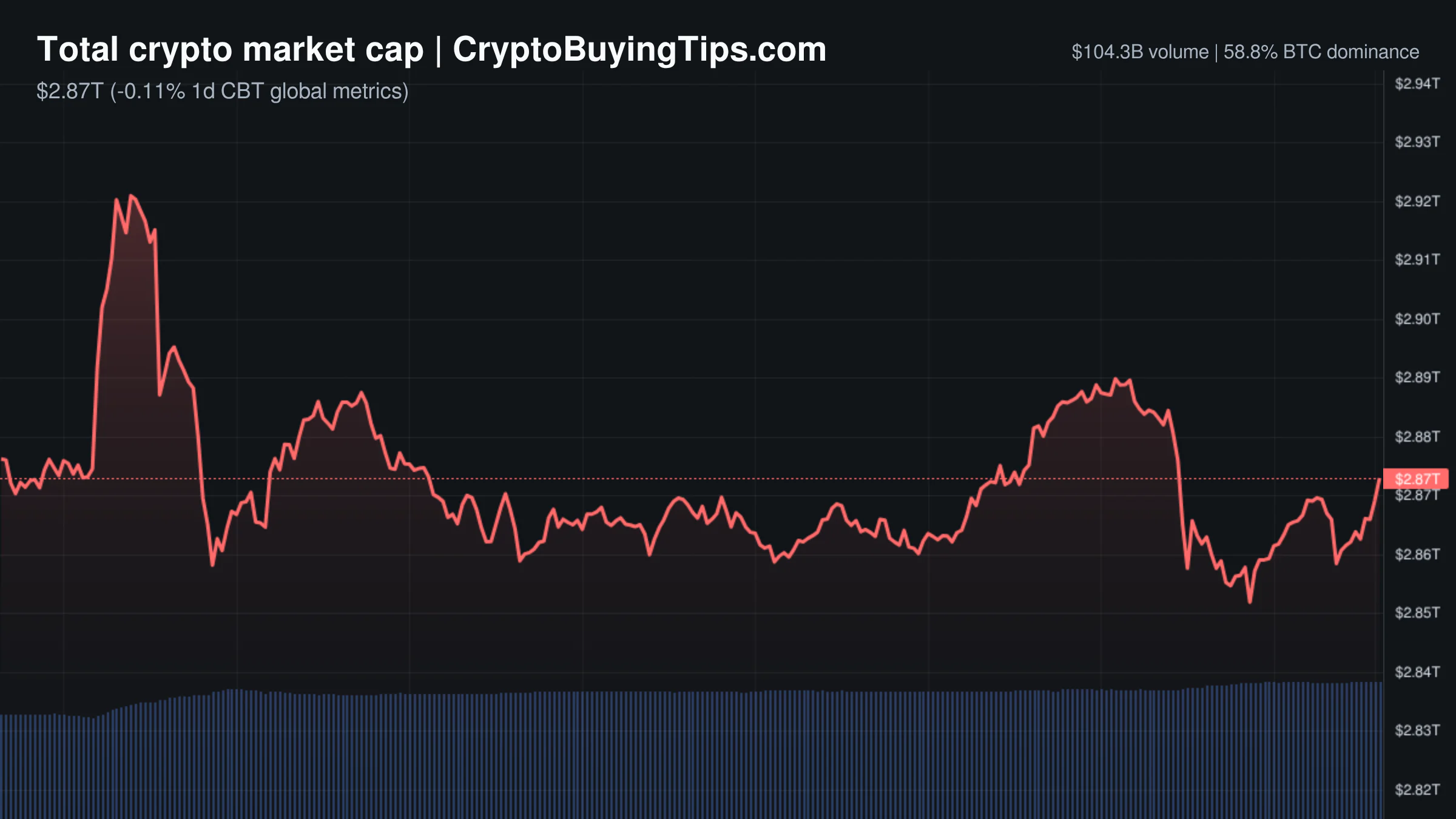
The market is currently presenting a curious contradiction. On the surface, the total crypto market cap sits at $2.25T with a slight 24h increase of 0.28%. However, looking beneath the price action reveals a ghost town. Trading activity has effectively evaporated. Spot volume is down nearly 23%, derivatives volume has fallen by 22.81%, and stablecoin volume has plummeted by 26.26%. When prices tick upward while everyone stops trading, it is rarely a sign of strength. It is usually a sign of indifference.

This lack of conviction is mirrored in the sentiment data. The Fear & Greed Index is at 34, placing the market firmly in "Fear" territory. This creates a sharp divergence between the raw price indices and the actual mood of the participants. The CMC20 and CMC100 indices are slightly positive, yet the traders themselves are clearly not buying the recovery. This is a market that is drifting, not driving.

The decoupling from traditional finance is also becoming more pronounced. While the S&P 500 and NASDAQ are both up (0.72% and 0.65% respectively), crypto remains stuck in a state of anxiety. We have seen this before; it suggests that the current pressure is internal to the crypto ecosystem rather than a result of a broad macro risk-off event. We previously noted how crypto decoupling happens when internal leverage issues outweigh Wall Street's optimism.

Dominance remains heavily skewed toward the top. Bitcoin dominance is hovering between 52.3% and 58.43% depending on the feed, while Ethereum is struggling to maintain 10%. The Altcoin Season Index is at 23, which is a clear indicator of a Bitcoin season. Capital is not rotating into alts; it is simply huddling in the largest asset while the rest of the market waits for a reason to return.

Bitcoin and Ethereum

Bitcoin is trading at $63,139.85, up a negligible 0.23%. While the price is holding, the underlying network health is showing signs of stress. Bitcoin mining difficulty has shrunk 14% from its yearly high. This is a structural warning. When plunging revenues force operators to pivot or shut down, it suggests a weakening of the network's economic foundation. The market is currently ignoring this, but a sustained drop in difficulty usually precedes a period of volatility.

Ethereum is in a more precarious position, priced at $1,867.35. The most alarming metric is the network activity. ETH gas is extremely low at 0.04 Gwei. For a network that claims to be the global settlement layer for finance, this level of stagnation is sobering. It suggests that on-chain activity has essentially stopped. We have previously discussed how Ethereum market share vanishes even as the corporate narrative is polished, and today's gas metrics provide the data to support that view.

Top crypto prices

Bitcoin (BTC) is at $63,139.85 (+0.23%). Ethereum (ETH) is at $1,867.35 (+0.06%). BNB (BNB) is trading at $583.19 (+0.42%). XRP (XRP) has seen a more notable gain, sitting at $1.07 (+1.68%). Solana (SOL) is at $73.22 (+0.60%). TRON (TRX) is slightly down at $0.3263 (-0.41%). Hyperliquid (HYPE) is at $51.5 (-1.26%).

News driving today's market

The dominant narrative today is one of security failure. The Coldcard hack is a significant blow to the "cold storage is safe" mantra. With over $88 million stolen and the attack still active, users are seeing their funds swept from addresses they believed were secure. This has triggered a massive movement of BTC, with nearly 40,000 BTC moving in small transactions as users panic. When the very tools meant to protect assets are compromised, it creates a systemic trust deficit that is hard to shake.

Regulatory friction is also adding to the malaise. In Russia, a decree has banned crypto mining across the Moscow region through 2032. While this is a regional ban, it signals a broader crackdown on the energy-intensive side of the industry. This combines with the 14% drop in mining difficulty to create a very bearish outlook for miners.

In the US, the SEC and CME Group are locked in a bureaucratic turf war over Bitcoin options. The SEC has paused Nasdaq's approval of QBTC options because the CME argues that these are commodity products and thus fall under the CFTC's jurisdiction. This is the kind of legal uncertainty that keeps institutional capital on the sidelines. It is not a crash, but it is a ceiling.

Other negative catalysts include a ban on crypto ATMs in Minnesota following $1 million in reported scams and reports of an Iran-linked exchange moving $676 million to Binance to evade sanctions. These stories do not move the price of Bitcoin instantly, but they reinforce the image of the industry as a wild west of scams and sanctions evasion. This is why BTC dominance data analysis often shows capital consolidating in the safest asset during these liquidity pauses.

Social intelligence

Geopolitical risk is currently the primary focus of the analyst community. Reports that Donald Trump has paused planned strikes on Iran in exchange for a nuclear deal have introduced a temporary layer of stability. However, the market is not treating this as a "risk-on" signal. Instead, it is a cautious pause. The volatility of the Middle East is a known quantity, and traders are waiting to see if the deal actually holds before committing new capital.

On the compliance front, the news that Capital One closed over 300 Trump Organization accounts following an anti-money laundering review is a reminder that the regulatory machinery is always running. While the bank claims this is not political, the sheer scale of the closures suggests that financial institutions are under immense pressure to scrub their books of any high-risk entities.

On-chain analysts are also monitoring the Coldcard fallout. The consensus among Twitter intelligence is that the attack is still evolving, with the attacker changing how funds are collected to avoid detection. This ongoing nature of the hack is preventing the market from "pricing in" the event and moving on.

Trading ideas worth watching

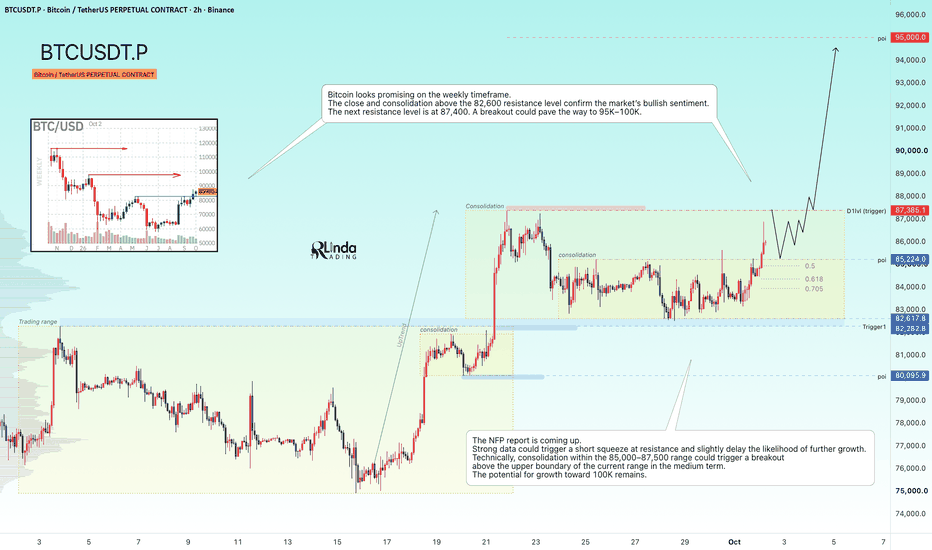
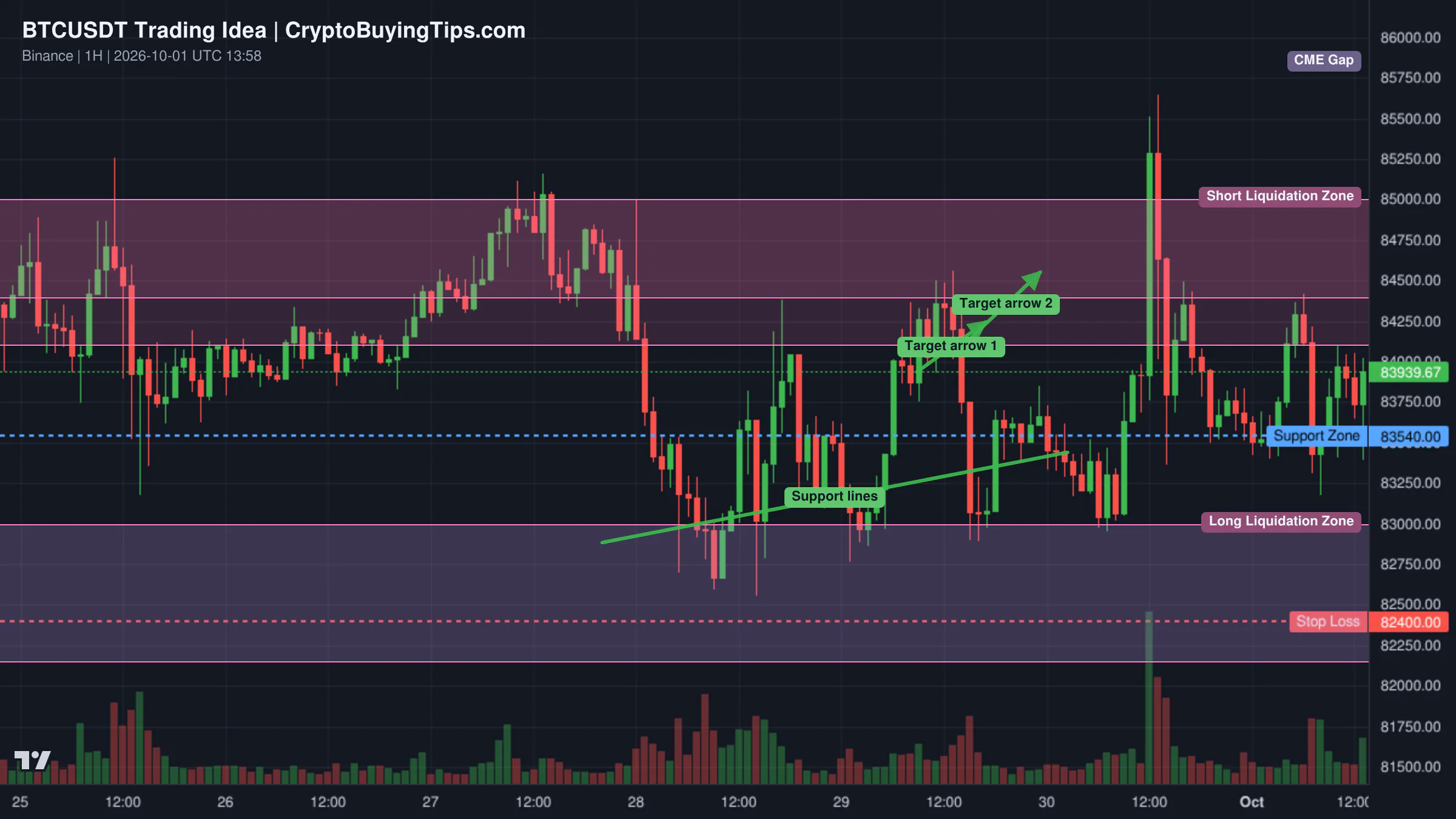
There is a potential long setup for Bitcoin on the 10-hour timeframe. The price is currently approaching a horizontal demand level. According to technical analysis from TopTradingSignals, a liquidity sweep has already occurred, which often precedes a recovery as buyers defend the zone.

Redrawn BTCUSD 600 trading idea chart for BITCOIN Potential Long! Buy!

The goal of this setup is a drive toward the overhead target level. However, this is a high-risk play given the current "Fear" sentiment and the collapsing volume. If the demand zone fails to hold, the lack of bid-side liquidity could lead to a disorderly move lower. Traders should be cautious and look for a clear reversal pattern before entering, as the current market lacks the momentum to sustain a rally without a significant catalyst.

What to watch next

The immediate focus is the Coldcard hack. If the stolen amount continues to climb or if more hardware wallet brands are implicated, we could see a genuine flight from the ecosystem. The psychological impact of "safe" storage being compromised is far worse than a typical exchange hack.

Beyond that, the August 24 deadline for comments on the SEC and CME dispute over Bitcoin options is a key date. A resolution in favor of the CME could streamline institutional access, while further delays will likely keep the market in this stagnant, low-volume loop.

Finally, the mining difficulty trend needs to be watched. If the 14% drop accelerates, it could lead to a miner capitulation event. While this often leads to a long-term bottom, the short-term effect is usually a wave of selling as miners liquidate their holdings to cover operational costs. For now, the market is pretending everything is fine, but the data suggests a very fragile equilibrium.

Crypto Market Overview | Derivatives volume dwarfs spot activity amid slipping sentiment and regulatory shocks | August 1, 2026
Sigrid Voss·

Crypto Market Overview | Derivatives volume dwarfs spot activity amid slipping sentiment and regulatory shocks | August 1, 2026

Market overview

The market is currently a study in contradiction. While the total market cap sits around $2.16T, down about 1% over the last day, the real story is the staggering gap between spot and derivatives activity. Spot volume is a modest $52.17B, but derivatives volume is dwarfing it at $501.53B. We are seeing a market where the tail is wagging the dog. When derivatives volume is ten times larger than spot, price action becomes a function of liquidations and leverage rather than genuine accumulation.

Sentiment has soured, with the Fear and Greed Index landing at 33. This suggests a high level of anxiety among retail participants. Curiously, the Altcoin Season Index remains neutral at 52, meaning neither Bitcoin nor alts are convincingly leading the charge. We are in a transition phase. Capital is not rotating so much as it is hesitating. The synchronized drop in volume across spot, DeFi, and derivatives suggests a general withdrawal of liquidity. Traders are stepping aside to see who blinks first.

The macro backdrop adds another layer of uncertainty. While the S&P 500 and NASDAQ showed modest gains, the threat of Japanese yen intervention looms. If the US Treasury follows through on warnings to banks about JPY market intervention, the global carry trade could tighten. For crypto, that usually means a reduction in the risk-on appetite that fuels these rallies.

Bitcoin and Ethereum

Bitcoin is trading at $62,993.02, down 1.36% in 24 hours. Its dominance is holding steady at 58.46%, though it is not exactly commanding the room. The price action is currently a grind. We are seeing a slow unwinding of July's gains, returning the asset to the lower end of its recent range. On-chain data from Lookonchain shows a curious split. Bitcoin ETFs saw a positive net flow of $212.73M on July 31, yet the price continues to slide. This suggests that institutional buying is currently insufficient to offset the selling pressure from leveraged longs.

Ethereum is in a more precarious position. Trading at $1,866.01, it is down 1.02% and its dominance has slipped to 10.42%. The network activity is ghost-town quiet, with gas fees sitting at an exceptionally low 0.06 Gwei for fast transactions. This lack of on-chain demand is a problem. We previously covered how Ethereum market share vanishes while the protocol focuses on corporate appeal. The data today confirms that the corporate makeover has not yet sparked a return of actual network utility.

The ETF divergence is particularly telling. While Bitcoin ETFs are seeing inflows, Ethereum ETFs are bleeding. Lookonchain reported a 7-day net outflow of 38,195 ETH, totaling roughly $71.08M. The market is essentially treating Ethereum as a beta play on Bitcoin that is currently failing to keep up.

Top crypto prices

The top of the cap is mostly red. Bitcoin leads the decline at $62,993.02. Ethereum follows at $1,866.01. BNB has taken a harder hit, falling 1.64% to $581.05. XRP is down 0.98% at $1.06, and Solana has dipped 0.97% to $72.77.

A few outliers exist. TRON is managing a 0.47% gain, trading at $0.3276. Hyperliquid is the biggest loser among the top ten, dropping 4.70% to $52.18. This suggests a sharp correction in high-beta assets as traders flee to the perceived safety of the majors.

News driving today's market

The news cycle is a tug-of-war between institutional legitimacy and systemic failure. On the positive side, the Bank for International Settlements (BIS) Project Agorá has successfully settled $1 million in tokenized cross-border payments. This is a big deal. When central banks and firms like JPMorgan and Citi start settling in tokenized reserves, the infrastructure of the entire industry is validated. Similarly, Circle securing a New York trust charter is a significant win. It adds a state-level layer of oversight to USDC, making it far more palatable for institutional treasuries.

However, these wins are being offset by a series of regulatory and security shocks. The US Treasury has sanctioned Iranian firms using Bitcoin to facilitate passage through the Strait of Hormuz. While some analysts argue this proves the "digital gold" narrative by showing state-level demand, the reality is that it invites more scrutiny from OFAC. This regulatory heat is compounded by reports that a Dubai-based exchange, Shelbit, was linked to a $4 billion sanction-evasion network involving Binance.

The most damaging news for sentiment is the Coldcard exploit. A software bug led to the theft of nearly 600 Bitcoin, roughly $38 million. This attacks the very core of the "not your keys, not your coins" philosophy. When a trusted hardware wallet fails, it pushes investors toward the perceived safety of ETFs. This shift in trust is exactly why we believe active crypto management is becoming the preferred route for big capital.

Finally, Russia has expanded its crypto mining ban to include Moscow through 2032. This is a blunt instrument that removes a significant amount of hash power from the network. While Bitcoin is resilient, the loss of a major mining hub is never a bullish catalyst.

Social intelligence

The social mood is one of cautious complacency. Glassnode notes that Bitcoin has slipped back to $62.6K, effectively erasing much of the July rebound. Interestingly, they point out that implied volatility remains subdued. This is the classic "calm before the storm" where options positioning is rebuilding while the market pretends everything is fine.

There is also a historical perspective circulating. Cointelegraph highlighted a Glassnode metric suggesting the current bear market is down 49%, making it the mildest drawdown on record. For some, this is a sign of market maturity. For others, it is a sign that we are merely in a prolonged plateau before a more violent correction.

On the derivatives side, the liquidation data is stark. Over $113.5 million in positions were wiped out in a single hour, with $106.8 million of that coming from longs. This is a textbook "long squeeze." The market is flushing out the over-optimists, and the resulting volatility is keeping the Fear and Greed Index firmly in the "Fear" zone.

Trading ideas worth watching

The most aggressive setup we are seeing is a bearish outlook on Bitcoin. Analyst TradingShot suggests we are entering the final bearish leg of the current cycle. The thesis is based on a break below the higher lows trend-line. If the price cannot hold above the 1D MA100, a move toward $50,000 becomes a conservative target. This would align with the 1W MA350, where the 2022 bear cycle bottomed. The risk here is that the spot ETF inflows we saw on July 31 could create a floor, leading to a fake-out spike toward $70,000 before any real drop.

Trading idea chart: BTCUSD - BITCOIN Final Bearish Leg to $50000 is starting..

On the altcoin side, PUMP is showing surprising strength. It surged 20% recently, breaking above a multi-month descending channel. The move was driven by spot buying rather than leverage, which is a healthy sign. The target is a further 5% rally, provided it can clear the resistance zone between $0.002186 and $0.002230. However, the 4-hour chart suggests it is completing a wave 5, meaning a pullback to $0.001970 is likely once the momentum fades.

Redrawn PUMPUSDT 240 trading idea chart for PUMP Surges 20% — Is Another 5% Rally Still Ahead?

Cardano is also presenting an interesting accumulation play. An inverse head-and-shoulders pattern is forming on the daily chart, paired with a bullish RSI divergence. The "smart money" signal here is a classic selling climax followed by high-volume accumulation. If ADA can maintain momentum within the order block and fair value gap zone, the path to the 2330 resistance level is open.

Altcoin Spotlight

PUMP deserves a mention for its ability to decouple from the general market gloom. While the rest of the sector is sliding, PUMP has used token buybacks to absorb selling pressure from recent unlocks. The fact that open interest declined while the price rose is the key metric here. It means the rally is not a leveraged bubble but is based on actual demand. In a market characterized by "fear," seeing an asset break a multi-month channel with high volume is a signal that some traders are finally finding value in the wreckage.

What to watch next

The coming days will be a battle between regulatory clarity and systemic risk. The Circle NY charter and the BIS Project Agorá results are the "adults in the room" trying to bring legitimacy to the space. But the Coldcard exploit and the Iran sanctions are reminders that the industry is still an unpredictable frontier.

We need to watch the JPY intervention closely. If the Yen strengthens violently, expect a liquidity crunch across all risk assets. Additionally, the divergence between Bitcoin and Ethereum ETF flows is widening. If Ethereum continues to bleed institutional support, we could see a further collapse in ETH dominance, potentially pushing it below 9%. For now, the market is in a holding pattern, waiting for a catalyst that is actually larger than a single hardware wallet bug.

Crypto Market Overview | Fear returns as regulatory hope fades and wallet bugs bite | July 31, 2026
Sigrid Voss·

Crypto Market Overview | Fear returns as regulatory hope fades and wallet bugs bite | July 31, 2026

Market overview

The crypto market is currently navigating a mood of quiet desperation. Total market capitalization sits at approximately $2.27 trillion, though different data feeds show a slight variance down to $2.18 trillion. This represents a modest decline of around 0.8% over the last 24 hours. On the surface, the numbers look like a typical sideways chop. However, the underlying plumbing suggests a more cautious environment.

There is a striking divergence between crypto and traditional risk assets. The S&P 500 and NASDAQ are ripping higher, up 1.68% and 3.30% respectively. In a standard risk-on environment, this would act as a tailwind for digital assets. Instead, crypto is lagging. The Fear and Greed Index has dipped to 36, placing the market firmly in Fear territory. This suggests that traders are not ignoring the equity rally; they are simply finding reasons to avoid the crypto trade.

Volume is drying up across the board. Total 24h volume has fallen by nearly 8%, while derivatives volume has seen a more aggressive 9.57% drop to $640.53 billion. When derivatives volume falls while spot prices slide, it often means the aggressive speculators have left the building. The only bright spot is DeFi, where 24h volume actually climbed 3.83% to $9.51 billion. It is a strange state of affairs where the broader market is retreating, but the decentralized finance sector is seeing a modest uptick in activity.

Bitcoin dominance remains high at 58.64%, though some metrics place it closer to 56.47%. This indicates that capital is not rotating into altcoins. The Altcoin Season Index is at 52, which is the definition of neutral. Money is not flowing into the "small caps" or the "moonshots." It is either staying in Bitcoin or moving into stables, with USDT and USDC dominance holding at 11.26%.

Bitcoin and Ethereum

Bitcoin is trading at $63,885.08, down 0.92% for the day. The price is currently caught in a tug-of-war between macro support and a series of technical hurdles. While the decline in the U.S. Dollar Index (DXY) usually helps Bitcoin, the asset is struggling to convert that weakness into a rally. The market is currently treating the "bottom" as a moving target. Some veteran traders are suggesting the real floor might be as low as $40,000, which would be a sobering correction from current levels.

Ethereum is in a worse position, trading at $1,887.06 and down 1.43%. The most telling metric here is not the price, but the network activity. Gas fees have plummeted to a range of 0.08 to 0.13 Gwei. These are exceptionally low levels. While this is great for anyone sending a few tokens, it signals that on-chain congestion is non-existent. The network is effectively a ghost town.

The lack of demand for Ethereum block space suggests that the "institutional adoption" narrative is currently lacking a pulse. If the big players were actually moving assets on-chain, gas fees would be higher. Instead, ETH is hovering near a major support floor at $1,900, waiting for a catalyst that doesn't involve another regulatory headache.

Top crypto prices

The top assets are mostly in the red, with a few outliers showing resilience. Bitcoin leads the pack at $63,885.08. Ethereum follows at $1,887.06. BNB is one of the few gainers, up 0.79% to $590.77.

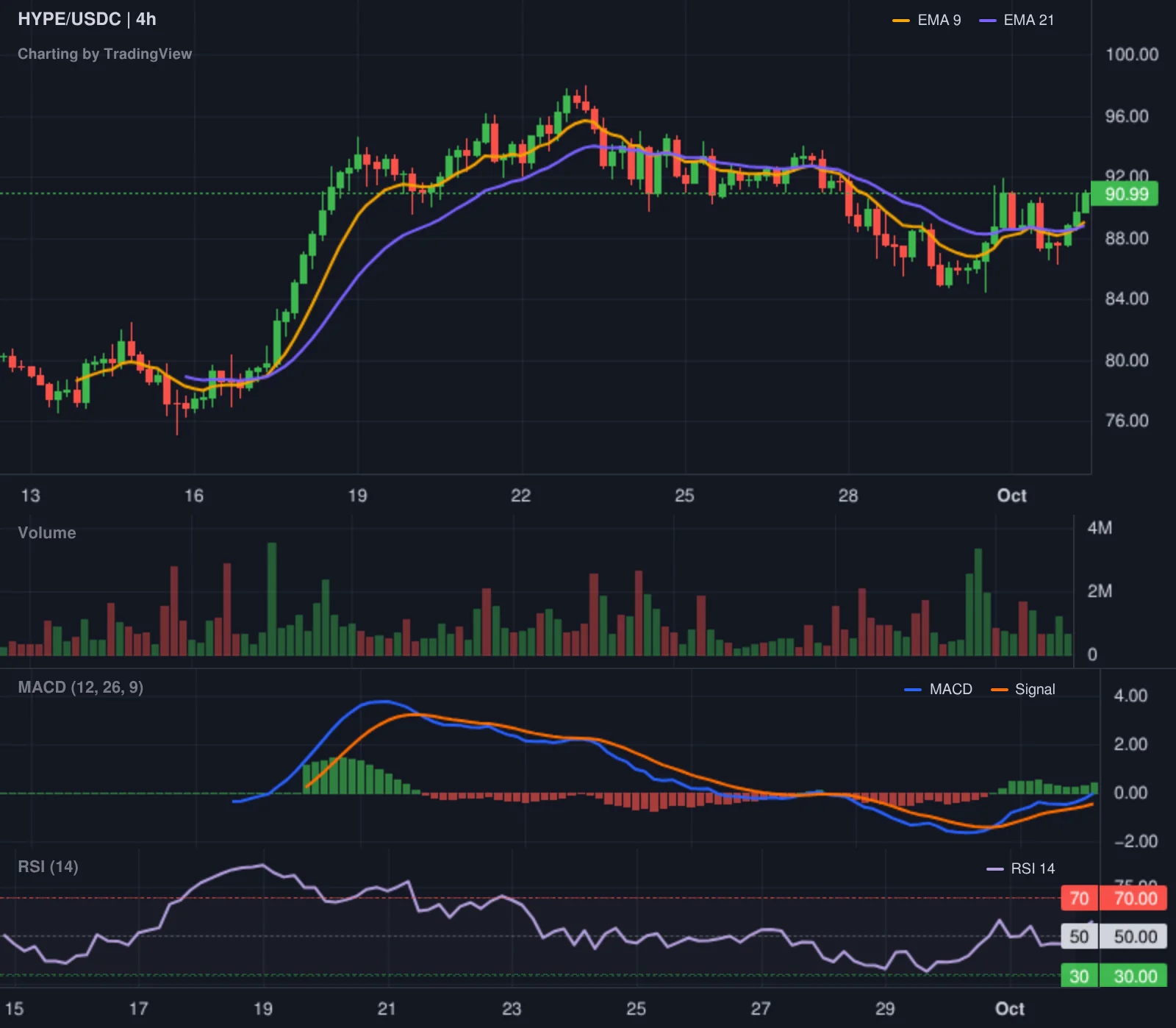
XRP is trading at $1.07, down 0.55%. Solana is at $73.51, down 0.64%. TRON sits at $0.3261, down 0.49%. Hyperliquid is the standout performer among the top ten, rising 1.95% to $54.75.

News driving today's market

The primary driver of current sentiment is the slow-motion collapse of the Clarity Act. Treasury Secretary Scott Bessent has urged the Senate to pass the bill to provide regulatory certainty. He even quoted Satoshi Nakamoto to add weight to his plea. However, the market is not buying the optimism. JPMorgan analysts have warned that the fading odds of the bill passing before the end of the year remove a key catalyst for the market. This is a classic case of the "hope trade" being priced out. We previously covered BTC dominance data analysis and noted how regulatory promises often clash with the reality of trading volumes.

Political scrutiny is also adding to the gloom. Senate Democrats are proposing an anti-corruption bureau to investigate high-profile crypto portfolios, specifically targeting Donald Trump's holdings. When the government starts looking for "corruption" in crypto earnings, it usually leads to tighter compliance and more enforcement actions.

On the technical side, a major hardware wallet flaw has shaken trust. A randomness bug turned secure seeds into guessable ones, leading to the drain of 594 BTC in a 25-minute sweep. Roughly $38 million has vanished. This is a reminder that "not your keys, not your coins" only works if the keys themselves aren't broken by design.

There is some institutional progress, though it feels disconnected from the retail price action. The Bank for International Settlements (BIS) led a pilot where global banks, including JPMorgan and Citi, settled $1 million in cross-border payments using tokenized money. This proves the plumbing works. But as we have noted before regarding the tokenizing stocks trap, there is a big difference between a bank using a private ledger and a public market rally.

Finally, New York State is suing Kalshi for $36 billion over illegal gambling claims. This puts the entire prediction market and derivatives space under a microscope.

Social intelligence

The social feed is dominated by geopolitical risk. Reports from @DeItaone indicate that the IRGC has stopped tankers from passing through the Strait of Hormuz. This is a high-impact event. Disruptions in major shipping lanes usually trigger risk-off behavior in global markets. At the same time, the Yen is strengthening suddenly, which puts traders on alert for intervention risk.

Macro data from the Eurozone is also weighing on the mood. Inflation rose to 2.9% in July. This increases the likelihood that the ECB will raise interest rates again in September. Higher rates are generally bad for risk assets.

Among the analysts, the sentiment is decidedly bearish. Veteran investor Michael Terpin has stated he is not convinced Bitcoin has found its bottom. He suggests prices could fall further into the $40,000 range. When the "old guard" starts calling for a 35% correction, the market tends to listen.

Altcoin Spotlight

Hyperliquid is currently the only asset in the top ten showing genuine strength, climbing 1.95% to $54.75. While the rest of the market is reacting to regulatory fear and wallet bugs, HYPE is decoupling. This suggests that traders are moving away from "legacy" blue chips and into platforms with actual utility and active trading volume. It is a small victory in a sea of red, but it shows that specific protocol strength can still override a general market slump.

Trading ideas worth watching

For Bitcoin, a Bearish Gartley harmonic pattern is forming on the 4-hour chart. The asset is testing the 50-day EMA and a key resistance zone. While the DXY is falling, the technicals suggest a reversal. The immediate target is $64,000. If that level breaks, the correction could extend toward the long liquidation zone between $63,400 and $62,550. The stop-loss for this bearish view sits at $65,803.

Redrawn BTCUSDT 240 trading idea chart for Bitcoin at a Critical Resistance: Bearish Gartley is forming

Ethereum offers a more optimistic setup. It is currently bouncing off a primary ascending support floor at $1,905. There is a massive wedge pattern forming on the 4-hour chart. If ETH can break and hold above the $2,000 resistance line, it could launch a multi-wave rally. The target for this expansion is the upper wedge boundary near $2,160 to $2,170. The risk is a 4-hour close below $1,870, which would invalidate the bullish wedge.

Redrawn ETHUSDT 240 trading idea chart for ETH/USDT: THE $2,170 WEDGE EXPANSION BREAKOUT!

What to watch next

The next few days will be a test of patience. The market is waiting for the Senate to either pass the Clarity Act or admit it is dead. If the bill fails, we expect a further retreat as the last bit of regulatory hope evaporates.

Keep a close eye on the ECB. A September rate hike will tighten liquidity and likely push Bitcoin and Ethereum lower. Additionally, the situation in the Strait of Hormuz could trigger a wider commodity shock. If oil prices spike, the resulting inflation will only make the central banks more aggressive.

For now, the data suggests a "wait and see" approach. With gas fees at record lows and volume disappearing, the market is effectively holding its breath. Whether it exhales in a rally or a crash depends on the Senate and the shipping lanes.