

Claude Mythos just broke the math and the crypto market is ignoring it
The market is currently mesmerized by Morgan Stanley's fee structures. It is a classic case of arguing over the price of the ticket while the theater is on fire. While the crowd celebrates the arrival of institutional ETFs, an AI model called Claude Mythos has just demonstrated a breakthrough in breaking encryption that should make every asset holder sweat. The current Fear & Greed Index sits at 35 (Fear), but that fear is directed at the wrong thing. Traders are worried about short-term price volatility, while they ignore a fundamental shift in the security of the ledger itself. This brings up a question that most investors haven't asked yet: what is post quantum cryptography crypto and why does it suddenly matter? We previously covered BTC dominance data analysis for more background.
Understanding the cryptographic shift: what is post quantum cryptography crypto?
The short answer is that most of the security in crypto relies on math problems that are hard for humans and classical computers to solve, but trivial for a powerful quantum computer. Post-quantum cryptography, or PQC, is the development of new algorithms that can resist attacks from both classical and quantum machines [en.wikipedia.org].
Our news scoring system flagged the Claude Mythos breakthrough with a 10/10 novelty score. The reason for this is simple. For years, the industry has operated on the assumption that "Q-Day" (the day quantum computers break current encryption) was a distant, theoretical problem. However, Anthropic's model has started to chip away at those assumptions using classical AI. According to reports, Mythos was able to break a reduced-round version of the Advanced Encryption Standard (AES) 200 to 1,000 times faster than previous human research [nytimes.com].
It did this by inventing a technique called a Möbius Bridge [cybersecuritynews.com]. This isn't a quantum computer, but it is an AI finding shortcuts in the math that we thought were secure. If AI can find these shortcuts, the timeline for the collapse of current encryption standards moves up significantly.
The immediate implications for BTC and ETH security
The danger here is not a "hack" in the sense of a phishing link or a leaked seed phrase. It is a systemic failure of the Elliptic Curve Digital Signature Algorithm (ECDSA). This is the math that allows you to prove you own your Bitcoin or Ethereum.
If an attacker can derive a private key from a public key, they don't need your password. They just take your funds. Currently, Bitcoin dominance is 58.71%, meaning the vast majority of the market's value is locked in a protocol that uses these vulnerable signatures.
The risk is most acute for "reused" addresses. If you have ever sent a transaction from an address, your public key is visible on the blockchain. For a cryptanalytic AI, that is a target. While the full AES-128 remains secure for now, the fact that an AI is finding "bridges" through the math suggests that the wall is thinner than we were told [cybersecuritynews.com]. We have previously covered how AI hackers and the blockchain are already creating security walls for institutions, but this is a different level of threat. This isn't about a bug in a smart contract. It is about the math of the universe being solved by a machine.
How does what is post quantum cryptography crypto work?
To understand the fix, you have to understand the flaw. Current encryption uses "trapdoor" functions. These are math problems that are easy to do in one direction but nearly impossible to reverse unless you have the key. Quantum computers use Shor's algorithm to walk through those trapdoors with ease [en.wikipedia.org].
PQC works by switching to different mathematical problems that don't have these specific quantum shortcuts. One of the most promising paths is lattice-based cryptography [en.wikipedia.org]. Instead of relying on prime factorization, these systems hide data inside complex, multi-dimensional grids. Finding the "shortest vector" in these lattices is a problem that remains difficult even for quantum computers [csrc.nist.gov].
The NIST is already in the process of standardizing these new algorithms, such as CRYSTALS-Dilithium [en.wikipedia.org]. The goal is to replace the old signatures before the computers capable of breaking them become commercially available.
Preparing for quantum resistance and the $2.19T problem
The total market cap of the crypto industry is roughly $2.19T. Transitioning that much value to new cryptographic standards is not as simple as a software update. It requires a massive coordination effort across decentralized networks.
Our news scoring system again gave this a 10/10 novelty score because the market is treating it as a "research paper" rather than a risk factor. Most investors are focused on whether Morgan Stanley's ETFs will drive the price higher. They aren't asking if the underlying assets will be secure in five years.
The transition to PQC will likely require users to move their funds from old addresses to new, quantum-resistant ones. This creates a massive window for chaos. If a "quantum break" happens before the migration is complete, the race to move funds will be a bloodbath of congestion and panic.
Our read is that the gap between the technical reality and the market sentiment is now a tradeable insight. The "Fear" in the current index is based on price action. The real fear should be based on the fact that the math is no longer a certainty. We aren't saying the sky is falling today, but the AI just proved it knows how to make it rain.
Some links in this article may be affiliate links. We may earn a commission at no extra cost to you — this never influences our analysis or coverage.

Sigrid Voss
Crypto analyst and writer covering market trends, trading strategies, and blockchain technology.
More Articles
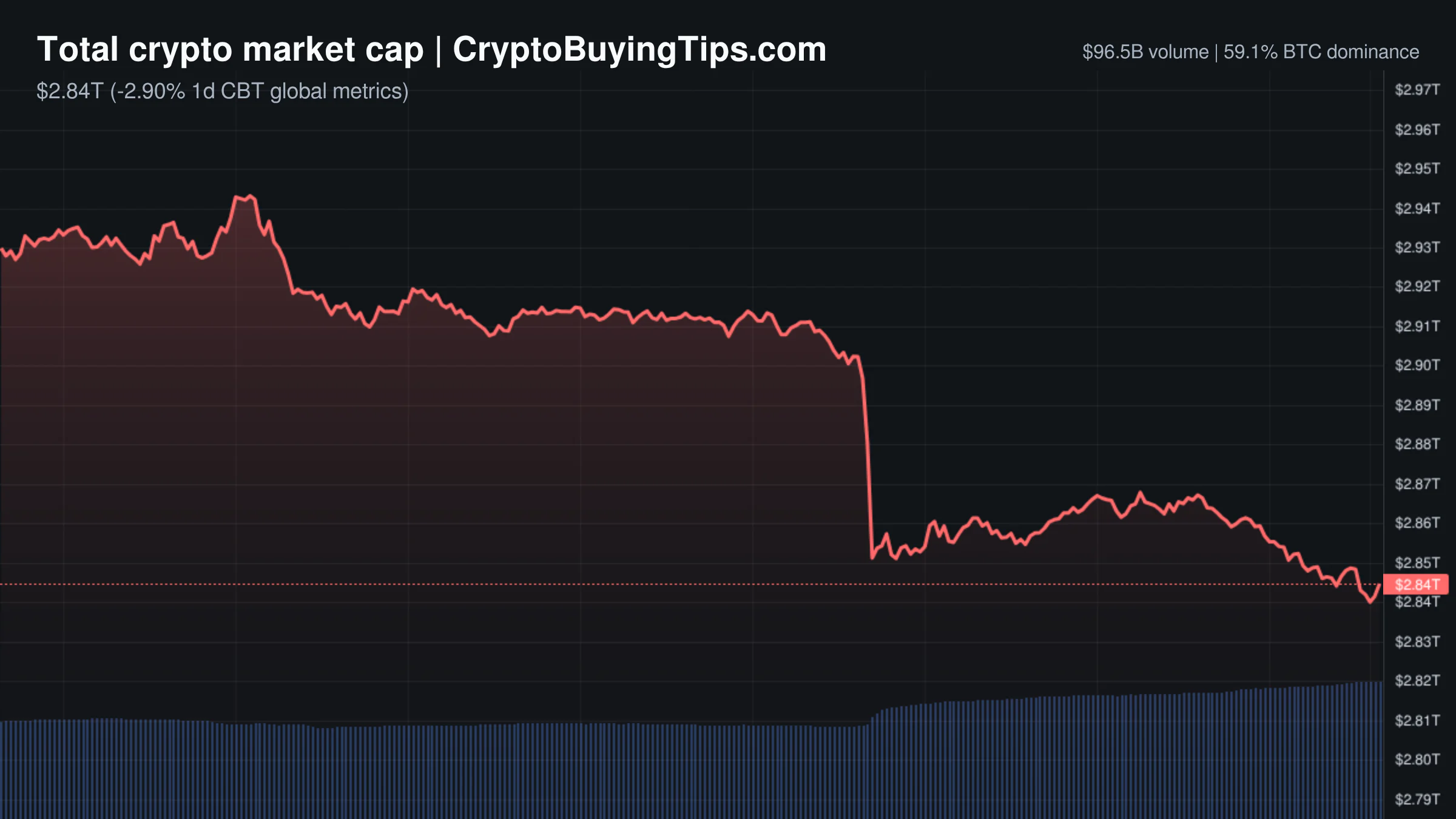
Crypto Market Overview | volume spikes amid institutional inflows despite quantum fears | October 7, 2026
Crypto market overview shows volume spikes amid institutional inflows despite quantum fears; see how ETF flows contrast…

What is stablecoin dominance and why it is the most ignored lead indicator in crypto
The market seems greedy on paper, but our data suggests otherwise; stablecoin dominance acts as the true measure of…
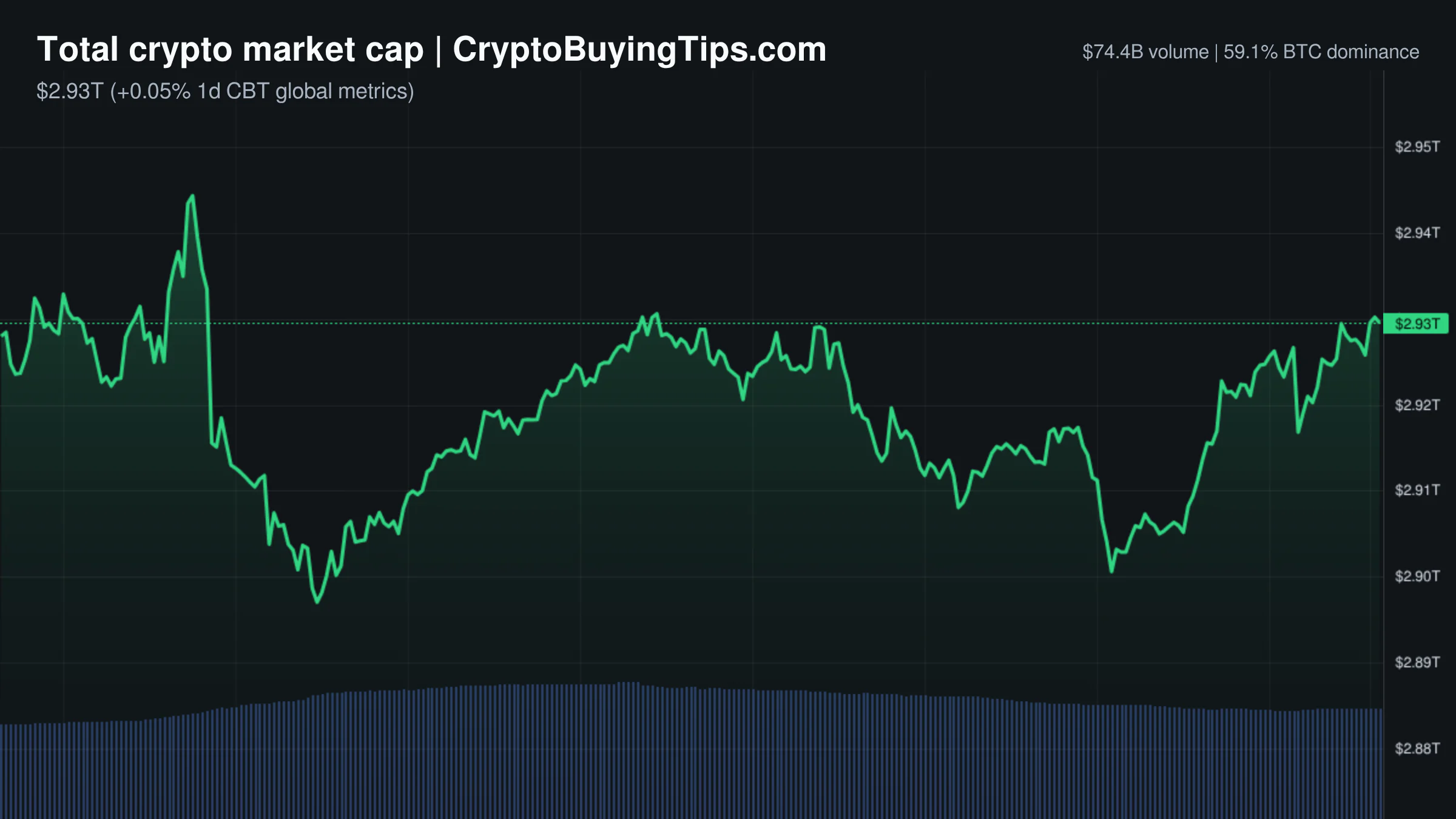
Crypto Market Overview | Leveraged derivatives volume dwarfs spot trading amid institutional infrastructure developments | October 6, 2026
Leveraged derivatives volume dwarfs spot trading at $2.93T market cap; see how institutional infrastructure developments…

Solana just tried to fire the clearinghouses
Another day, another attempt to make old banking rails look quaint. Solana’s Delivery-versus-Payment (DvP) rail is less…