

CME just added AVAX and SUI futures. The institutional trade is moving beyond Bitcoin
The CME Group just added Avalanche (AVAX) and Sui (SUI) to its futures lineup, and it is a move that tells us exactly where the big money is looking. For a long time, the "institutional trade" was just a shorthand for "buying Bitcoin ETFs." But the market is shifting. We've seen a lot of noise lately about Bitcoin and Ethereum ETFs bleeding outflows, which had some people wondering if the big players were bored. I think it is actually the opposite. They aren't leaving; they are diversifying into specific Layer 1 ecosystems. For a beginner, seeing these names pop up on a regulated exchange like the CME can be confusing, especially if you are still trying to figure out the difference between spot and futures trading for beginners.
Why the CME expansion is a big deal
When the CME adds a token, it isn't because they like the project's "vision" or "community." They do it because there is enough institutional demand to make a derivatives market viable. By adding AVAX and SUI, the CME is essentially giving hedge funds and asset managers a regulated way to bet on the growth of these specific networks without having to manage a private key or deal with the chaos of an offshore exchange. We previously covered Tokenized Stocks Explained for more background.
This is a pivot from the "BTC-only" era. It suggests that professional traders now view certain altcoins as legitimate asset classes rather than just speculative lottery tickets. SUI and AVAX both represent a bet on high-throughput, scalable infrastructure. If the big money starts hedging their positions in these assets via futures, it creates a floor of liquidity that usually helps stabilize price action over the long term.
The difference between spot and futures trading for beginners
Since the CME only deals in derivatives, it is a good time to clarify how this actually works. In spot trading, you are buying the actual asset. If you buy 10 SUI on an exchange, you own those coins. You can move them to a hardware wallet, stake them, or sell them later. It is a direct exchange of currency for an asset.
Futures trading is different. You aren't buying the coin; you are buying a contract that tracks the price of the coin. You are essentially making a bet on where the price will be at a specific date in the future. Institutions love this because it allows them to hedge. For example, a fund might hold a huge amount of spot AVAX but buy a futures contract to protect themselves against a sudden price drop.
If you are just starting out and want to actually own your assets, I always suggest moving them off the exchange. I prefer the Ledger Flex because it has a Gorilla Glass E Ink touchscreen and a secure element chip, which makes managing your portfolio a lot less stressful than leaving it on a platform where you don't control the keys.
The data behind the shift
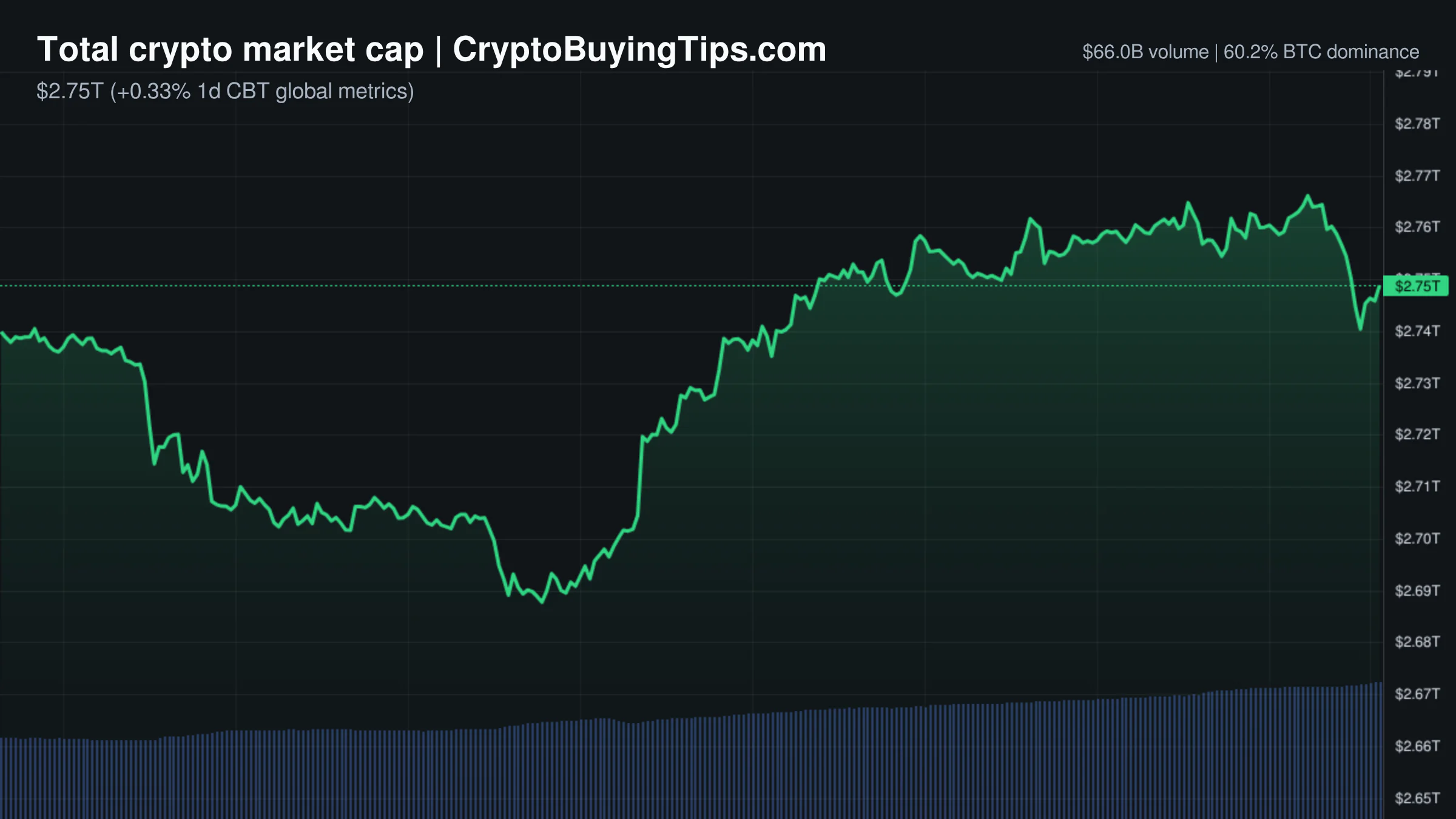
The current market data shows a weird contradiction. The Fear and Greed Index is sitting at 37, which is firmly in "Fear" territory. Total market cap is around $2.83T, and Bitcoin dominance is still very high. However, if you look at the volume, something interesting is happening. 24h volume is up significantly, with derivatives volume hitting $742.67B.
This tells me that the "fear" we are seeing is mostly a price-action narrative. Under the hood, the trading activity is massive. We are seeing a huge amount of leverage and speculation. The fact that the CME is expanding its altcoin list while the spot market feels sluggish suggests that the "smart money" is positioning itself for the next rotation. They aren't waiting for the retail crowd to get bullish again; they are building the pipes to trade these assets professionally right now.
Where I land on this
I'm not a permabull, and I've seen enough "institutional adoption" narratives fail to be blindly optimistic. But this is a structural change. Moving beyond the BTC/ETH duopoly into a broader basket of L1s like SUI and AVAX is a sign of market maturity.
The risk here is that futures markets can sometimes lead to more volatility through massive liquidations. But the reward is that these assets get "professionalized." When the CME provides the tools for institutions to trade SUI and AVAX, it removes one of the biggest barriers to entry: the fear of using an unregulated exchange. I think we are entering a phase where the "Altcoin Season" isn't just about random meme coins pumping, but about which professional-grade ecosystems actually have the utility to attract a billion-dollar fund.
Trade the news at our editorial-picked exchange: Bybit
Some links in this article may be affiliate links. We may earn a commission at no extra cost to you — this never influences our analysis or coverage.

Sigrid Voss
Crypto analyst and writer covering market trends, trading strategies, and blockchain technology.
More Articles
Crypto Market Overview | Leveraged bets surge as institutional rails expand despite ETF outflows | October 19, 2026
Leveraged bets surge as institutional rails expand despite ETF outflows; see our market overview on BTC dominance and…

Why 0.04 Gwei gas is a red flag for Ethereum
The quiet gas fees suggest nothing about underlying utility demand; meanwhile, $566B in derivatives volume points…
Crypto Market Overview | Bitcoin dominance climbs while altcoins struggle amid institutional friction | October 18, 2026
Bitcoin dominance climbs to 60.1% while altcoins struggle amid institutional friction; see our market overview for…

6 million Bitcoin are quantum-exposed. Here is what that actually means
Six million Bitcoin are sitting in addresses that could be vulnerable to quantum attacks. The risk isn't theoretical; it…