
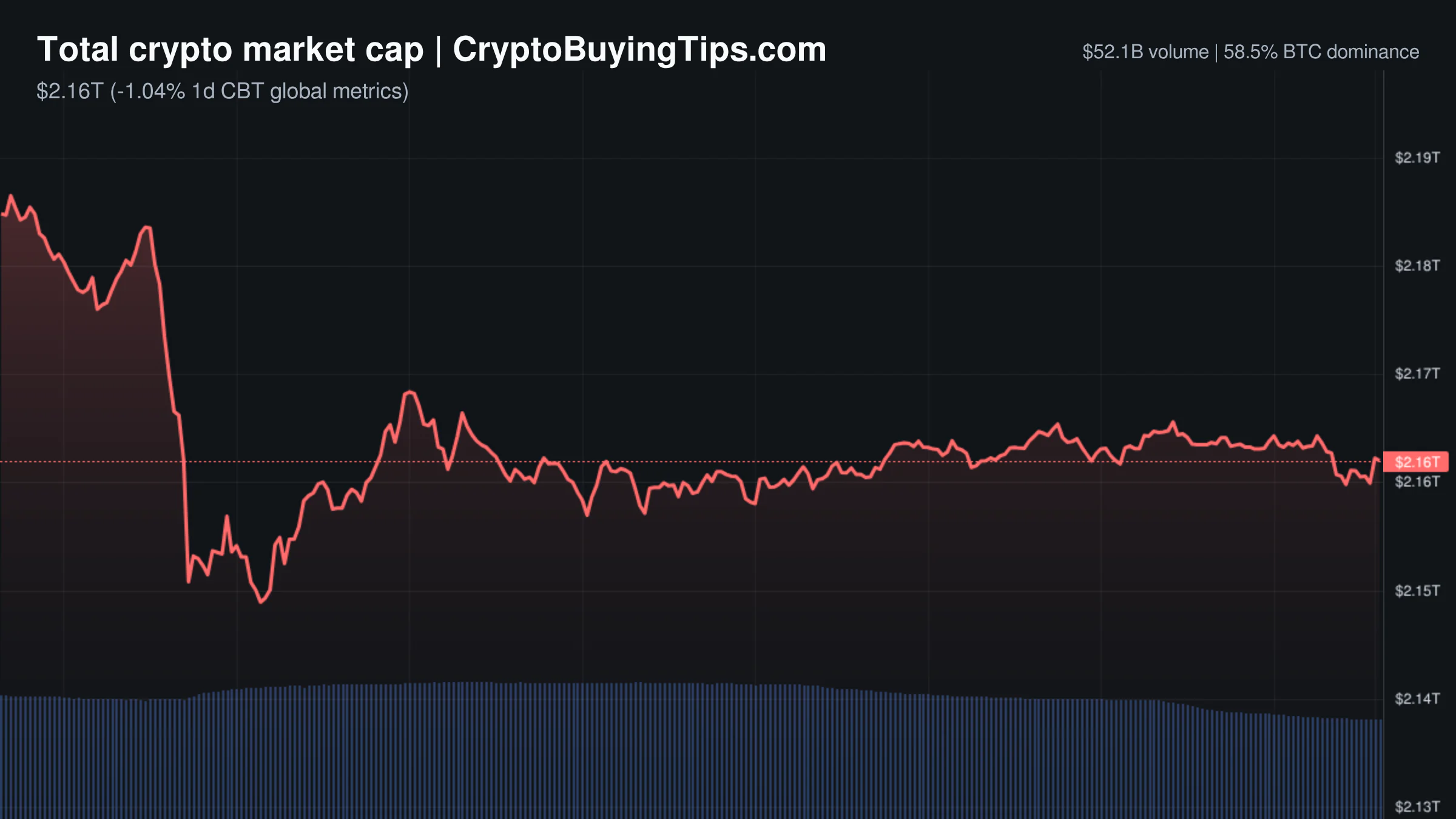
Crypto Market Overview | Derivatives volume dwarfs spot activity amid slipping sentiment and regulatory shocks | August 1, 2026
Crypto Market Overview | Derivatives volume dwarfs spot activity amid slipping sentiment and regulatory shocks | August 1, 2026
Market overview
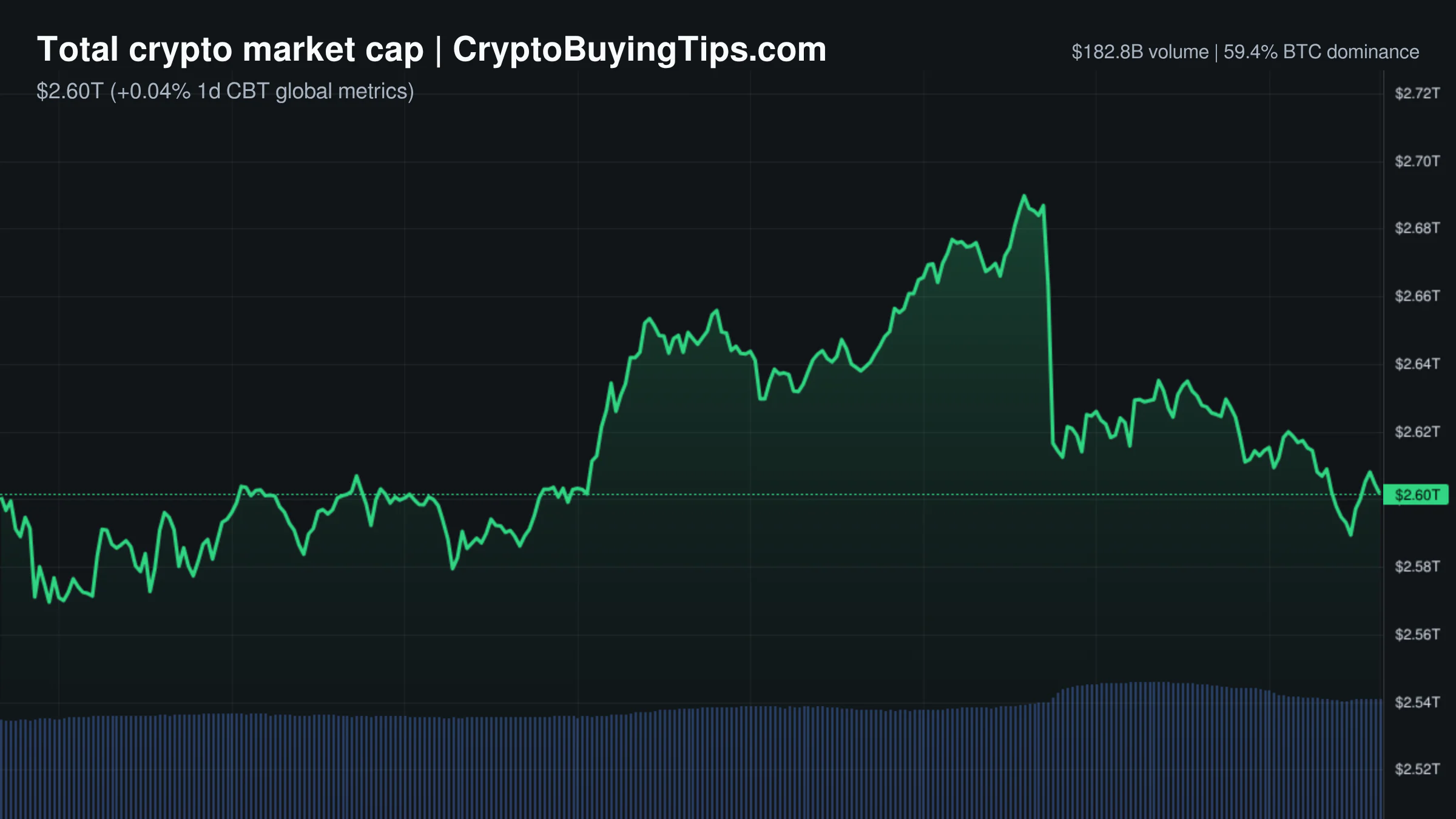
The market is currently a study in contradiction. While the total market cap sits around $2.16T, down about 1% over the last day, the real story is the staggering gap between spot and derivatives activity. Spot volume is a modest $52.17B, but derivatives volume is dwarfing it at $501.53B. We are seeing a market where the tail is wagging the dog. When derivatives volume is ten times larger than spot, price action becomes a function of liquidations and leverage rather than genuine accumulation.
Sentiment has soured, with the Fear and Greed Index landing at 33. This suggests a high level of anxiety among retail participants. Curiously, the Altcoin Season Index remains neutral at 52, meaning neither Bitcoin nor alts are convincingly leading the charge. We are in a transition phase. Capital is not rotating so much as it is hesitating. The synchronized drop in volume across spot, DeFi, and derivatives suggests a general withdrawal of liquidity. Traders are stepping aside to see who blinks first.
The macro backdrop adds another layer of uncertainty. While the S&P 500 and NASDAQ showed modest gains, the threat of Japanese yen intervention looms. If the US Treasury follows through on warnings to banks about JPY market intervention, the global carry trade could tighten. For crypto, that usually means a reduction in the risk-on appetite that fuels these rallies.
Bitcoin and Ethereum
Bitcoin is trading at $62,993.02, down 1.36% in 24 hours. Its dominance is holding steady at 58.46%, though it is not exactly commanding the room. The price action is currently a grind. We are seeing a slow unwinding of July's gains, returning the asset to the lower end of its recent range. On-chain data from Lookonchain shows a curious split. Bitcoin ETFs saw a positive net flow of $212.73M on July 31, yet the price continues to slide. This suggests that institutional buying is currently insufficient to offset the selling pressure from leveraged longs.
Ethereum is in a more precarious position. Trading at $1,866.01, it is down 1.02% and its dominance has slipped to 10.42%. The network activity is ghost-town quiet, with gas fees sitting at an exceptionally low 0.06 Gwei for fast transactions. This lack of on-chain demand is a problem. We previously covered how Ethereum market share vanishes while the protocol focuses on corporate appeal. The data today confirms that the corporate makeover has not yet sparked a return of actual network utility.
The ETF divergence is particularly telling. While Bitcoin ETFs are seeing inflows, Ethereum ETFs are bleeding. Lookonchain reported a 7-day net outflow of 38,195 ETH, totaling roughly $71.08M. The market is essentially treating Ethereum as a beta play on Bitcoin that is currently failing to keep up.
Top crypto prices
The top of the cap is mostly red. Bitcoin leads the decline at $62,993.02. Ethereum follows at $1,866.01. BNB has taken a harder hit, falling 1.64% to $581.05. XRP is down 0.98% at $1.06, and Solana has dipped 0.97% to $72.77.
A few outliers exist. TRON is managing a 0.47% gain, trading at $0.3276. Hyperliquid is the biggest loser among the top ten, dropping 4.70% to $52.18. This suggests a sharp correction in high-beta assets as traders flee to the perceived safety of the majors.
News driving today's market
The news cycle is a tug-of-war between institutional legitimacy and systemic failure. On the positive side, the Bank for International Settlements (BIS) Project Agorá has successfully settled $1 million in tokenized cross-border payments. This is a big deal. When central banks and firms like JPMorgan and Citi start settling in tokenized reserves, the infrastructure of the entire industry is validated. Similarly, Circle securing a New York trust charter is a significant win. It adds a state-level layer of oversight to USDC, making it far more palatable for institutional treasuries.
However, these wins are being offset by a series of regulatory and security shocks. The US Treasury has sanctioned Iranian firms using Bitcoin to facilitate passage through the Strait of Hormuz. While some analysts argue this proves the "digital gold" narrative by showing state-level demand, the reality is that it invites more scrutiny from OFAC. This regulatory heat is compounded by reports that a Dubai-based exchange, Shelbit, was linked to a $4 billion sanction-evasion network involving Binance.
The most damaging news for sentiment is the Coldcard exploit. A software bug led to the theft of nearly 600 Bitcoin, roughly $38 million. This attacks the very core of the "not your keys, not your coins" philosophy. When a trusted hardware wallet fails, it pushes investors toward the perceived safety of ETFs. This shift in trust is exactly why we believe active crypto management is becoming the preferred route for big capital.
Finally, Russia has expanded its crypto mining ban to include Moscow through 2032. This is a blunt instrument that removes a significant amount of hash power from the network. While Bitcoin is resilient, the loss of a major mining hub is never a bullish catalyst.
Social intelligence
The social mood is one of cautious complacency. Glassnode notes that Bitcoin has slipped back to $62.6K, effectively erasing much of the July rebound. Interestingly, they point out that implied volatility remains subdued. This is the classic "calm before the storm" where options positioning is rebuilding while the market pretends everything is fine.
There is also a historical perspective circulating. Cointelegraph highlighted a Glassnode metric suggesting the current bear market is down 49%, making it the mildest drawdown on record. For some, this is a sign of market maturity. For others, it is a sign that we are merely in a prolonged plateau before a more violent correction.
On the derivatives side, the liquidation data is stark. Over $113.5 million in positions were wiped out in a single hour, with $106.8 million of that coming from longs. This is a textbook "long squeeze." The market is flushing out the over-optimists, and the resulting volatility is keeping the Fear and Greed Index firmly in the "Fear" zone.
Trading ideas worth watching
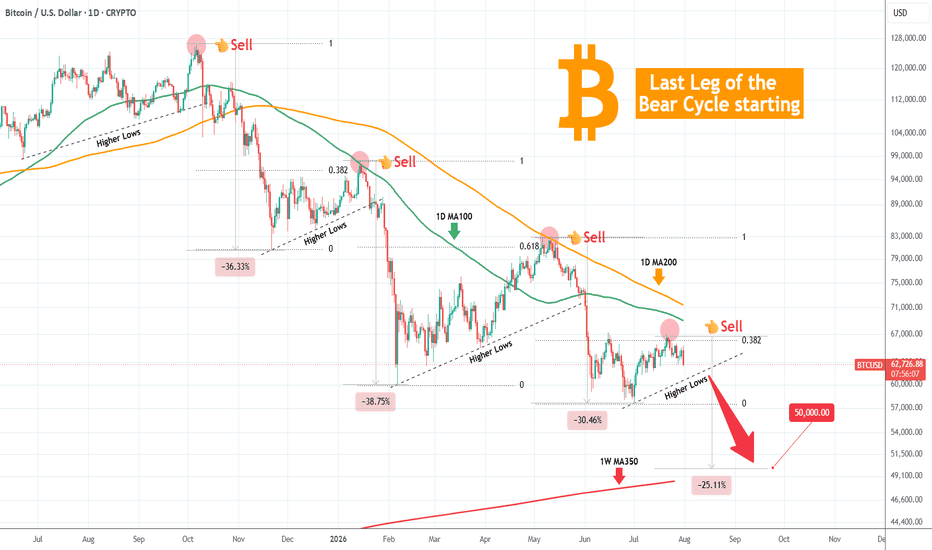
The most aggressive setup we are seeing is a bearish outlook on Bitcoin. Analyst TradingShot suggests we are entering the final bearish leg of the current cycle. The thesis is based on a break below the higher lows trend-line. If the price cannot hold above the 1D MA100, a move toward $50,000 becomes a conservative target. This would align with the 1W MA350, where the 2022 bear cycle bottomed. The risk here is that the spot ETF inflows we saw on July 31 could create a floor, leading to a fake-out spike toward $70,000 before any real drop.
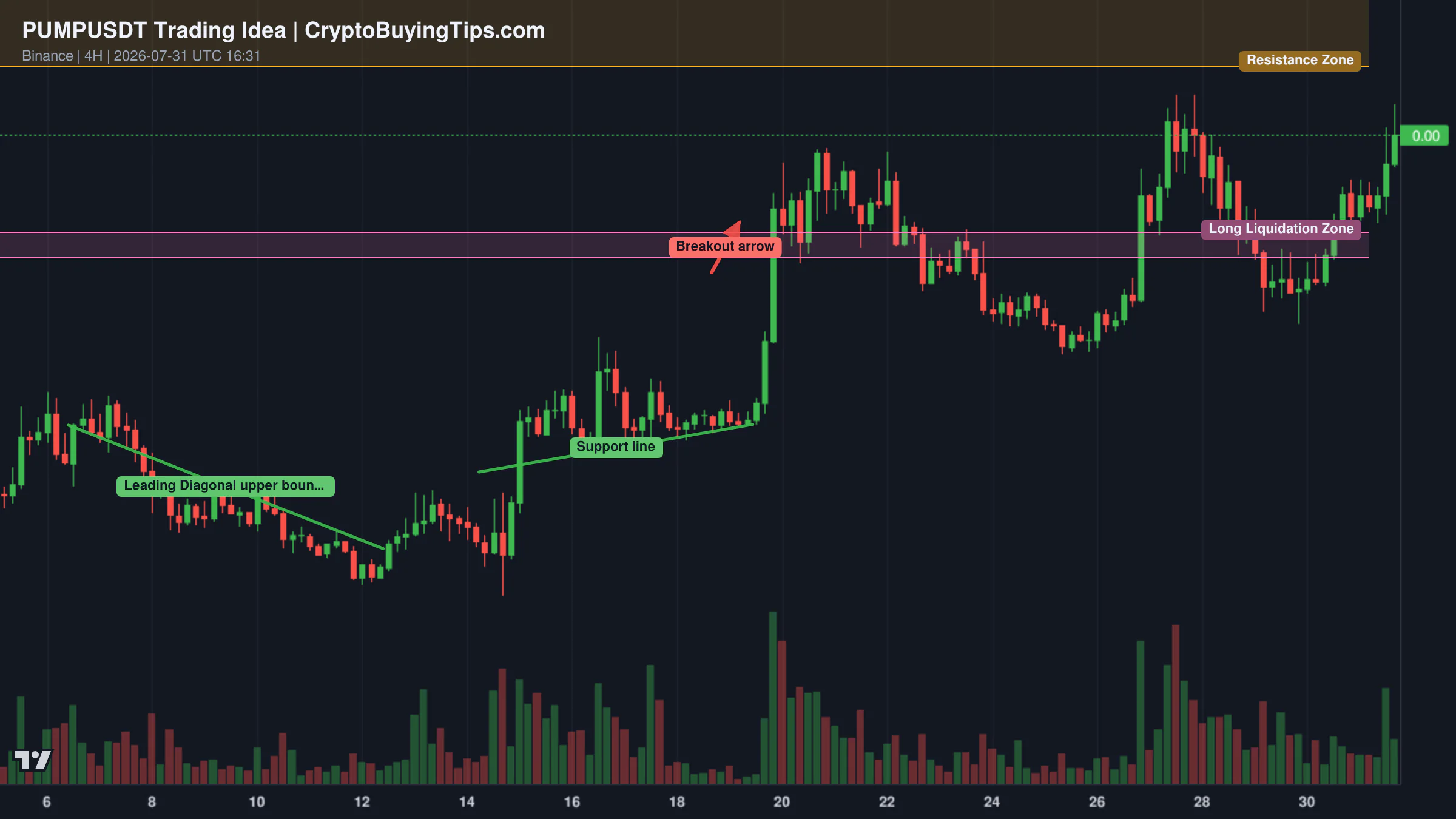
On the altcoin side, PUMP is showing surprising strength. It surged 20% recently, breaking above a multi-month descending channel. The move was driven by spot buying rather than leverage, which is a healthy sign. The target is a further 5% rally, provided it can clear the resistance zone between $0.002186 and $0.002230. However, the 4-hour chart suggests it is completing a wave 5, meaning a pullback to $0.001970 is likely once the momentum fades.
Cardano is also presenting an interesting accumulation play. An inverse head-and-shoulders pattern is forming on the daily chart, paired with a bullish RSI divergence. The "smart money" signal here is a classic selling climax followed by high-volume accumulation. If ADA can maintain momentum within the order block and fair value gap zone, the path to the 2330 resistance level is open.
Altcoin Spotlight
PUMP deserves a mention for its ability to decouple from the general market gloom. While the rest of the sector is sliding, PUMP has used token buybacks to absorb selling pressure from recent unlocks. The fact that open interest declined while the price rose is the key metric here. It means the rally is not a leveraged bubble but is based on actual demand. In a market characterized by "fear," seeing an asset break a multi-month channel with high volume is a signal that some traders are finally finding value in the wreckage.
What to watch next
The coming days will be a battle between regulatory clarity and systemic risk. The Circle NY charter and the BIS Project Agorá results are the "adults in the room" trying to bring legitimacy to the space. But the Coldcard exploit and the Iran sanctions are reminders that the industry is still an unpredictable frontier.
We need to watch the JPY intervention closely. If the Yen strengthens violently, expect a liquidity crunch across all risk assets. Additionally, the divergence between Bitcoin and Ethereum ETF flows is widening. If Ethereum continues to bleed institutional support, we could see a further collapse in ETH dominance, potentially pushing it below 9%. For now, the market is in a holding pattern, waiting for a catalyst that is actually larger than a single hardware wallet bug.
Some links in this article may be affiliate links. We may earn a commission at no extra cost to you — this never influences our analysis or coverage.

Sigrid Voss
Crypto analyst and writer covering market trends, trading strategies, and blockchain technology.
More Articles

Derivatives volume is 8x higher than spot. Here is why that is a warning
The market's current price action seems to be driven by bets rather than cash; with derivatives volume eight times…
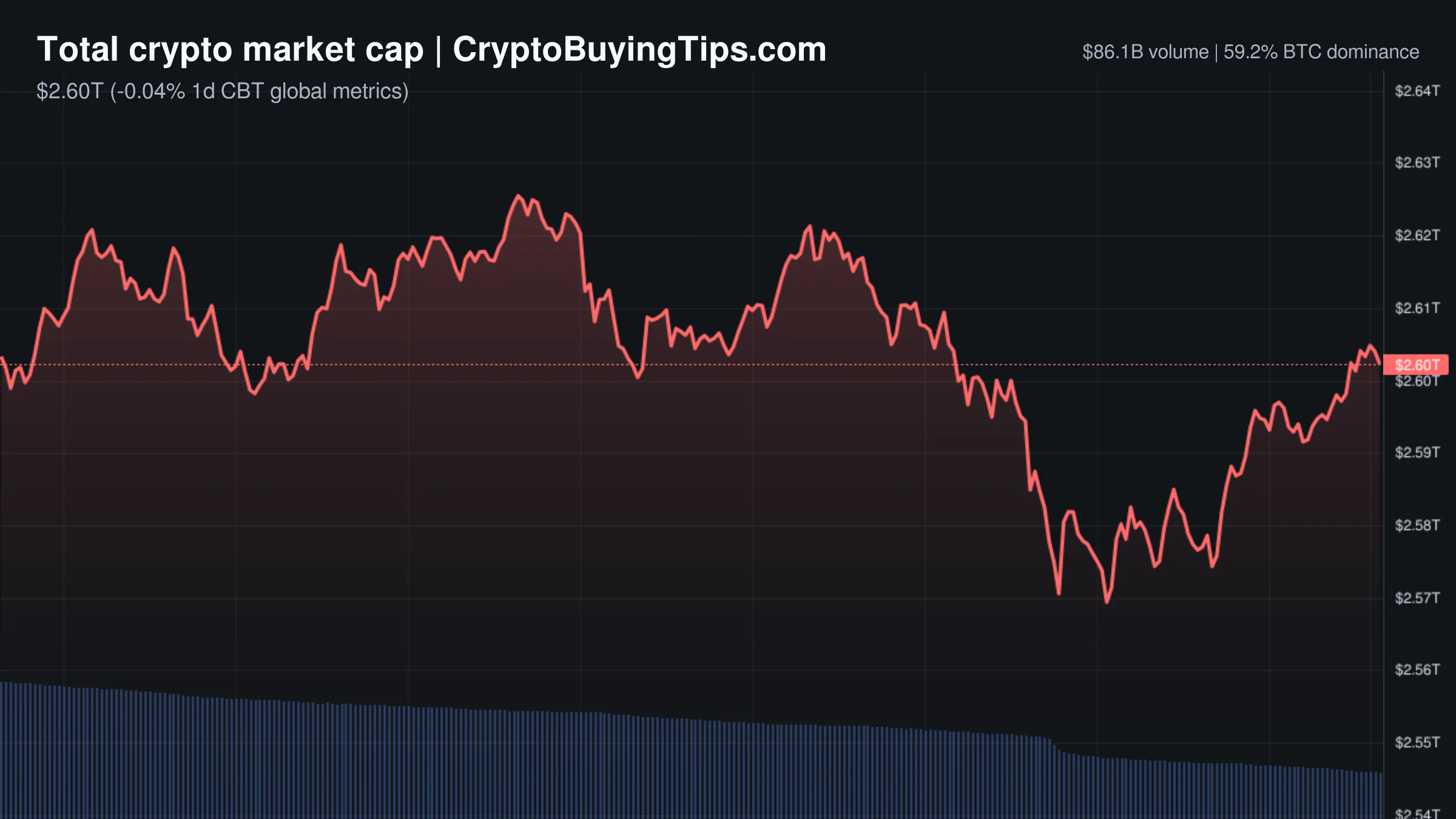
Crypto Market Overview | volume collapses as greed persists amid regulatory friction | August 23, 2026
Volume collapses as greed persists amid regulatory friction; see our market overview on crypto's current state and key…

Brussels is coming for DeFi vaults and the market is ignoring the risk
Brussels seems to think "decentralized" is just an aesthetic choice for now. Our read suggests MiCA regulation isn't…
Crypto Market Overview | Spot accumulation rises while derivatives volume cools | August 22, 2026
Spot accumulation rises while derivatives volume cools in this market overview of crypto activity and macro drivers for…