
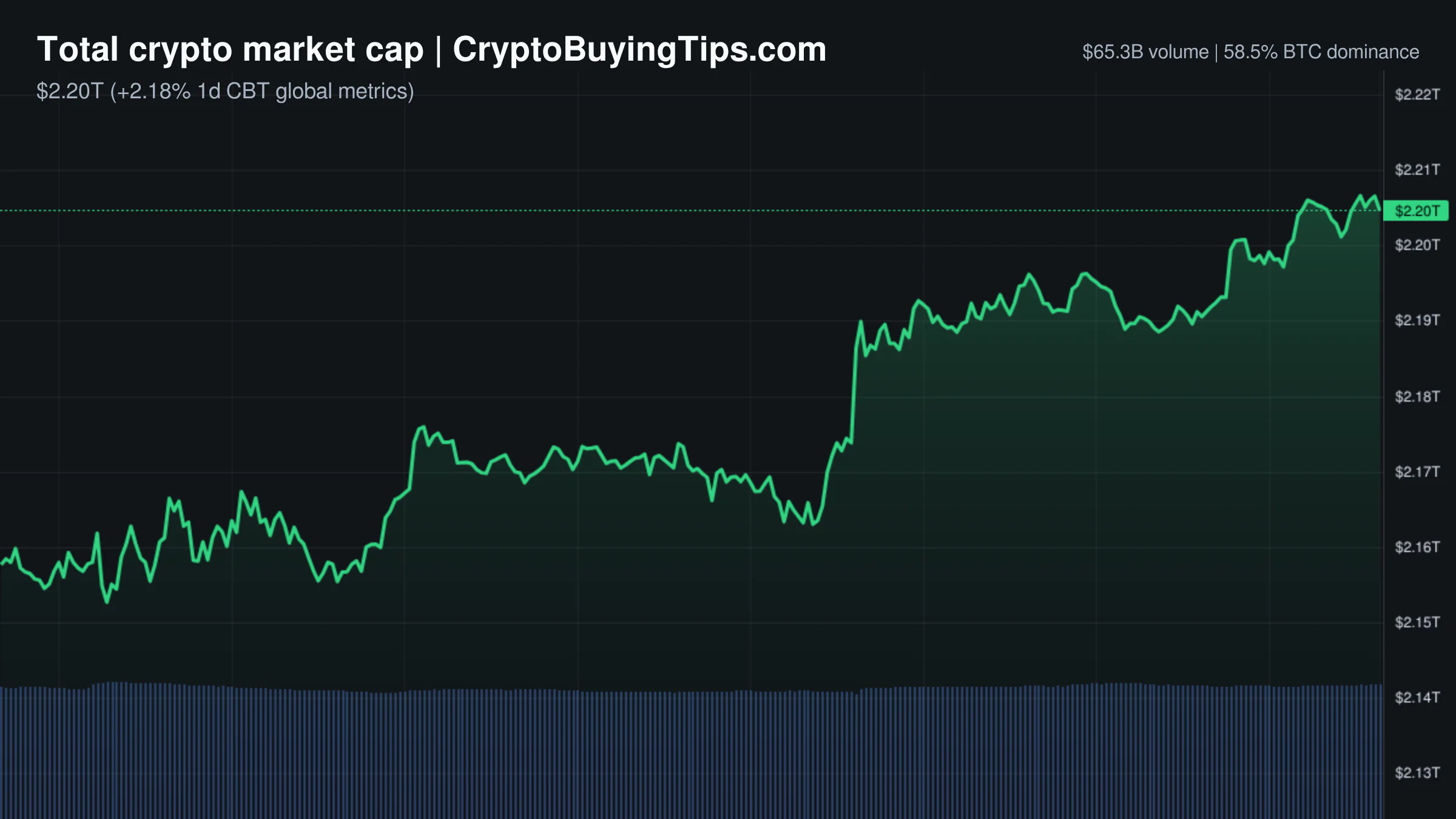
Crypto Market Overview | Skepticism persists despite green macro signals and ETF outflows | July 10, 2026
Crypto Market Overview | Skepticism persists despite green macro signals and ETF outflows | July 10, 2026
Market overview
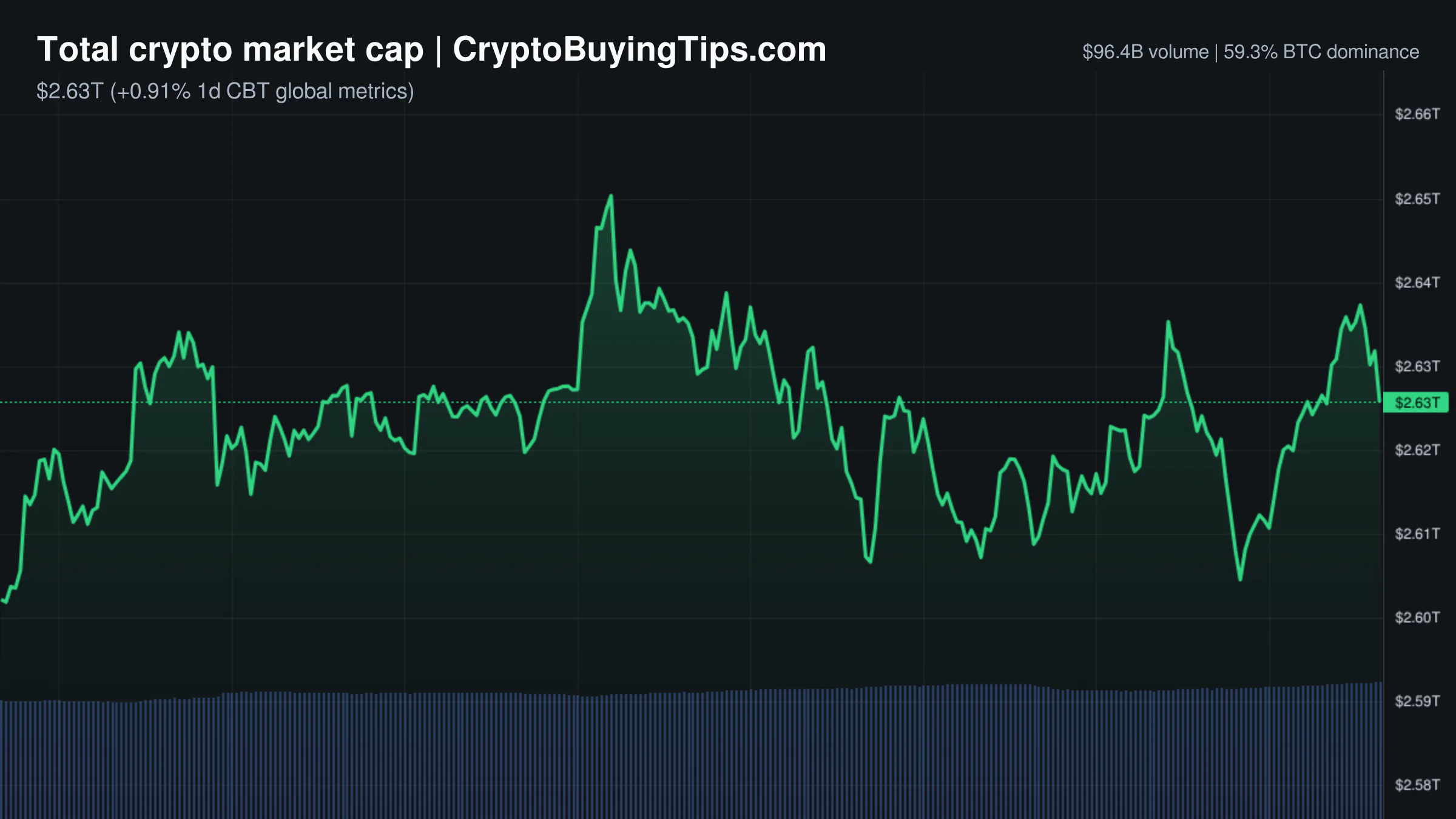
The market is currently performing a delicate dance between positive price action and deep-seated skepticism. While the total market cap sits around $2.21T with a 2.27% increase over the last 24 hours, the sentiment data suggests few traders actually believe in the recovery. The Fear and Greed Index remains stuck at 31, firmly in Fear territory. It is a peculiar state of affairs where prices climb while the collective mood remains miserable. This divergence suggests the current move is less about a return of conviction and more about a short-term technical bounce or a short squeeze.
Liquidity remains heavily skewed toward the derivatives market, which is where the real action is happening. With 24h derivatives volume at $590.93B, it dwarfs the $65.51B seen in spot trading. This ratio indicates that the current price movement is being driven by leveraged positions rather than genuine accumulation of the underlying assets. When derivatives volume is nearly ten times spot volume, the market is essentially a casino built on top of a very small foundation of actual ownership.
Macro correlations are providing some wind in the sails. The S&P 500 and NASDAQ both closed in the green, with the QQQ rising 1.66%. This risk-on appetite in traditional finance often spills over into crypto, but the lack of a strong fundamental catalyst means this support is fragile. Stablecoin activity is steady with $68.61B in 24h volume, but the sharp 16.43% drop in DeFi volume suggests that while people are moving their money, they are not yet deploying it into yield-generating protocols.
Bitcoin and Ethereum
Bitcoin is trading at $64,378.58, up 2.73% on the day. Despite the green candle, the broader trend remains cautious. Bitcoin dominance has ticked up to 58.55%, which typically suggests that capital is retreating from riskier altcoins and seeking shelter in the primary asset. However, institutional flows are not providing the support that bulls would like. Spot BTC ETFs saw net outflows of $95.3M on July 9, proving that the big money is still hesitant to commit during this volatility.
Ethereum is priced at $1,795.98, marking a 3% gain. The on-chain data for Ethereum is particularly quiet, with gas fees sitting at an extremely low 0.14 Gwei. This indicates a lack of network congestion and, more importantly, a lack of demand for block space. When gas is this cheap, it means the "world computer" is currently a very empty room.
There is a notable disconnect between the ETF data and private whale activity. While the ETFs are leaking capital, on-chain intelligence shows Tom Lee's Bitmine has been aggressively accumulating ETH, purchasing over 60,000 tokens from Galaxy Digital, FalconX, and Kraken in a short window. This suggests a divide between the passive institutional index buyers and active managers who see the current dip as a buying opportunity.
Top crypto prices
The top assets are mostly mirroring the broader market's modest recovery. Bitcoin leads at $64,378.58 and Ethereum follows at $1,795.98. BNB is slightly more muted at $575.9, up 1.11%. XRP has gained 2.12% to reach $1.11, while Solana is up 2.11% at $79.47. TRON is the odd one out among the leaders, slipping 0.46% to $0.3298. Hyperliquid continues its steady climb, trading at $68.93 after a 2.29% increase.
News driving today's market
Institutional adoption is moving toward "permissioned" infrastructure, which is a double-edged sword for the industry. SWIFT is testing a blockchain-based shared ledger with 17 global giants, including HSBC and Citi, to enable 24/7 cross-border payments. Similarly, Sony Bank has cleared the OCC hurdle to issue its own dollar stablecoin. These moves prove that banks love blockchain technology as long as they can keep the "decentralized" part out of the equation. We previously covered how this trend of tokenizing stocks trap often results in centralized receipts rather than true financial revolution.
Regulatory headwinds remain a constant drag. The EU is preparing to revise MiCA in 2027 to bring foreign stablecoin issuers under its supervision, which will likely increase compliance costs and restrict how dollar-pegged tokens operate in Europe. At the same time, the EU parliament passed "chat control" laws allowing private chat scans until 2028. For a sector built on the premise of privacy and censorship resistance, this is a sobering reminder of the regulatory environment. We previously covered Hyperliquid volume tracker for more background.
In the US, there is a tug-of-war over the rules of the game. Phantom and Hyperliquid are urging the CFTC to stop treating on-chain protocols like traditional brokers, which would be a major win for DeFi infrastructure. However, CFTC Chair Michael Selig has warned that regulators will end up writing all the rules if the Clarity Act stalls in Congress. This uncertainty keeps the market in a state of suspended animation, where any positive news is immediately balanced by the fear of a sudden regulatory crackdown.
Social intelligence
The social narrative is currently dominated by the tension between public chains and institutional rails. JPMorgan has sparked a debate by suggesting that the real risk to Bitcoin is not selling pressure, but the rise of permissioned infrastructure that bypasses public tokens entirely. This is a direct challenge to the "digital gold" narrative, suggesting that if the world's largest banks build their own private highways, the public road becomes irrelevant.
On the more optimistic side, Bitwise has noted that DeFi tokens fell only 4% in June compared to Bitcoin's 22% drop. This suggests a quiet re-rating of the sector as institutions begin to build on protocols like Aave and Morpho. This rotation, if it sustains, could signal the start of a more sustainable DeFi cycle that isn't based on inflationary rewards but on actual institutional utility.
We are also seeing a focus on specific technical milestones. Zcash is preparing for its Ironwood upgrade on July 28, which usually brings a spike in short-term speculative interest. Meanwhile, the release of OpenAI's GPT-5.6 is being viewed by some analysts as a catalyst for decentralized compute and infrastructure layers, though this remains more of a narrative play than a data-driven reality.
Trading ideas worth watching
Litecoin is showing a classic bearish setup. The asset has formed a Head and Shoulders pattern on the 1-hour chart and is currently testing the neckline. A confirmed close below this level would likely extend the selloff toward the first support at 42.59. If the momentum remains strong, the next target is 41.26. This is a textbook reversal structure that suggests the recent uptrend has run out of steam.
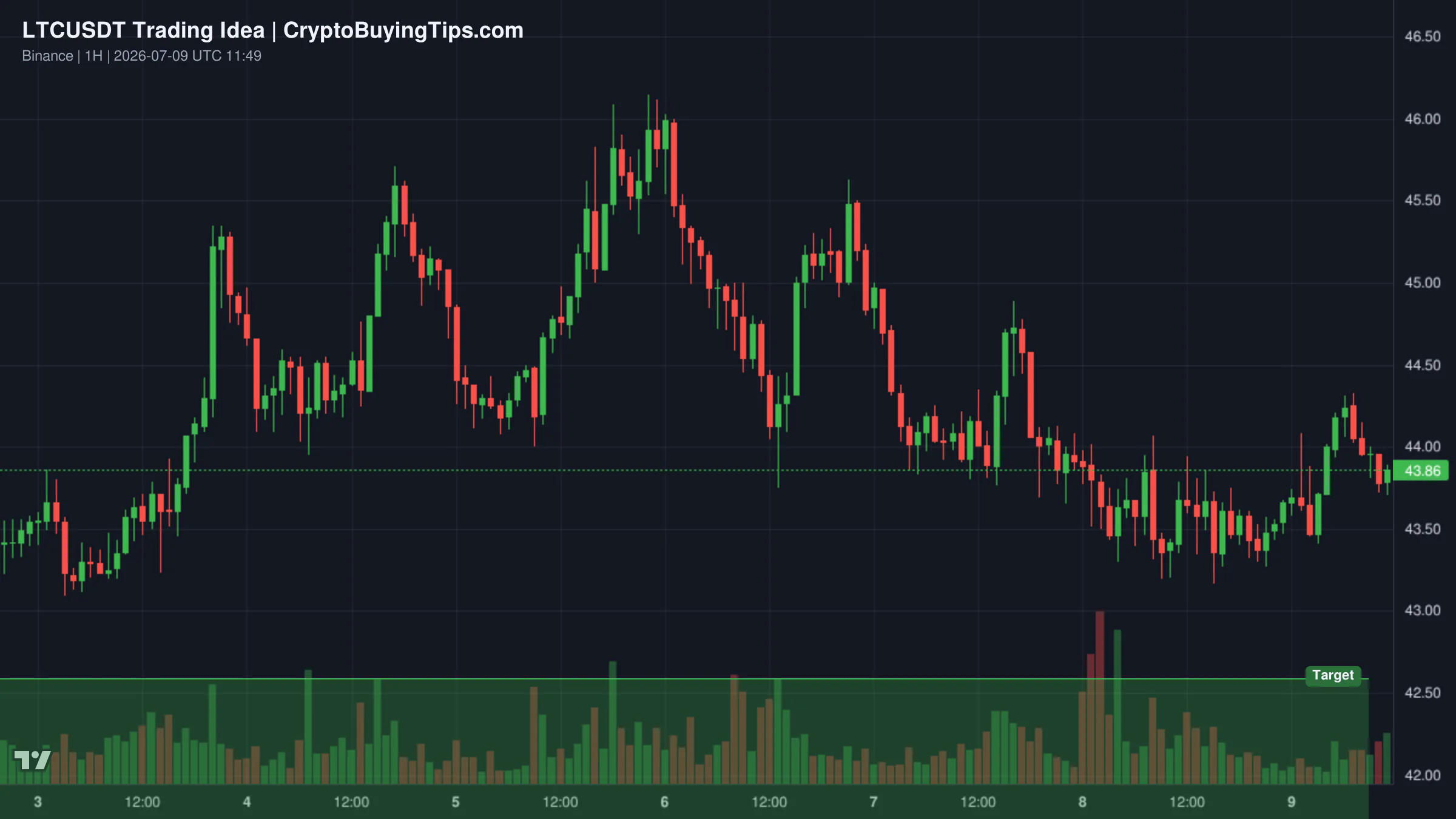
Bitcoin is currently fighting for air in the 64,370 to 64,690 resistance zone. This area coincides with a major liquidity pool and the upper boundary of its current trading range. The setup looks like a potential liquidity grab before another leg lower. While a short squeeze could momentarily push prices higher, the lack of fundamental catalysts and resuming ETF outflows suggest that a decline toward 62,550 or the range support at 61,300 is more probable.
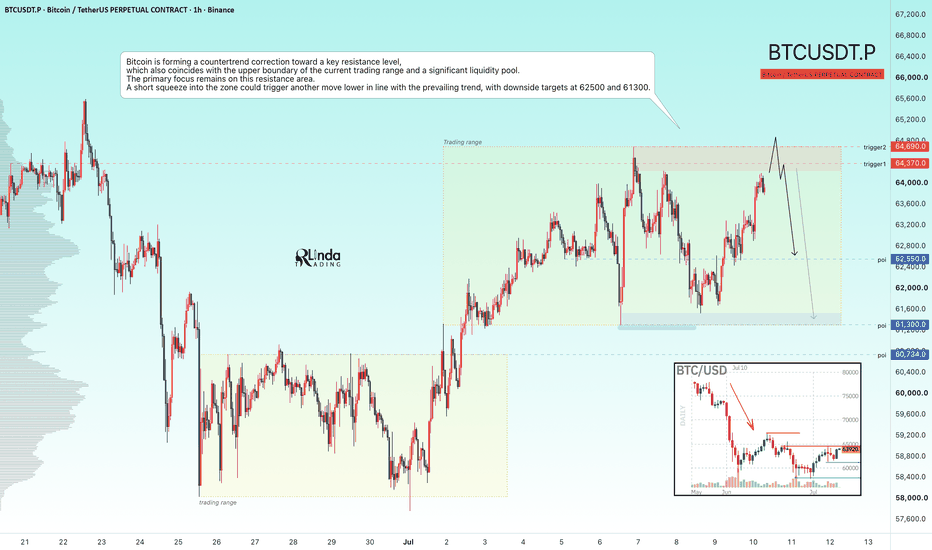
For those with a higher risk appetite, Sui presents a bullish long opportunity on the daily timeframe. With an entry zone between $0.62 and $0.74, the setup targets a move toward $0.86 and potentially as high as $1.18. The trade uses 5x leverage and requires a weekly close below $0.61 to invalidate the thesis. It is a high-reward play that bets on a surprise bullish phase for the broader altcoin market.
What to watch next
The coming days will be a test of whether the market can break out of its "Fear" cycle. The divergence between price and sentiment is usually a warning sign. If the market continues to rise while the Fear and Greed index stays low, it suggests a "short squeeze" rally that can vanish as quickly as it appeared.
The real story is the institutional shift toward permissioned ledgers. The SWIFT and Sony Bank developments are bullish for the technology but potentially bearish for the tokens. If the world's financial plumbing moves to blockchain but ignores the public tokens, the value proposition of the current market changes. We will be watching the CFTC's response to the Phantom and Hyperliquid request, as any move toward exempting non-custodial wallets would provide the regulatory breathing room the DeFi sector desperately needs. Until then, the market is essentially waiting for a reason to actually believe in the rally.
Some links in this article may be affiliate links. We may earn a commission at no extra cost to you — this never influences our analysis or coverage.

Sigrid Voss
Crypto analyst and writer covering market trends, trading strategies, and blockchain technology.
More Articles
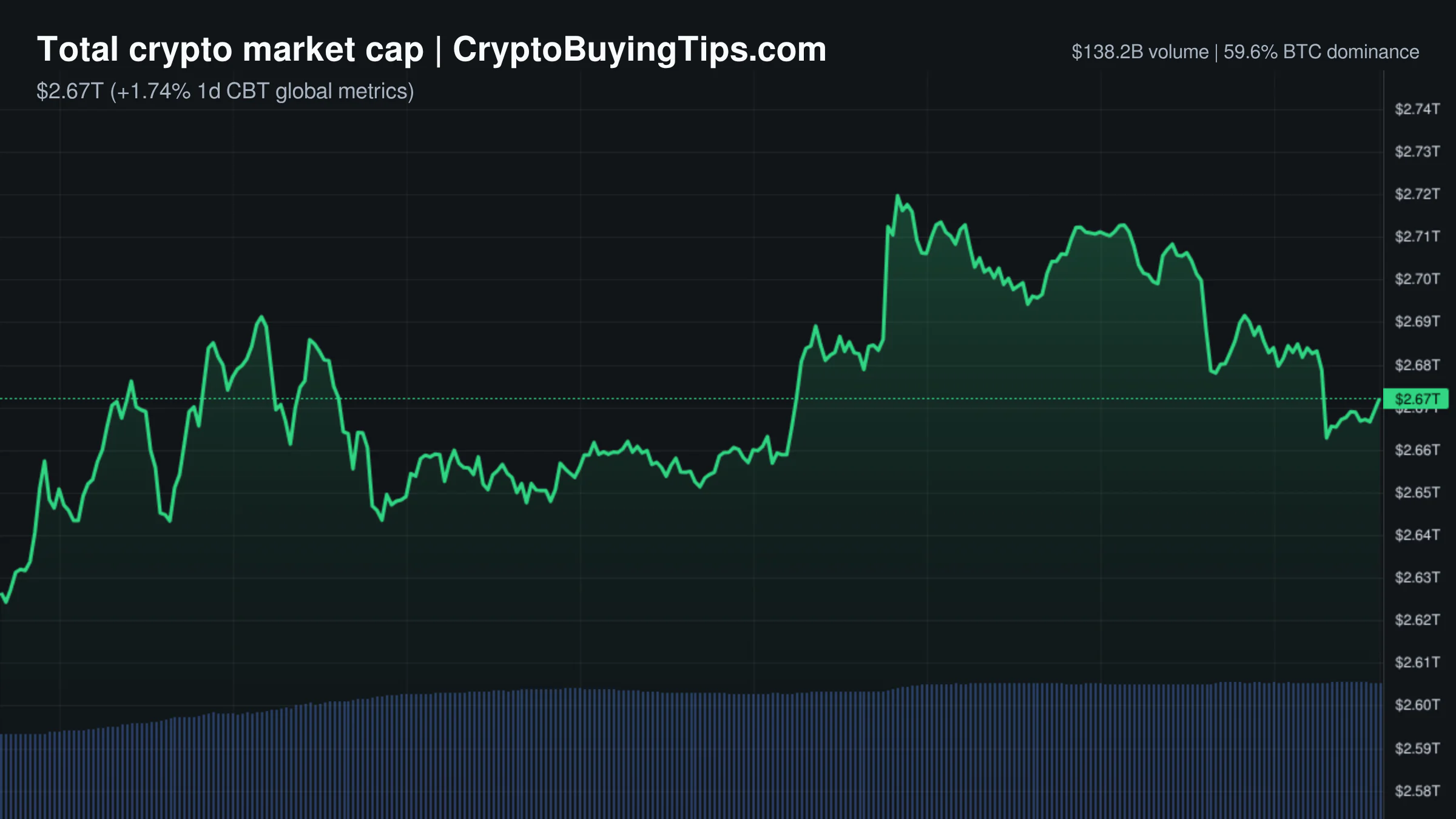
Crypto Market Overview | leverage driving bitcoin's move amid institutional adoption and geopolitical risk | August 25, 2026
The market shows contradiction as leverage drives bitcoin's move amid institutional adoption and geopolitical risk…

Coinbase is putting stocks on Base, but the money is still in Bitcoin
Coinbase has launched tokenized stocks on Base, which sounds rather sophisticated for mere digital shares. However, our…
Crypto Market Overview | Leverage-driven rally amid strong ETF inflows as BTC targets 80k | August 24, 2026
Leverage-driven rally sees BTC near 80k amid strong ETF inflows; see our market overview on current crypto dynamics.

Derivatives volume is 8x higher than spot. Here is why that is a warning
The market's current price action seems to be driven by bets rather than cash; with derivatives volume eight times…