Market Overviews

Daily crypto market overviews, trend analysis, and key updates from our editorial team.

Crypto Market Overview | Skepticism persists despite green macro signals and ETF outflows | July 10, 2026
Sigrid Voss·

Crypto Market Overview | Skepticism persists despite green macro signals and ETF outflows | July 10, 2026

Market overview

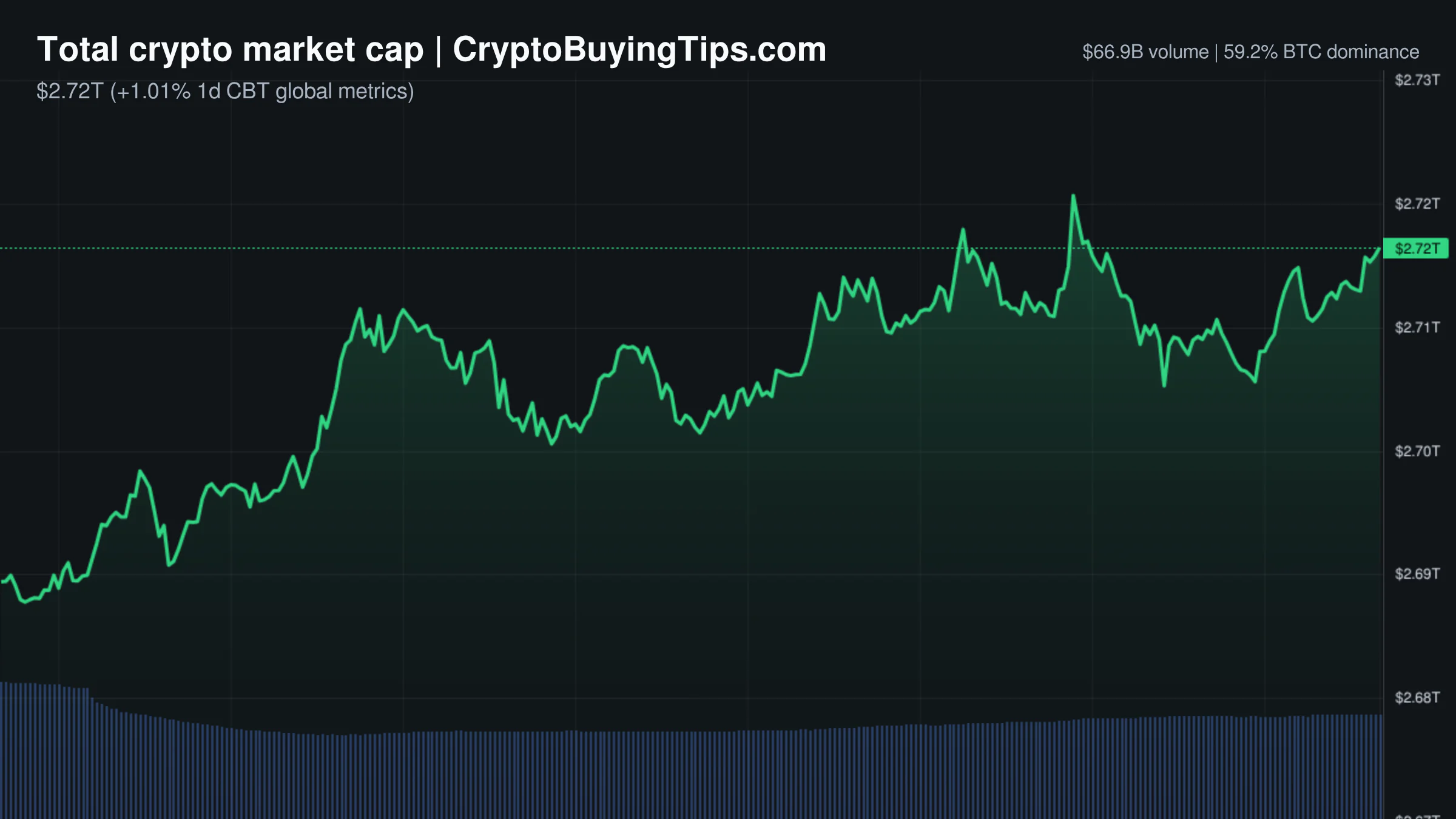
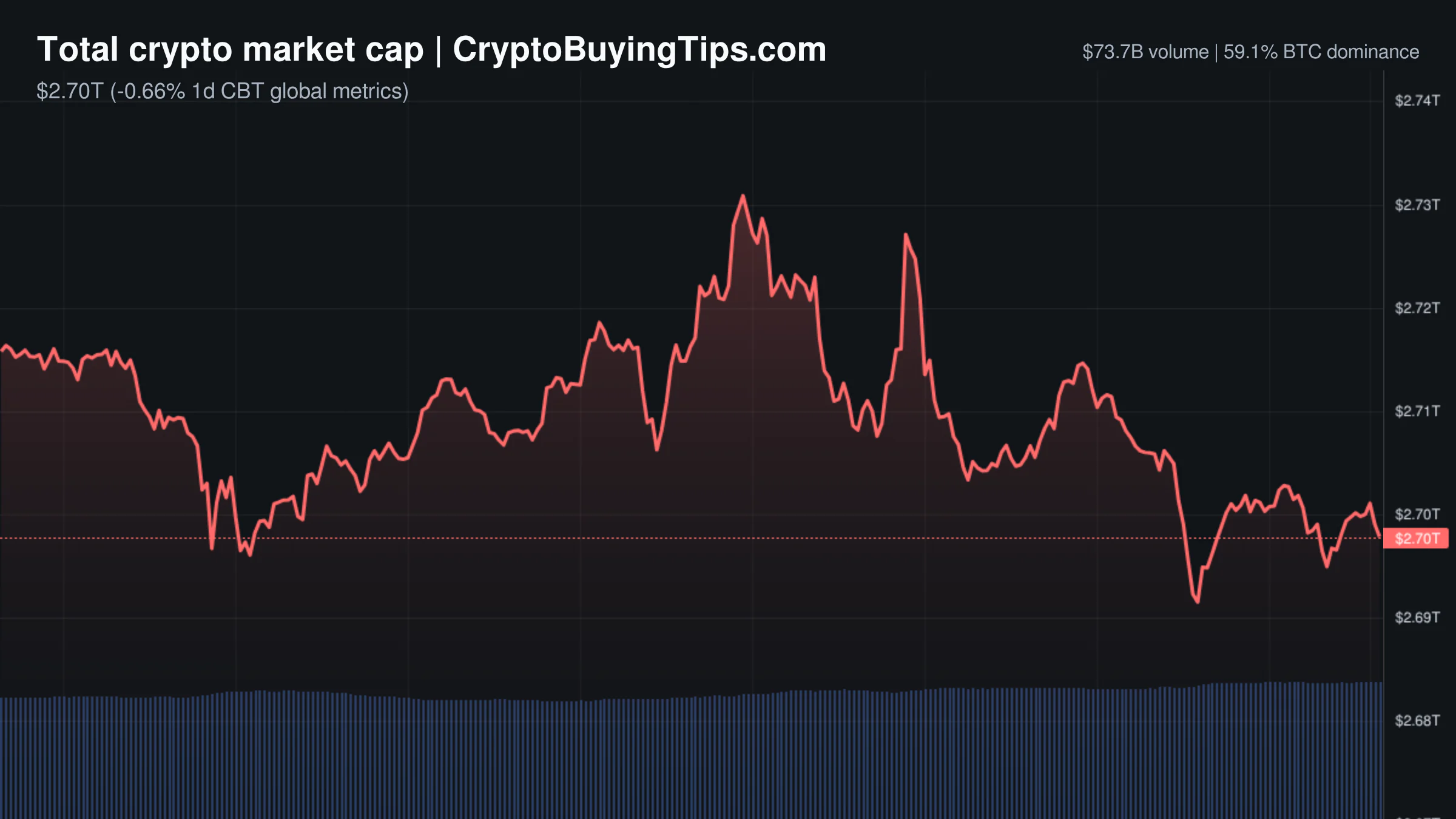
The market is currently performing a delicate dance between positive price action and deep-seated skepticism. While the total market cap sits around $2.21T with a 2.27% increase over the last 24 hours, the sentiment data suggests few traders actually believe in the recovery. The Fear and Greed Index remains stuck at 31, firmly in Fear territory. It is a peculiar state of affairs where prices climb while the collective mood remains miserable. This divergence suggests the current move is less about a return of conviction and more about a short-term technical bounce or a short squeeze.

Liquidity remains heavily skewed toward the derivatives market, which is where the real action is happening. With 24h derivatives volume at $590.93B, it dwarfs the $65.51B seen in spot trading. This ratio indicates that the current price movement is being driven by leveraged positions rather than genuine accumulation of the underlying assets. When derivatives volume is nearly ten times spot volume, the market is essentially a casino built on top of a very small foundation of actual ownership.

Macro correlations are providing some wind in the sails. The S&P 500 and NASDAQ both closed in the green, with the QQQ rising 1.66%. This risk-on appetite in traditional finance often spills over into crypto, but the lack of a strong fundamental catalyst means this support is fragile. Stablecoin activity is steady with $68.61B in 24h volume, but the sharp 16.43% drop in DeFi volume suggests that while people are moving their money, they are not yet deploying it into yield-generating protocols.

Bitcoin and Ethereum

Bitcoin is trading at $64,378.58, up 2.73% on the day. Despite the green candle, the broader trend remains cautious. Bitcoin dominance has ticked up to 58.55%, which typically suggests that capital is retreating from riskier altcoins and seeking shelter in the primary asset. However, institutional flows are not providing the support that bulls would like. Spot BTC ETFs saw net outflows of $95.3M on July 9, proving that the big money is still hesitant to commit during this volatility.

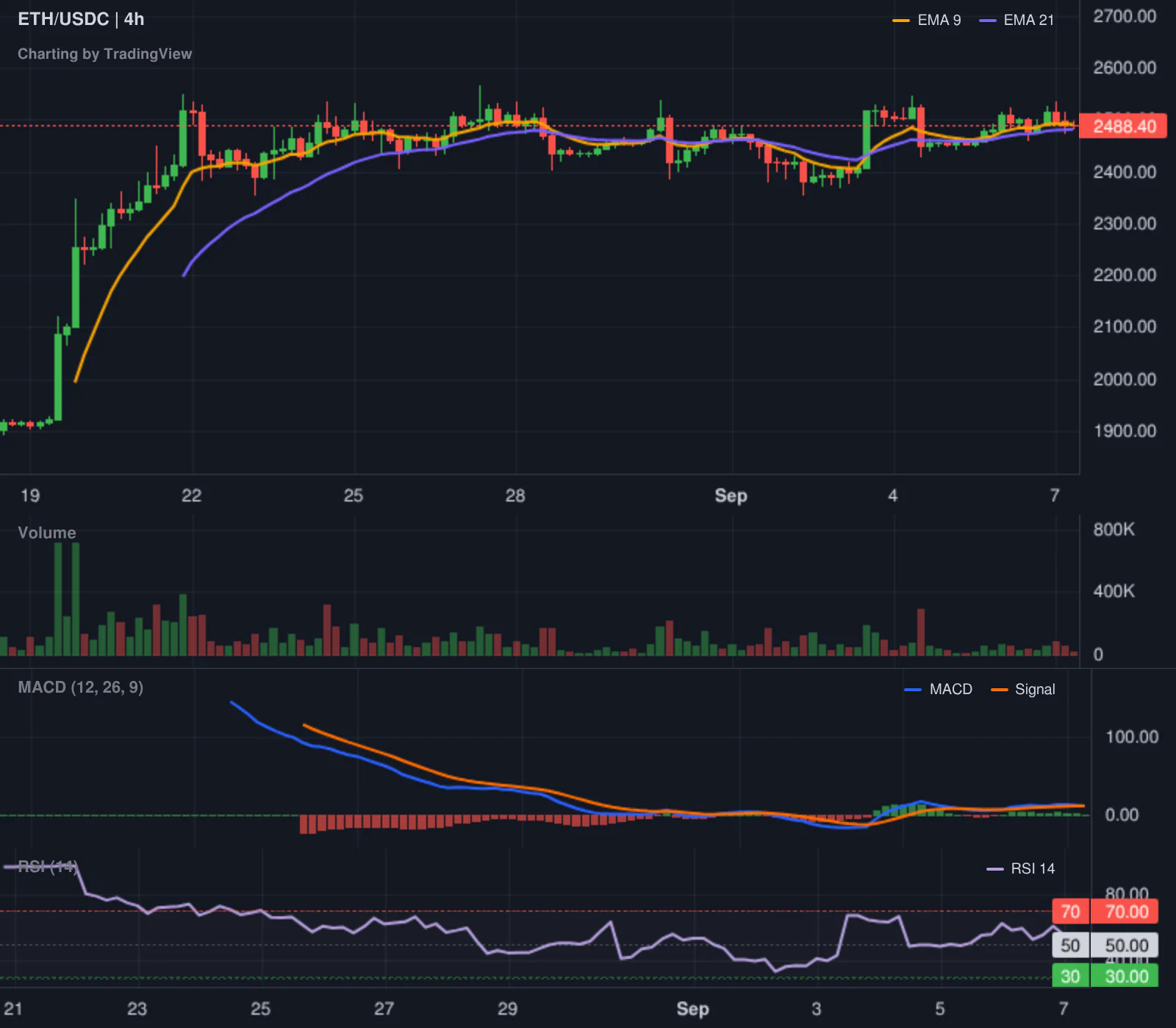
Ethereum is priced at $1,795.98, marking a 3% gain. The on-chain data for Ethereum is particularly quiet, with gas fees sitting at an extremely low 0.14 Gwei. This indicates a lack of network congestion and, more importantly, a lack of demand for block space. When gas is this cheap, it means the "world computer" is currently a very empty room.

There is a notable disconnect between the ETF data and private whale activity. While the ETFs are leaking capital, on-chain intelligence shows Tom Lee's Bitmine has been aggressively accumulating ETH, purchasing over 60,000 tokens from Galaxy Digital, FalconX, and Kraken in a short window. This suggests a divide between the passive institutional index buyers and active managers who see the current dip as a buying opportunity.

Top crypto prices

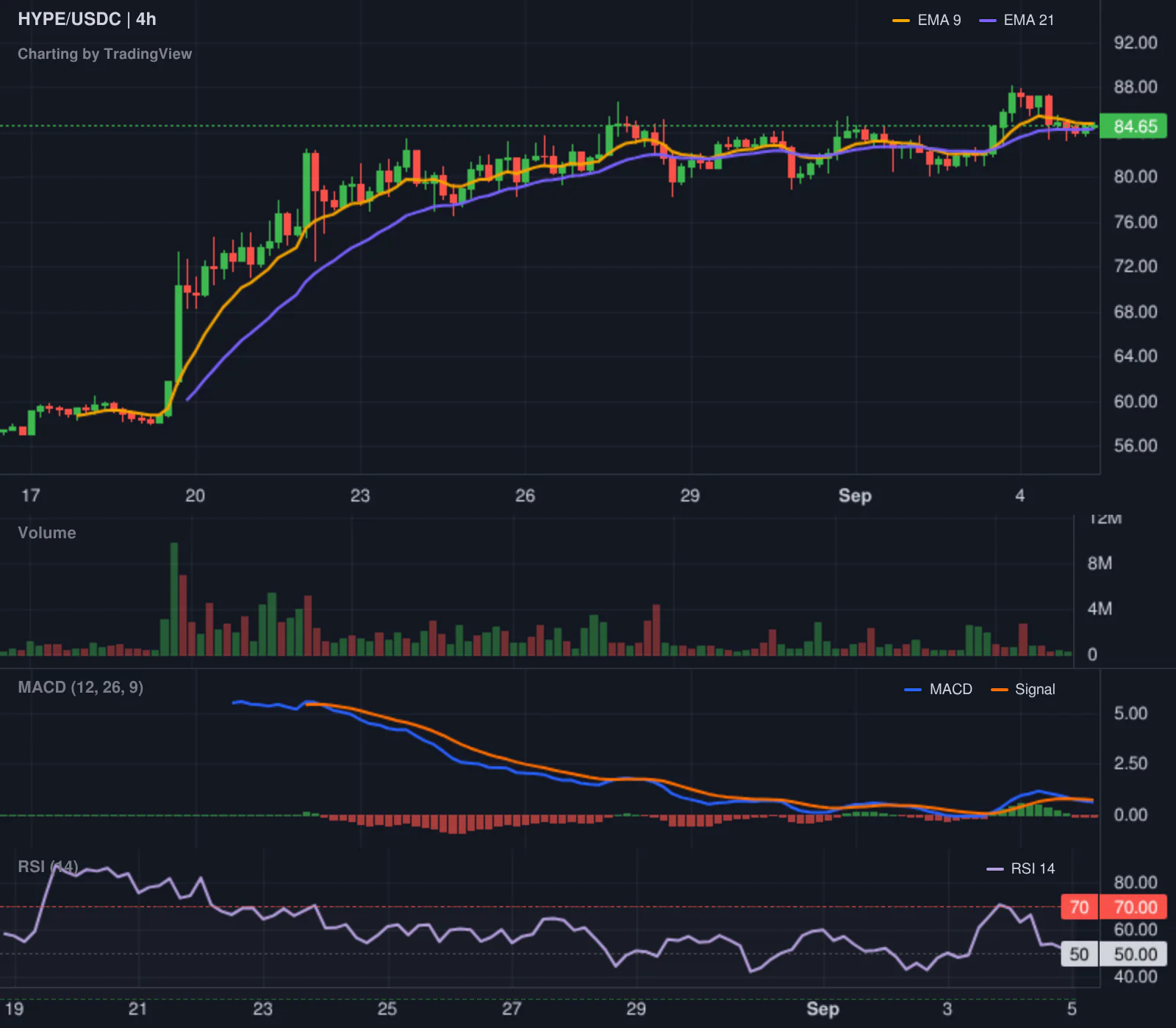
The top assets are mostly mirroring the broader market's modest recovery. Bitcoin leads at $64,378.58 and Ethereum follows at $1,795.98. BNB is slightly more muted at $575.9, up 1.11%. XRP has gained 2.12% to reach $1.11, while Solana is up 2.11% at $79.47. TRON is the odd one out among the leaders, slipping 0.46% to $0.3298. Hyperliquid continues its steady climb, trading at $68.93 after a 2.29% increase.

News driving today's market

Institutional adoption is moving toward "permissioned" infrastructure, which is a double-edged sword for the industry. SWIFT is testing a blockchain-based shared ledger with 17 global giants, including HSBC and Citi, to enable 24/7 cross-border payments. Similarly, Sony Bank has cleared the OCC hurdle to issue its own dollar stablecoin. These moves prove that banks love blockchain technology as long as they can keep the "decentralized" part out of the equation. We previously covered how this trend of tokenizing stocks trap often results in centralized receipts rather than true financial revolution.

Regulatory headwinds remain a constant drag. The EU is preparing to revise MiCA in 2027 to bring foreign stablecoin issuers under its supervision, which will likely increase compliance costs and restrict how dollar-pegged tokens operate in Europe. At the same time, the EU parliament passed "chat control" laws allowing private chat scans until 2028. For a sector built on the premise of privacy and censorship resistance, this is a sobering reminder of the regulatory environment. We previously covered Hyperliquid volume tracker for more background.

In the US, there is a tug-of-war over the rules of the game. Phantom and Hyperliquid are urging the CFTC to stop treating on-chain protocols like traditional brokers, which would be a major win for DeFi infrastructure. However, CFTC Chair Michael Selig has warned that regulators will end up writing all the rules if the Clarity Act stalls in Congress. This uncertainty keeps the market in a state of suspended animation, where any positive news is immediately balanced by the fear of a sudden regulatory crackdown.

Social intelligence

The social narrative is currently dominated by the tension between public chains and institutional rails. JPMorgan has sparked a debate by suggesting that the real risk to Bitcoin is not selling pressure, but the rise of permissioned infrastructure that bypasses public tokens entirely. This is a direct challenge to the "digital gold" narrative, suggesting that if the world's largest banks build their own private highways, the public road becomes irrelevant.

On the more optimistic side, Bitwise has noted that DeFi tokens fell only 4% in June compared to Bitcoin's 22% drop. This suggests a quiet re-rating of the sector as institutions begin to build on protocols like Aave and Morpho. This rotation, if it sustains, could signal the start of a more sustainable DeFi cycle that isn't based on inflationary rewards but on actual institutional utility.

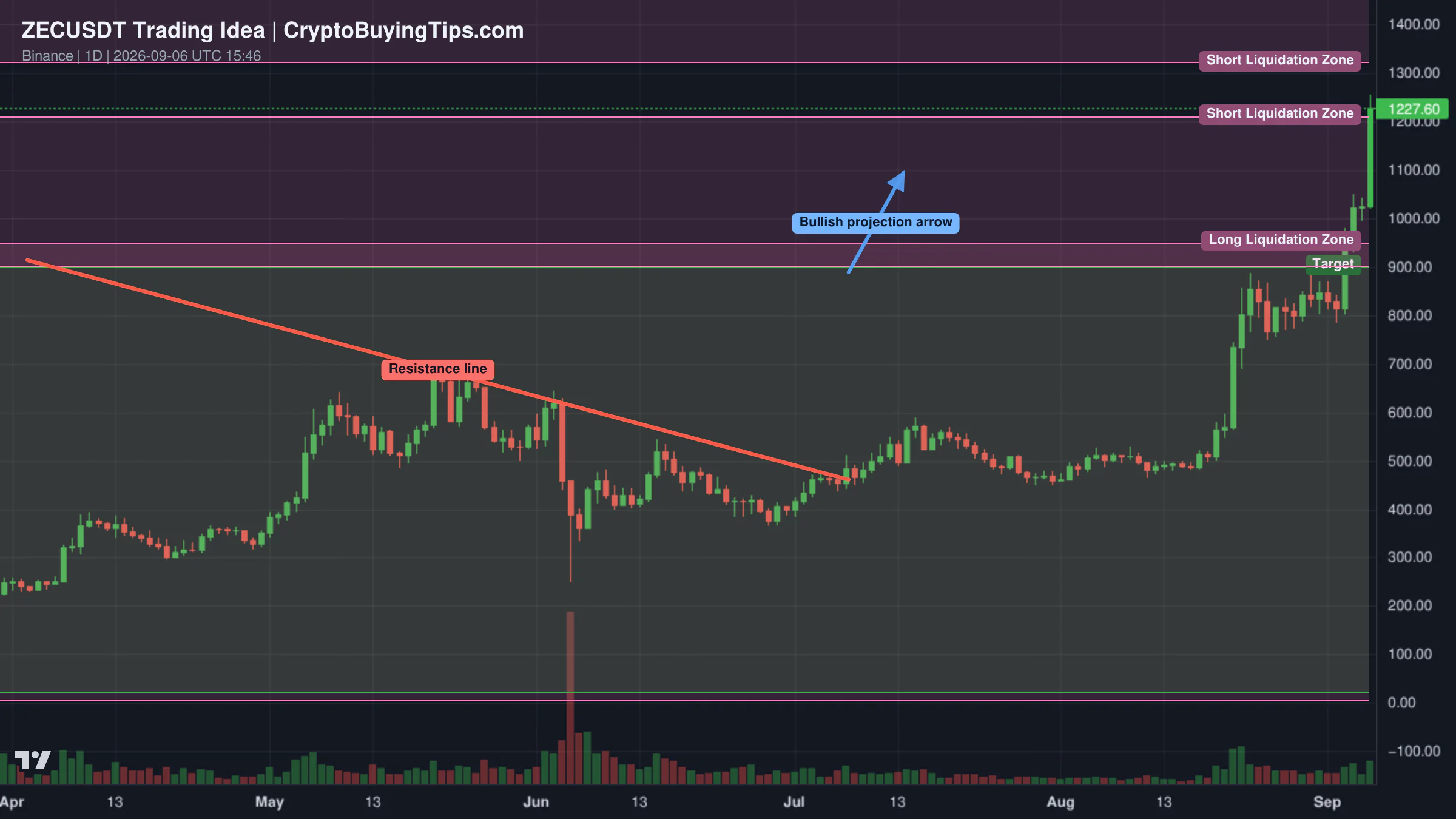
We are also seeing a focus on specific technical milestones. Zcash is preparing for its Ironwood upgrade on July 28, which usually brings a spike in short-term speculative interest. Meanwhile, the release of OpenAI's GPT-5.6 is being viewed by some analysts as a catalyst for decentralized compute and infrastructure layers, though this remains more of a narrative play than a data-driven reality.

Trading ideas worth watching

Litecoin is showing a classic bearish setup. The asset has formed a Head and Shoulders pattern on the 1-hour chart and is currently testing the neckline. A confirmed close below this level would likely extend the selloff toward the first support at 42.59. If the momentum remains strong, the next target is 41.26. This is a textbook reversal structure that suggests the recent uptrend has run out of steam.

Redrawn LTCUSDT 60 trading idea chart for Litecoin: Neckline Breakdown Could Extend the Selloff

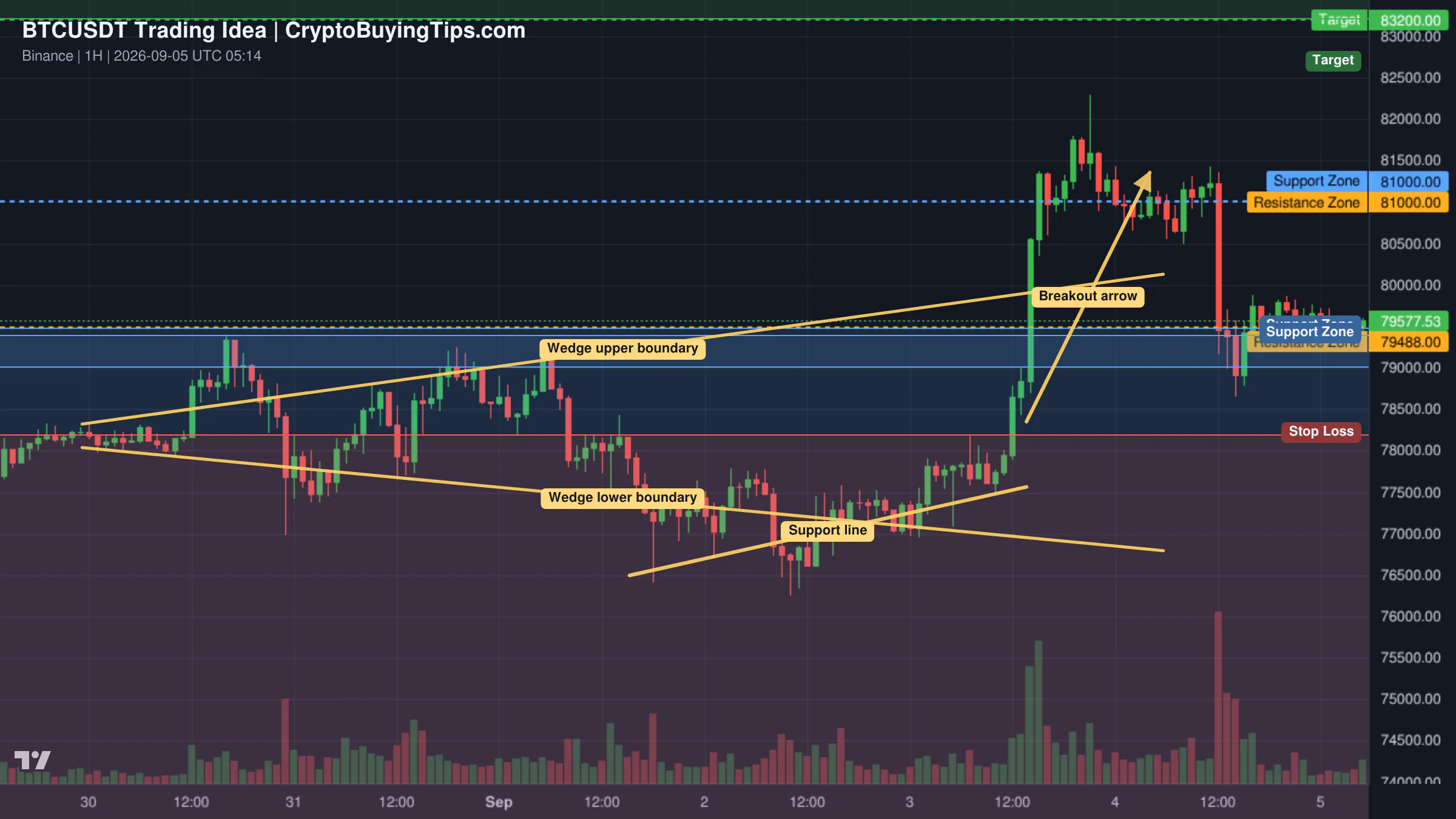
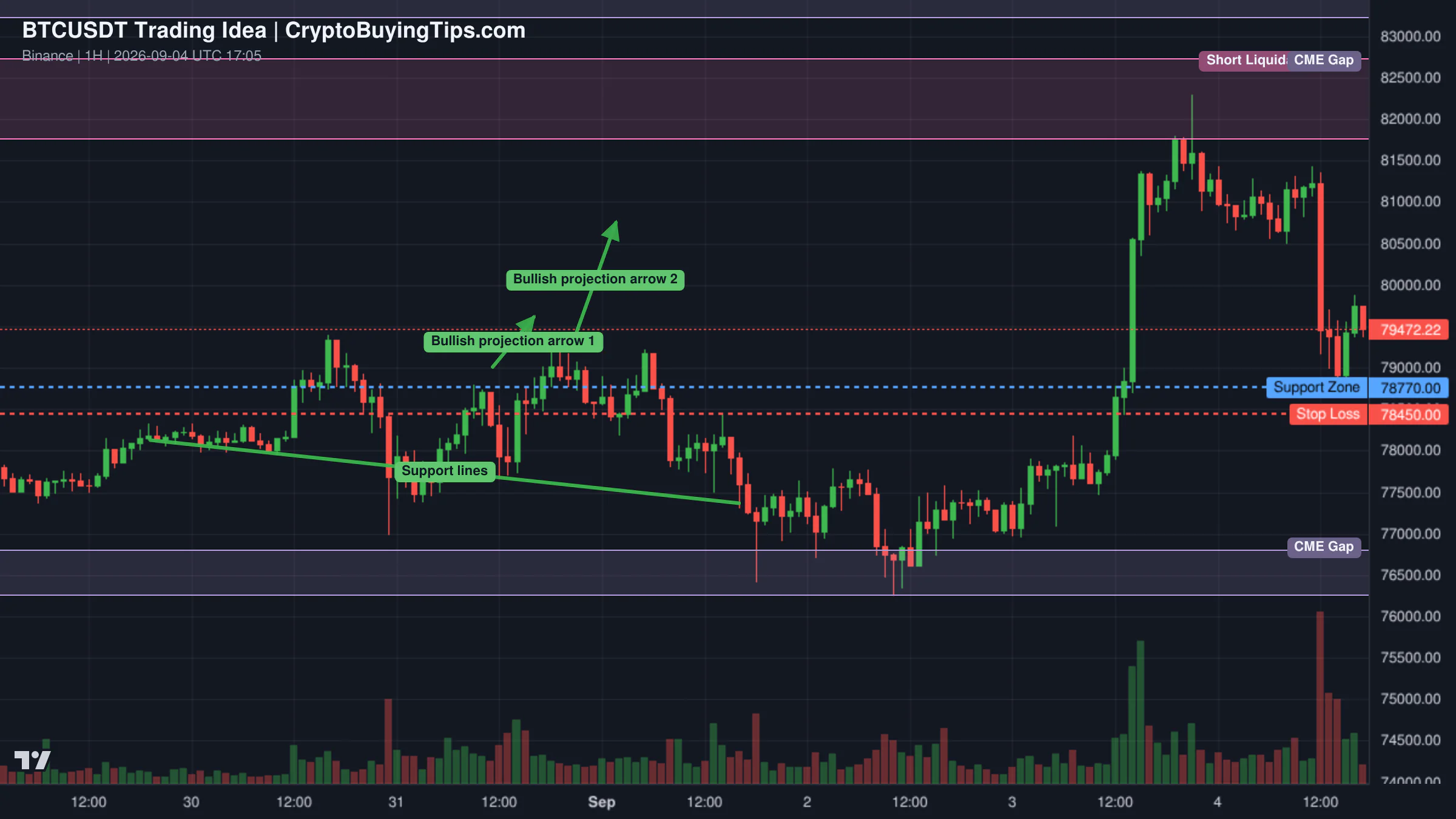
Bitcoin is currently fighting for air in the 64,370 to 64,690 resistance zone. This area coincides with a major liquidity pool and the upper boundary of its current trading range. The setup looks like a potential liquidity grab before another leg lower. While a short squeeze could momentarily push prices higher, the lack of fundamental catalysts and resuming ETF outflows suggest that a decline toward 62,550 or the range support at 61,300 is more probable.

Trading idea chart: BTCUSDT.P - BITCOIN - Retest of the 64,500 liquidity zone

For those with a higher risk appetite, Sui presents a bullish long opportunity on the daily timeframe. With an entry zone between $0.62 and $0.74, the setup targets a move toward $0.86 and potentially as high as $1.18. The trade uses 5x leverage and requires a weekly close below $0.61 to invalidate the thesis. It is a high-reward play that bets on a surprise bullish phase for the broader altcoin market.

What to watch next

The coming days will be a test of whether the market can break out of its "Fear" cycle. The divergence between price and sentiment is usually a warning sign. If the market continues to rise while the Fear and Greed index stays low, it suggests a "short squeeze" rally that can vanish as quickly as it appeared.

The real story is the institutional shift toward permissioned ledgers. The SWIFT and Sony Bank developments are bullish for the technology but potentially bearish for the tokens. If the world's financial plumbing moves to blockchain but ignores the public tokens, the value proposition of the current market changes. We will be watching the CFTC's response to the Phantom and Hyperliquid request, as any move toward exempting non-custodial wallets would provide the regulatory breathing room the DeFi sector desperately needs. Until then, the market is essentially waiting for a reason to actually believe in the rally.

Crypto Market Overview | low volume divergence amid institutional adoption | July 9, 2026
Sigrid Voss·

Crypto Market Overview | low volume divergence amid institutional adoption | July 9, 2026

Market overview

The market is currently presenting a contradiction that would make a seasoned trader blink. We are seeing a sentiment score of 27 on the Fear and Greed Index, placing the mood firmly in Fear, yet the major indices are posting modest gains. The CMC20 and CMC100 indices have climbed between 0.73% and 0.97% over the last 24 hours. This is the kind of divergence that usually suggests the crowd is either terrified of a ghost or simply ignoring the price action.

The real story is the collapse in activity. Trading volume has fallen off a cliff across the board. Spot volume is down roughly 18%, derivatives volume has plummeted by about 21%, and stablecoin activity has dropped by 18%. We are operating in a liquidity vacuum. When prices rise on such thin volume, the move lacks conviction. It is a fragile recovery.

Bitcoin dominance remains high at 58.3%, which continues to squeeze the available capital for smaller assets. With a total market cap sitting around $2.16T and an Altcoin Season Index of 47, we are in a neutral zone. Neither the flagship asset nor the alts are leading the charge. This is a waiting game. We previously covered how BTC dominance data analysis suggests capital is consolidating during a general liquidity pause, and today's data confirms that the ghost town is still very much open for business.

Bitcoin and Ethereum

Bitcoin is trading at $62,684.45, up 0.91% on the day. The price action is stagnant, but the institutional narrative is attempting to shift. Recent reports suggest Bitcoin ETFs are turning a corner after a record $8 billion bleed since mid-May. However, the immediate flow data is mixed. Social intelligence indicates that BTC spot ETFs saw net outflows of $84.86M on July 8. The market is absorbing the selling, but there is no aggressive bid to push the price higher.

Ethereum is priced at $1,743.87, a slight increase of 0.30%. While the price is flat, the flow data is surprisingly positive. ETH spot ETFs recorded net inflows of $70.48M on July 8, contrasting sharply with the outflows seen in Bitcoin and Solana. This suggests a tactical rotation into the second largest asset, perhaps as a hedge or a bet on upcoming network utility.

Network activity on Ethereum is exceptionally quiet. Gas fees are sitting between 0.07 and 0.08 Gwei. This indicates almost zero on-chain congestion, which is a double-edged sword. Low fees are great for users, but they signal a lack of demand for block space. We have noted before that Ethereum market share vanishes even as the corporate narrative improves. The current price action reflects this tension.

Top crypto prices

The top of the market is showing modest green across most names. BNB is one of the stronger performers, trading at $569.55 and up 1.28%. TRON follows closely at $0.3312, rising 1.12%. XRP is holding at $1.09, up 0.94%, while Solana is slightly higher at $77.7, a 0.58% gain.

Not every asset is participating in this low-volume drift. Hyperliquid is trading at $67.34, down 1.19%. This suggests a slight cooling off for the perp-dex narrative as traders rotate back into the majors.

News driving today's market

The institutional side of the market is producing the only genuine catalysts. SWIFT has launched a blockchain ledger to host a tokenized bank deposit pilot with 17 major banks. This is a significant move. It moves blockchain from the realm of speculative assets into the plumbing of global cross-border payments. When the world's primary banking messaging system adopts a ledger, the utility argument for the technology wins a major victory.

Similarly, Sony Bank has received conditional OCC approval to set up a U.S. stablecoin trust bank. This subsidiary, Connectia Trust, will be capitalized with $40 million. The entry of a global giant like Sony into the stablecoin space adds a layer of legitimacy that the industry desperately needs to move past the "wild west" phase.

On the regulatory front, the European Commission is looking to expand the MiCA framework to cover non-EU stablecoin issuers and tokenization. This is a move toward a more regulated and structured environment. We previously explained how Mica crypto regulation explained creates operational hurdles for platforms, and this expansion will likely increase compliance costs for any issuer wanting to touch the European market.

Law enforcement is also active. INTERPOL led a global crackdown that resulted in over 5,800 arrests and the discovery of a laundering network tied to a $122.5 million wallet. This serves as a reminder that the perceived anonymity of cross-chain swaps is often an illusion. These actions increase the operational risk for DeFi protocols that lack robust KYC or AML filters.

Social intelligence

The political atmosphere is adding a layer of volatility to the sentiment. Donald Trump has been vocal about the need for the U.S. to develop cryptocurrency to prevent other countries from taking dominance. He argues that the Biden administration's initial crackdown was a political miscalculation. This rhetoric keeps the "political hedge" trade alive, as traders bet on a more permissive regulatory environment if the political wind shifts.

On the on-chain side, tokenized stock transfers are surging. Data shows a 105% increase in a single month, reaching $8.4B in volume. This trend suggests that the real innovation is happening in the tokenization of traditional assets rather than the creation of new, speculative tokens.

The ETF flow data remains the most actionable social signal. The divergence between ETH inflows and BTC outflows is a clear indicator of a short-term sentiment shift. Traders are rotating. They are not leaving the market, but they are changing their bets.

Trading ideas worth watching

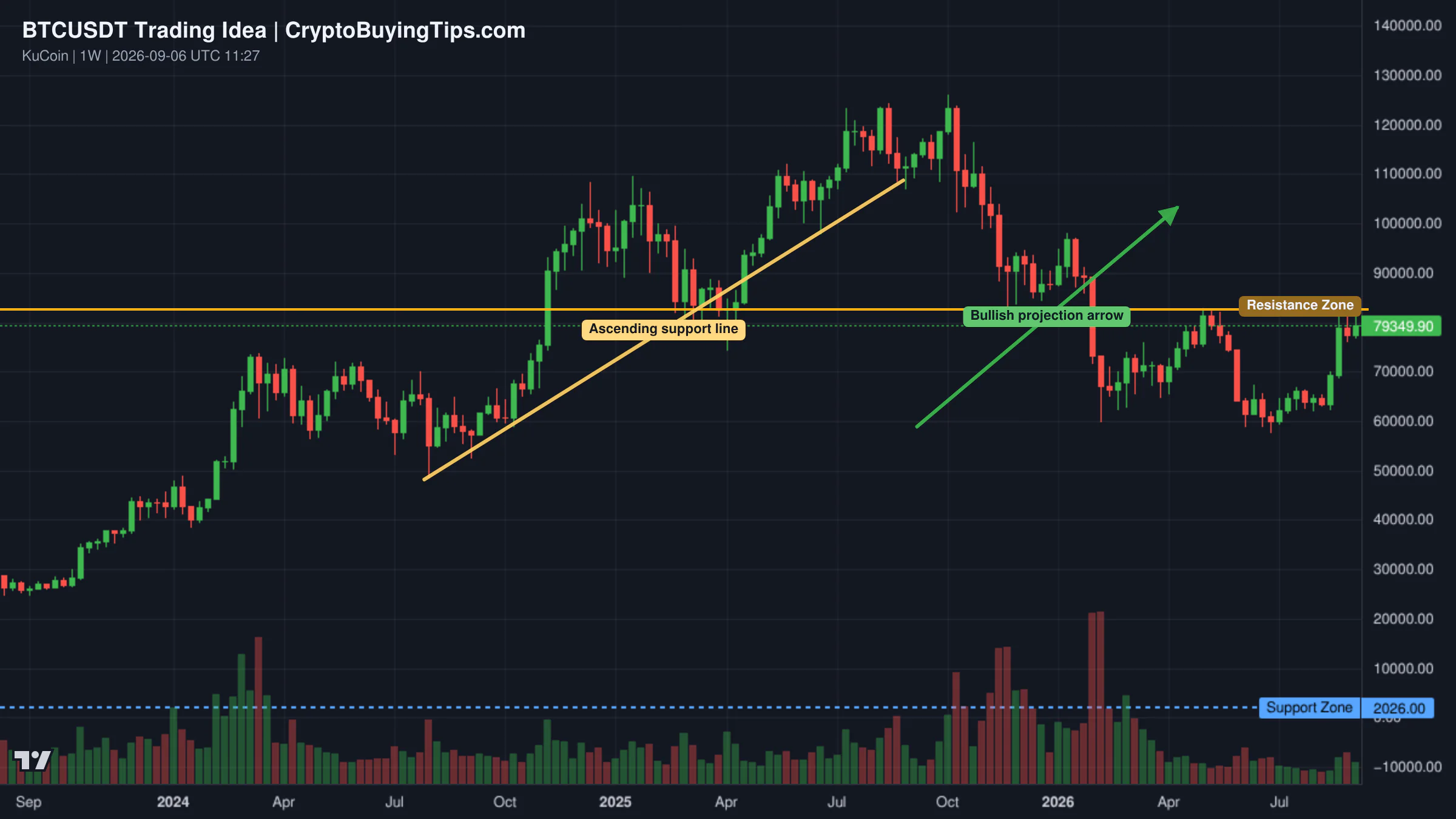
There is a sharp divide in the technical outlook for Bitcoin. One bearish setup identifies a "Channel Down" pattern that has persisted since June 2. The key level here is the 4-hour MA50. If Bitcoin closes a 4-hour candle below this line, the setup suggests a new selling sequence could target the 1.136 Fibonacci extension, which sits at $57,000. The fact that the price has failed to test the 1-day MA50 suggests the long-term trend is still heavily skewed to the downside.

Redrawn BTCUSDT 1W trading idea chart for Bitcoin: Lack of downtrend, five months—Extreme opportunity buyTrading idea chart: BTCUSD - BITCOIN Channel Down eyes $57000 if the 4H MA50 breaks.

Conversely, a more bullish read suggests we are in an "extreme opportunity buy-zone" between $58,000 and $68,000. This analysis argues that the bear market ended when the sideways action lasted longer than the previous bearish impulse. This view identifies a double-bottom around $58,000 to $60,000. For those with a longer time horizon, any price below $70,000 is viewed as a spot accumulation area.

A third perspective focuses on a "Channel Expansion" toward $66,000. This view is bolstered by historical seasonality, noting that July is often one of the strongest months for Bitcoin, even in down-cycles. The macro backdrop here is the internal division within the Fed. While some officials want rates steady, others are pushing for hikes due to AI-driven structural pressures. This uncertainty creates a volatile floor for risk assets.

What to watch next

The immediate focus is on volume. We cannot trust a price recovery that happens in a vacuum. If the total market volume remains 20% below its recent averages, any move higher is likely a bull trap. We need to see a return of liquidity, particularly in the derivatives market, to confirm a trend reversal.

The MiCA 2.0 revisions are also a key watch point. If the EU successfully expands its reach to non-EU stablecoin issuers by 2027, it will force a massive reorganization of how stablecoins are issued and managed globally. This could either lead to a more stable, institutionalized market or a fragmented one where certain issuers simply exit the European market.

Finally, the Fed's internal struggle under Chair Kevin Warsh will dictate the liquidity environment. If the "rate hike" faction wins out, the pressure on risk assets will increase. If the "cooling inflation" narrative takes hold, the seasonal July tailwind could finally push Bitcoin out of its current sideways rut. For now, the market is a quiet place where fear persists despite the green candles.

Crypto Market Overview | DeFi volume climbs amid broader market risk-off dip | July 8, 2026
Sigrid Voss·

Crypto Market Overview | DeFi volume climbs amid broader market risk-off dip | July 8, 2026

Market overview

The market is currently caught in a contradiction. We are seeing a strong "Fear" regime with the Fear and Greed Index sitting at 26, yet the news cycle is dominated by the prospect of a US regulatory truce. This gap between sentiment and potential catalysts is where the current volatility lives. Total market capitalization has slipped to approximately $2.14T, a decline of 1.81% over the last 24 hours. This move is not happening in a vacuum. The broader risk-off mood is evident in traditional markets, with the NASDAQ 100 dropping 1.85% and the S&P 500 falling 0.48%.

Trading activity is thinning out. Total 24h volume has dropped over 11% to $78.28B, while stablecoin volume is also retreating. However, we have spotted a curious divergence in DeFi. While the rest of the market is quiet, DeFi volume has actually climbed 9.20%. It is a strange sight to see decentralized finance activity pick up while the primary assets are sliding, but it suggests some capital is rotating into on-chain yield or hedging strategies rather than simply exiting the ecosystem.

Capital is concentrating in the primary asset. Bitcoin dominance is climbing to 58.13%, a sign that traders are retreating to the perceived safety of the king during this dip. The Altcoin Season Index is neutral at 47, confirming that the appetite for riskier assets has vanished for now. We are seeing a textbook flight to quality, though the "quality" is still losing value in absolute terms.

Bitcoin and Ethereum

Bitcoin is currently trading at $62,118.41, down 1.70% today. The asset is struggling to maintain momentum as it faces a wall of resistance near $65,000. While the long-term narrative remains focused on institutional adoption, the short-term reality is a lack of aggressive buying. The rise in dominance suggests that BTC is not necessarily being bought with new money, but is instead the only place traders feel safe hiding while the alts bleed.

Ethereum is in a more precarious position. The price has fallen 1.94% to $1,738.81, and its dominance has slipped to 9.79%. The most telling metric is the network activity. Gas fees are exceptionally low, with slow transactions at 0.11 Gwei. This is practically a ghost town on-chain. It seems the corporate makeover for ETH we have noted previously is not yet translating into actual usage or price support. Our read is that Ethereum is currently the casualty of both a macro risk-off event and a lack of a compelling short-term catalyst.

Top crypto prices

The broader market is seeing a synchronized decline. BNB has dropped 2.71% to $562.33, while XRP has fallen more sharply by 3.74% to $1.08. The pain is most evident in Solana, which has slid 4.64% to $77.25, reflecting the typical volatility of high-beta assets when fear enters the room.

TRON has remained relatively resilient, dropping only 0.85% to $0.3276. Meanwhile, Hyperliquid is feeling the pressure with a 4.46% drop to $68.16. The general trend is clear: everything is sliding, but the assets with the highest perceived volatility are leading the way down.

News driving today's market

The biggest story is the SEC's updated 2026 agenda. Chairman Paul Atkins is preparing to introduce "Regulation Crypto" as soon as this month. This proposal would create a regulatory safe harbor and exemptions for certain on-chain activities, including DeFi and tokenized securities. This is a bullish signal for the long term, as it could finally provide the legal certainty institutions need to enter the market. We previously covered the SEC's priority on crypto, and this new "safe harbor" is the first concrete step toward that goal.

However, the market is not reacting with immediate euphoria. This is likely because the news is being offset by a series of bearish shocks. The CFTC has sued a crypto pool operator for $14 million in fraud, reminding the market that the "Wild West" era of the industry is still producing casualties. More concerning is the report that the central bank of India is seeking to bar financial institutions from any crypto exposure. This kind of institutional blockade in a major emerging market creates a ceiling for global growth.

We also see the EU continuing its regulatory push. While the adoption of a digital assets policy stance after the MiCA transition is generally positive for structure, the ESMA's focus on custody risks adds a layer of operational stress for providers. It is a classic case of "good news" in the form of regulation being viewed as "bad news" in the form of compliance costs. This environment is exactly why we have seen the BTC dominance data analysis suggest that capital is consolidating rather than expanding.

Social intelligence

On the social front, the focus is on the "Clarity Act" and the geopolitical race for financial leadership. Analysts are debating whether the US can pass this legislation before the Senate summer recess. The sentiment is that if the US fails to lead, it will simply watch from the sidelines while other jurisdictions build the next financial system.

Michael Saylor continues to be a focal point for Bitcoin bulls. He recently argued that MicroStrategy's breakeven ARR is misunderstood, suggesting that as long as BTC appreciates by more than 3.3% over time, the capital gains can fund dividends indefinitely. It is a bold claim, but it reinforces the institutional bet on the asset as a primary treasury reserve.

There is also a growing narrative around Real World Assets (RWA). Robinhood's CEO, Vlad Tenev, has explicitly stated that the future of crypto lies in RWAs. This aligns with the recent move by Ondo Finance to allow tokenized stocks to be used as collateral for perpetual trading. We have discussed tokenized stocks for everyday investors before, and the integration of these assets into trading collateral is a practical step toward that vision.

Trading ideas worth watching

One setup to monitor is Bitcoin near the $65,000 resistance zone. Some analysts suggest that BTC has completed its impulsive five waves in an ascending channel and is now facing a potential correction. With the DXY and US 10-Year yields providing resistance, the upside looks limited. A break below the lower line of this channel could send the price toward the long liquidation zone between $61,270 and $60,440. The first target for a correction is $61,545, with a deeper target at $59,900. A stop loss above $65,253 would be the standard invalidation point here.

Redrawn BTCUSD 240 trading idea chart for Why You Should Trade Less When You're WinningRedrawn BTCUSDT 60 trading idea chart for Bitcoin Near $65K Resistance — Is a Major Correction Beginning?

On a much longer timeframe, there is a bullish argument that Bitcoin is entering a bear cycle bottoming phase. Using the 2-month chart, the RSI and Stoch RSI are showing patterns that historically precede cycle bottoms. This analysis suggests a potential bottom could form in the September-October window, with a minimum zone between $45,000 and $50,000. While this is a massive drop from current prices, it serves as a reminder that the macro cycle still has room for significant volatility.

Finally, there is a psychological note for those currently in profit. The tendency to break risk rules after a winning streak is a common pitfall. When the account is green, traders often stop asking if a trade matches their system and start asking how much more they can make. The advice here is to implement a "hard stop" for winning days, just as one would for losing days, to prevent greed from erasing a series of clean wins.

What to watch next

The immediate focus is the SEC's actual release of the "Regulation Crypto" proposal. If the safe harbor rules are as broad as teased, we could see a sharp reversal in sentiment. However, the market is currently too timid to buy the rumor. We will be watching the NASDAQ closely, as a continued slide in tech stocks will likely drag BTC and ETH lower regardless of regulatory news.

The DeFi volume divergence is also a point of interest. If this increase in volume continues while the rest of the market is stagnant, it may signal the start of a quiet rotation back into on-chain activity. For now, the path of least resistance appears to be sideways or slightly down, as the market waits to see if the SEC's promises actually materialize into a usable framework.